depgstaff

  • Weekly Roundup – 16-Feb-25

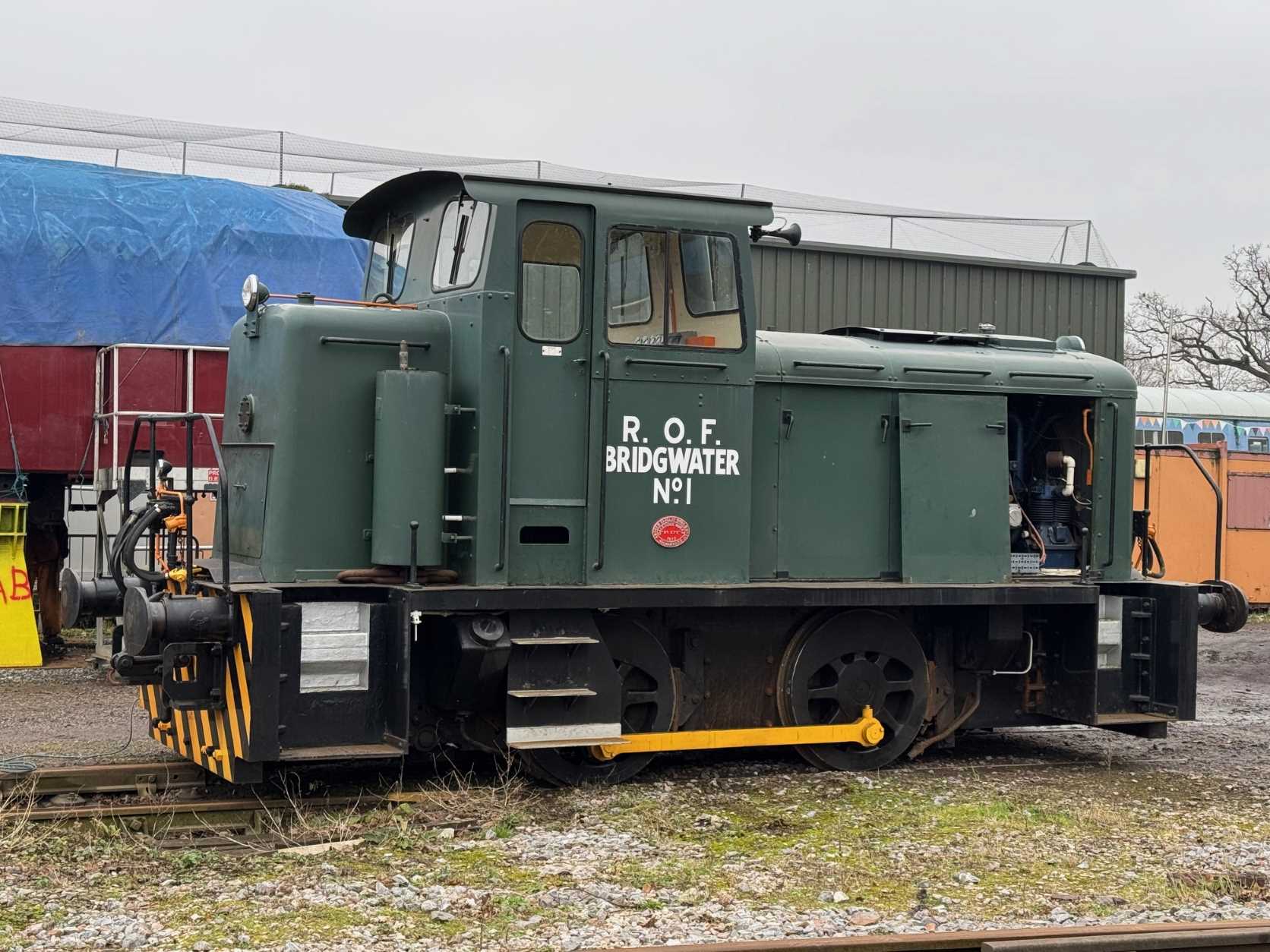
    DEPG Chairman Martin Howard is happy with the progress being made on D1010, D4107, D7017, D7018 and D9518 and is also happy that Barclay 578 (ROF 1) is running again ! Pictured at Williton on Saturday 15th February 2025 by Andy Royal © CC BY-NC 3.0


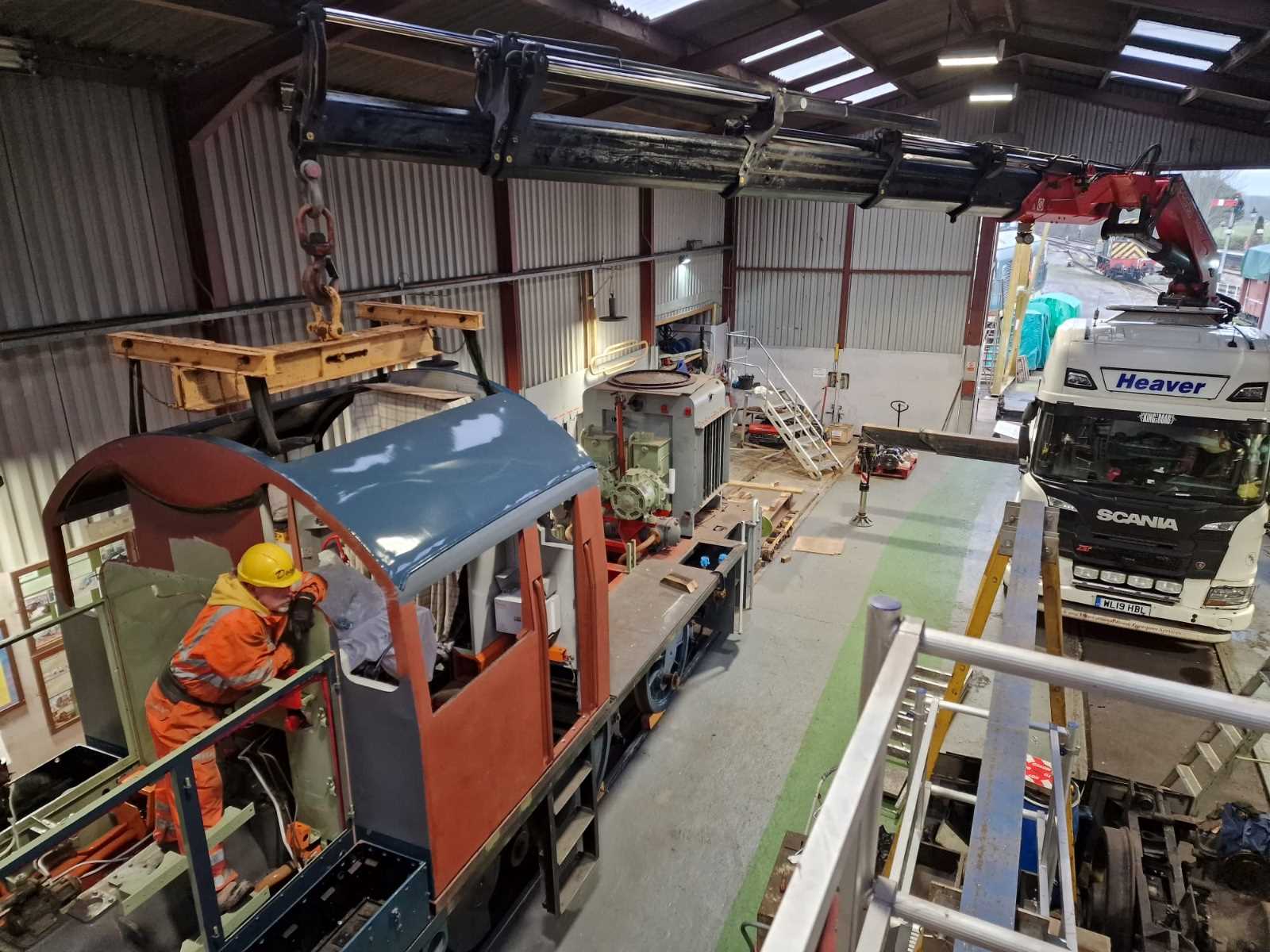
    The lifting activities that took place at Williton on Friday and Saturday 7th/8th February were almost disrupted by the failure of the starter motor on DEPG yard pilot Barclay 578 (ROF1) which prevented Class 14 ‘Teddy Bear’ D9518 (NCB No. 7) from being pulled out of the loco shed. In the end, the skill of the crane operator from Heaver Brothers saved the day by lifting the cab back on to the Class 14’s frames inside the shed, avoiding a delay and the expense of another crane visit.

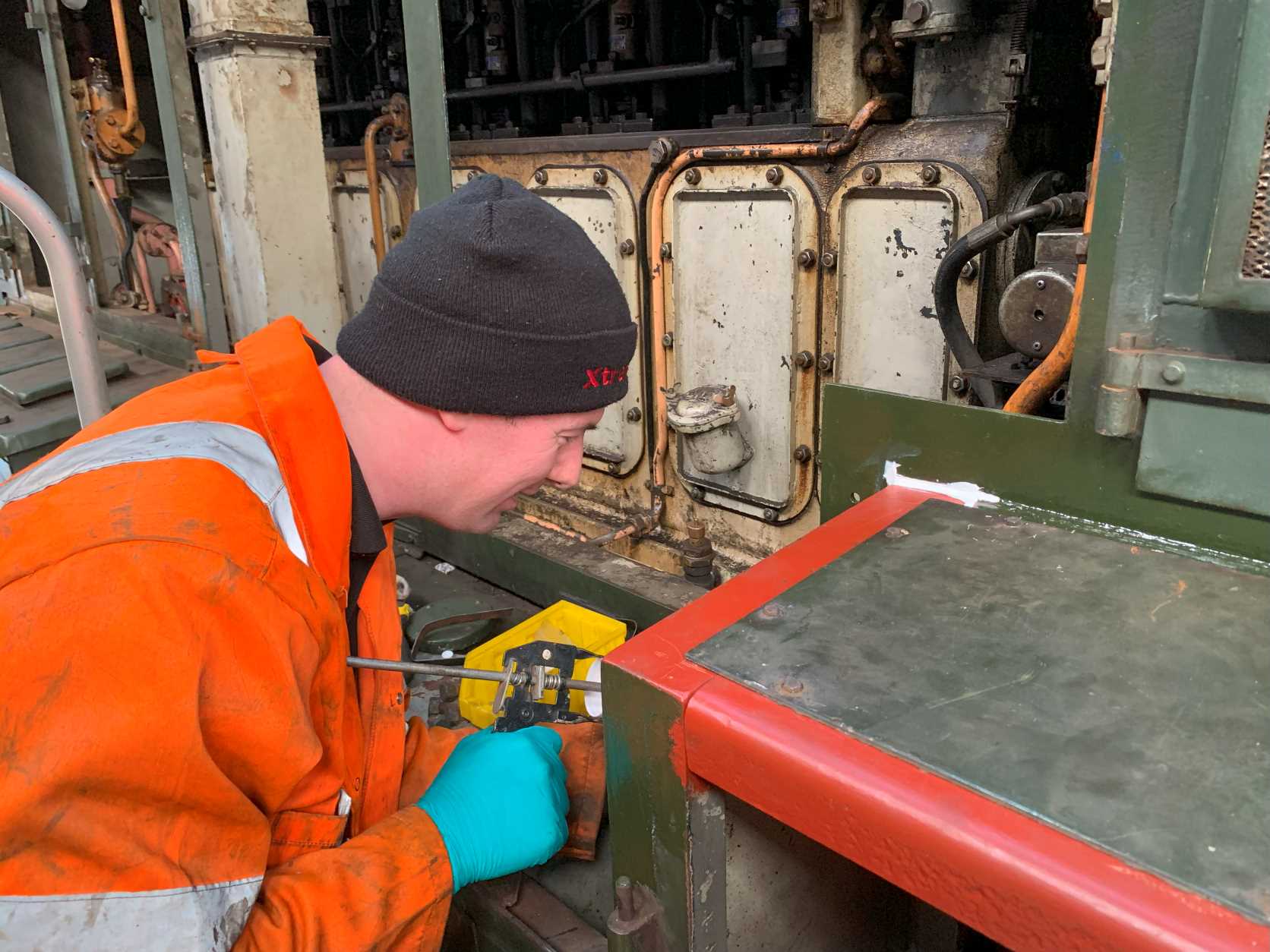
    The issue has now been resolved by repairs to the starter motor that were carried out by DEPG volunteer John Cooke on Saturday 15th, with the repaired motor re-fitted to the loco by Martin later in the day. The loco started straight away and was later shunted to a more convenient location on number 2 road where it is now ready for future duties – hopefully with improved reliability and resilience since we have now acquired some spare parts !

    Barclay 578 (ROF 1) – starter motor removed. Pictured at Williton on Saturday 15th February 2025 by Andy Royal © CC BY-NC 3.0


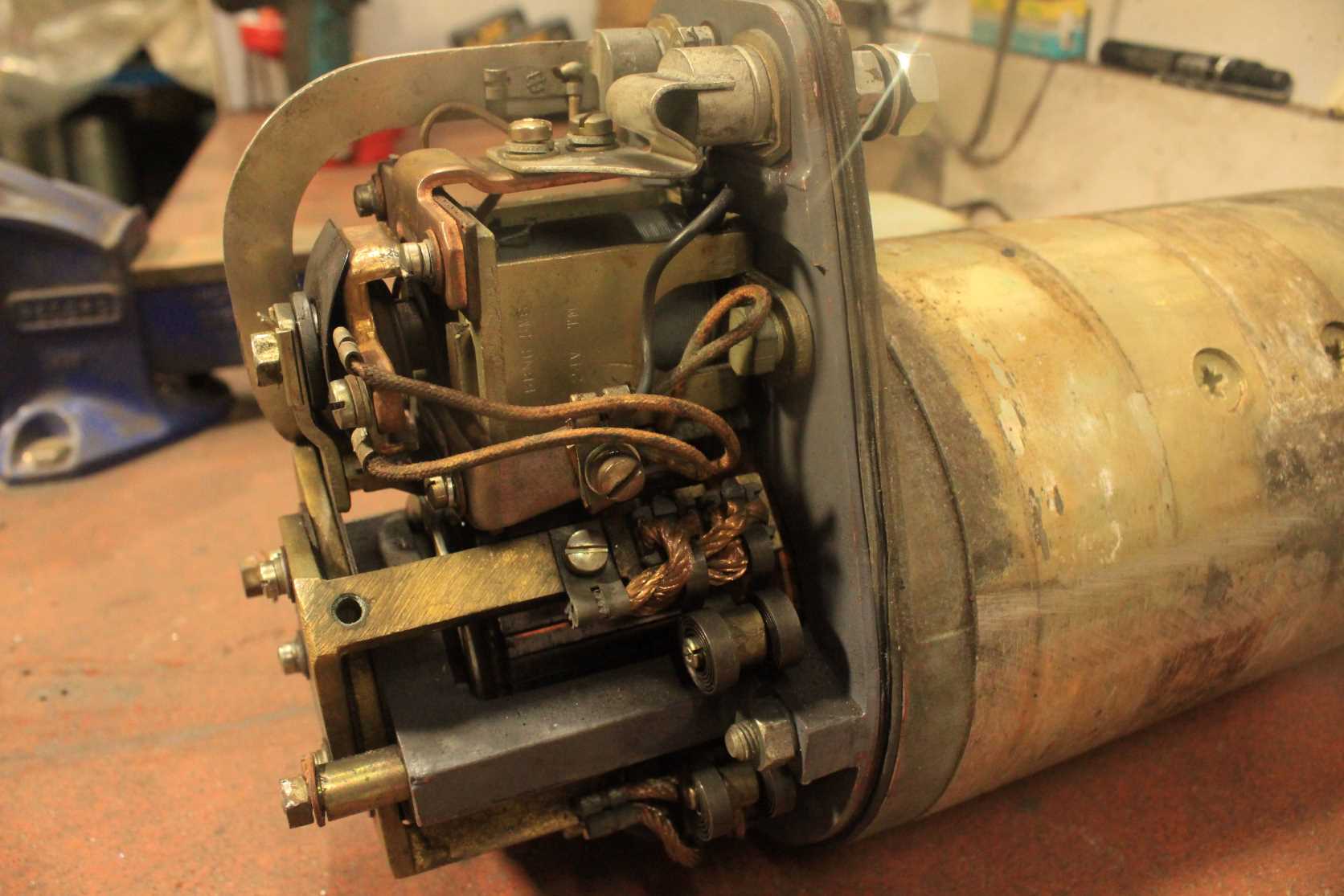
    Barclay 578 (ROF 1) – starter motor solenoid switch contacts in need of repair. Pictured at Williton on Saturday 8th February 2025 by Terry Deacon © CC BY-NC 3.0


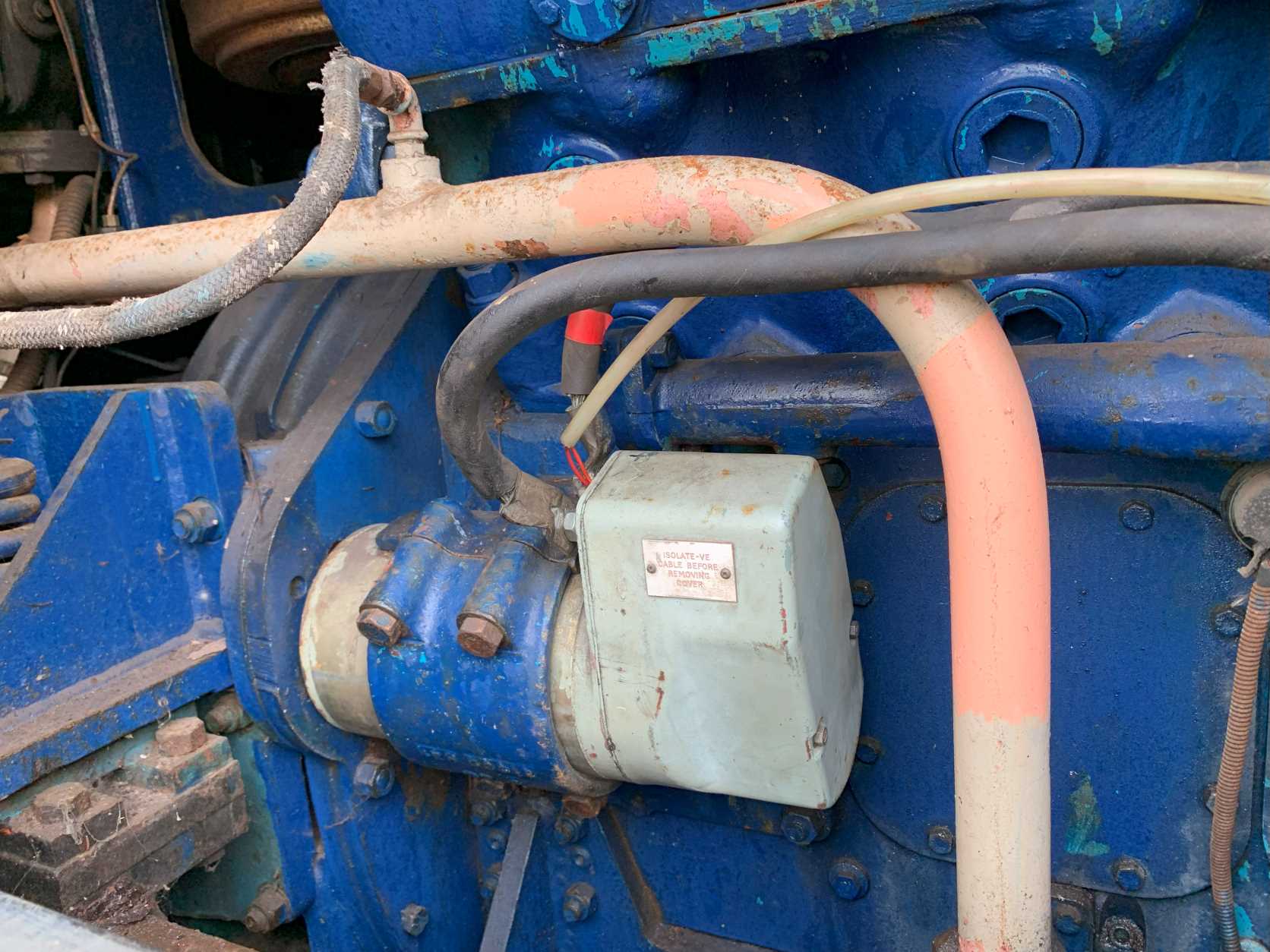
    Barclay 578 (ROF 1) – repaired starter motor re-fitted. Pictured at Williton on Saturday 15th February 2025 by Andy Royal © CC BY-NC 3.0


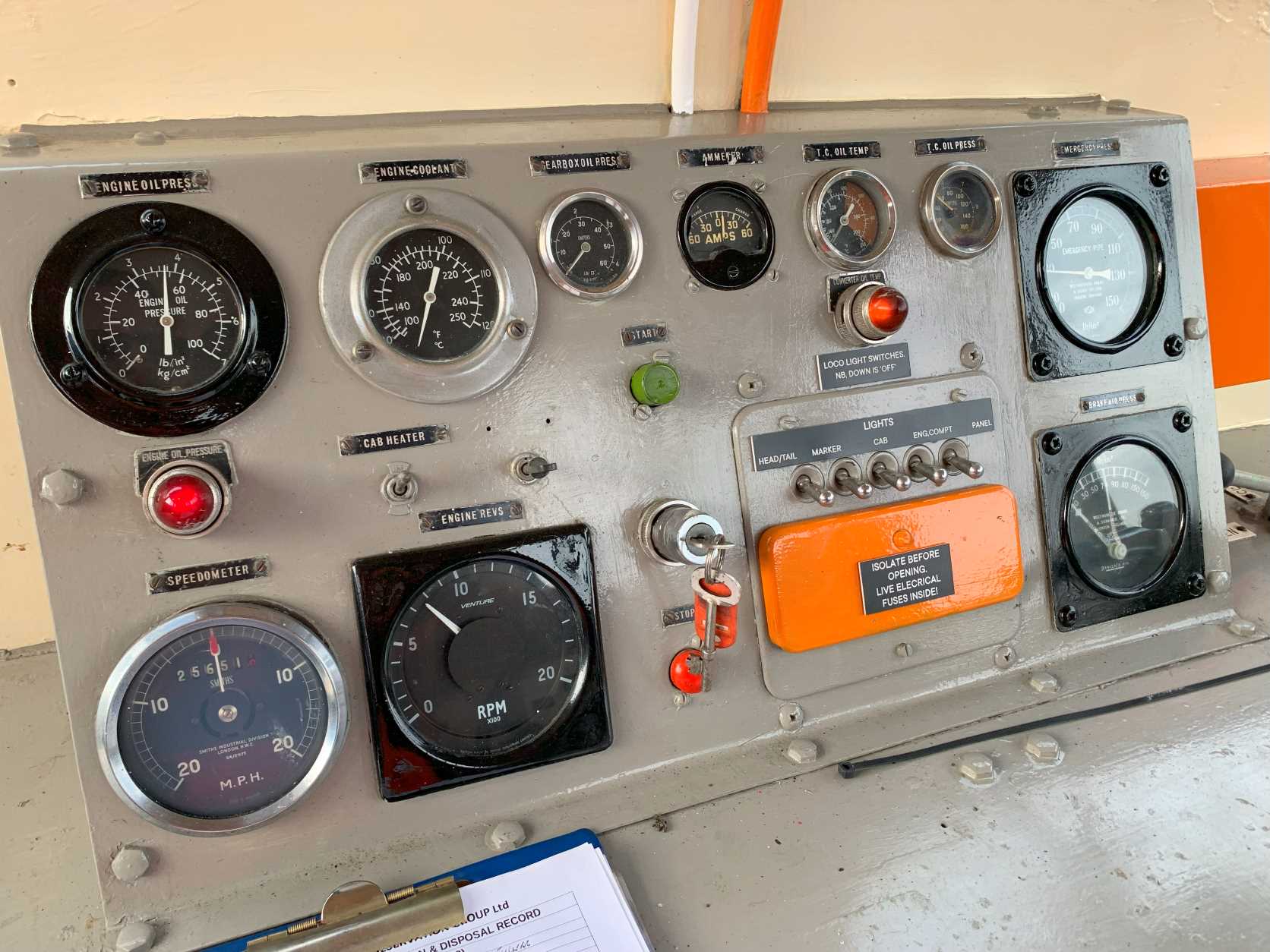
    Barclay 578 (ROF 1) – engine started and running at a steady 750 rpm to warm up. Pictured at Williton on Saturday 15th February 2025 by Andy Royal © CC BY-NC 3.0


    D7017 UPDATE

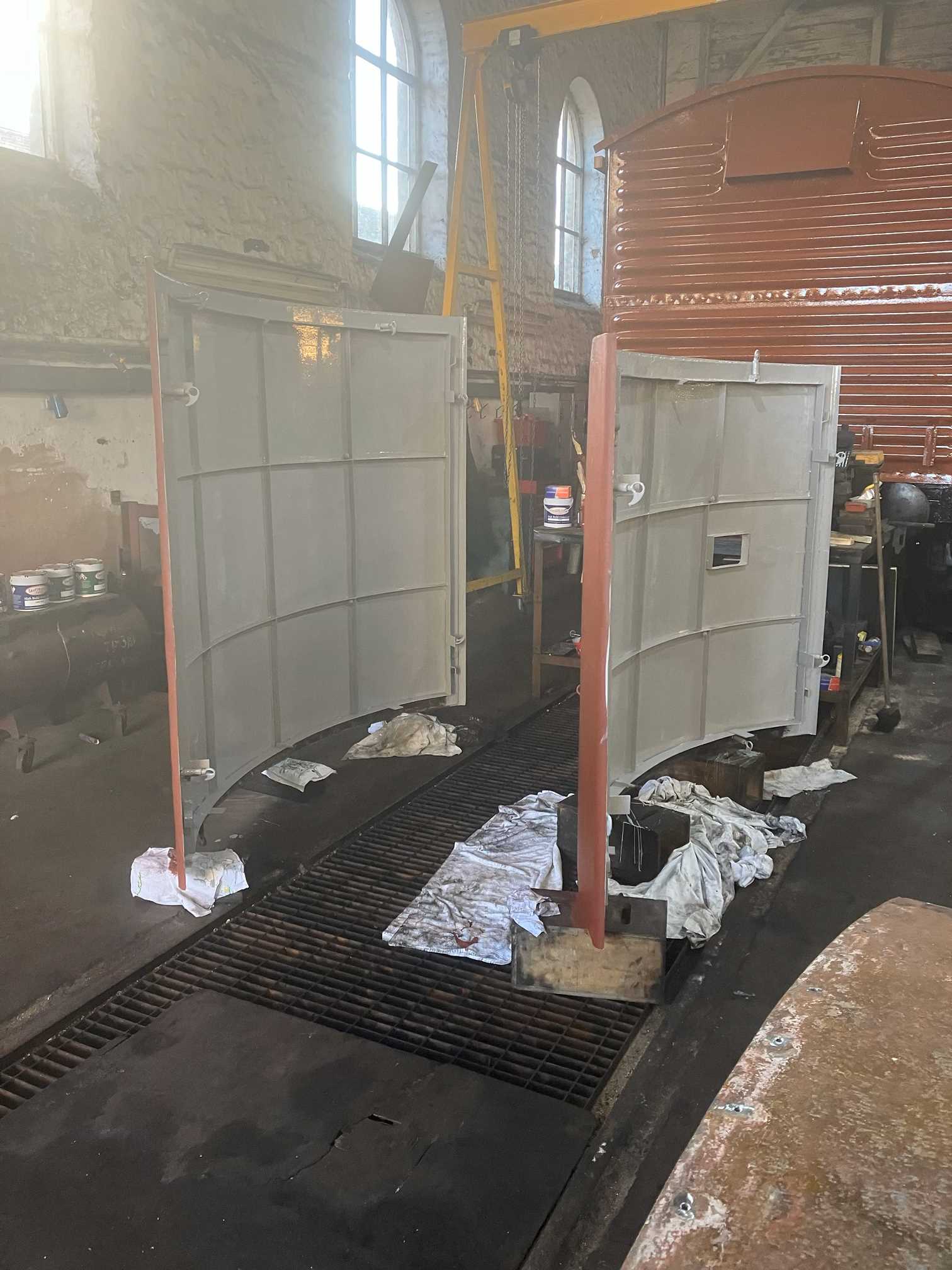
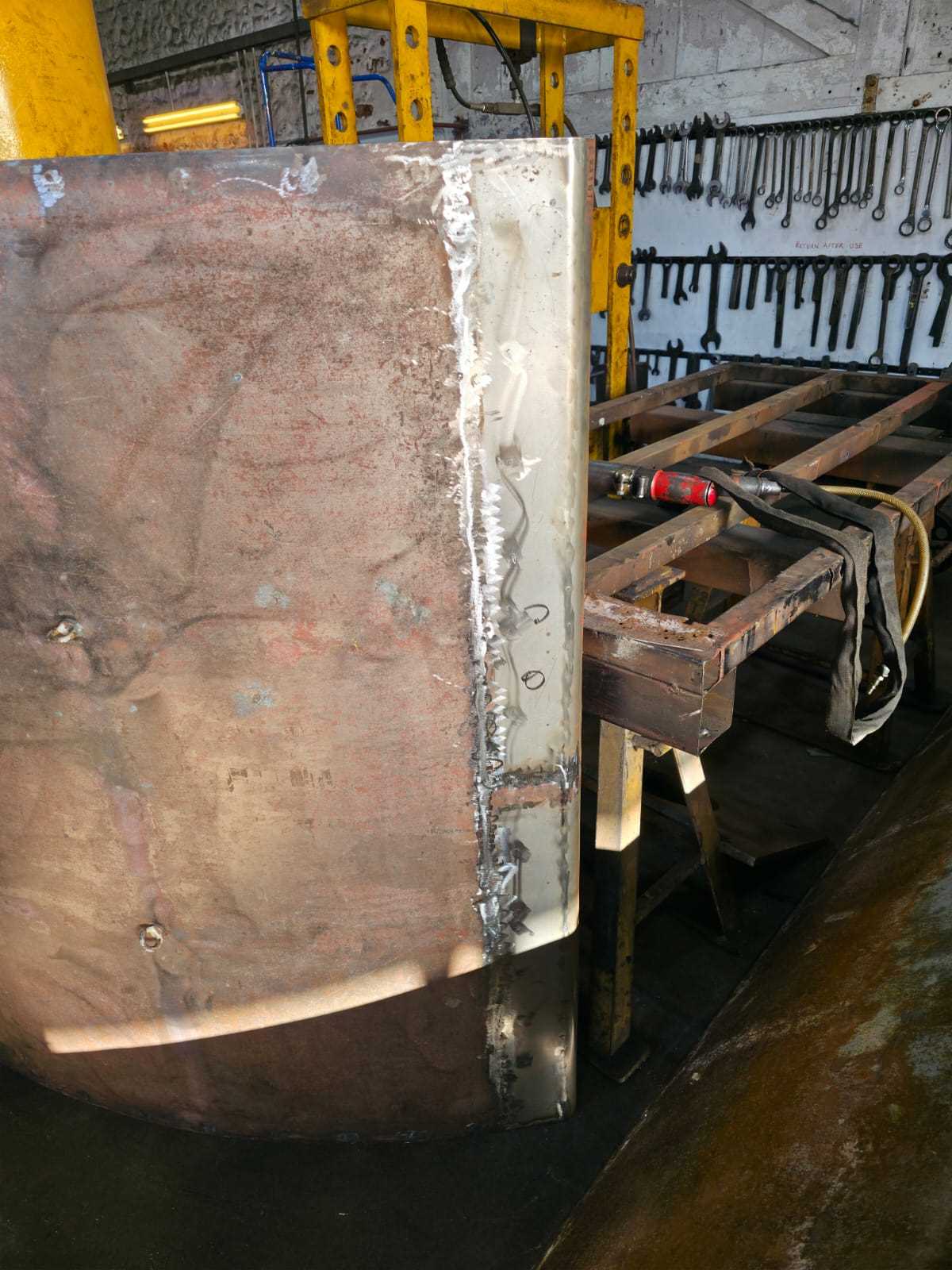
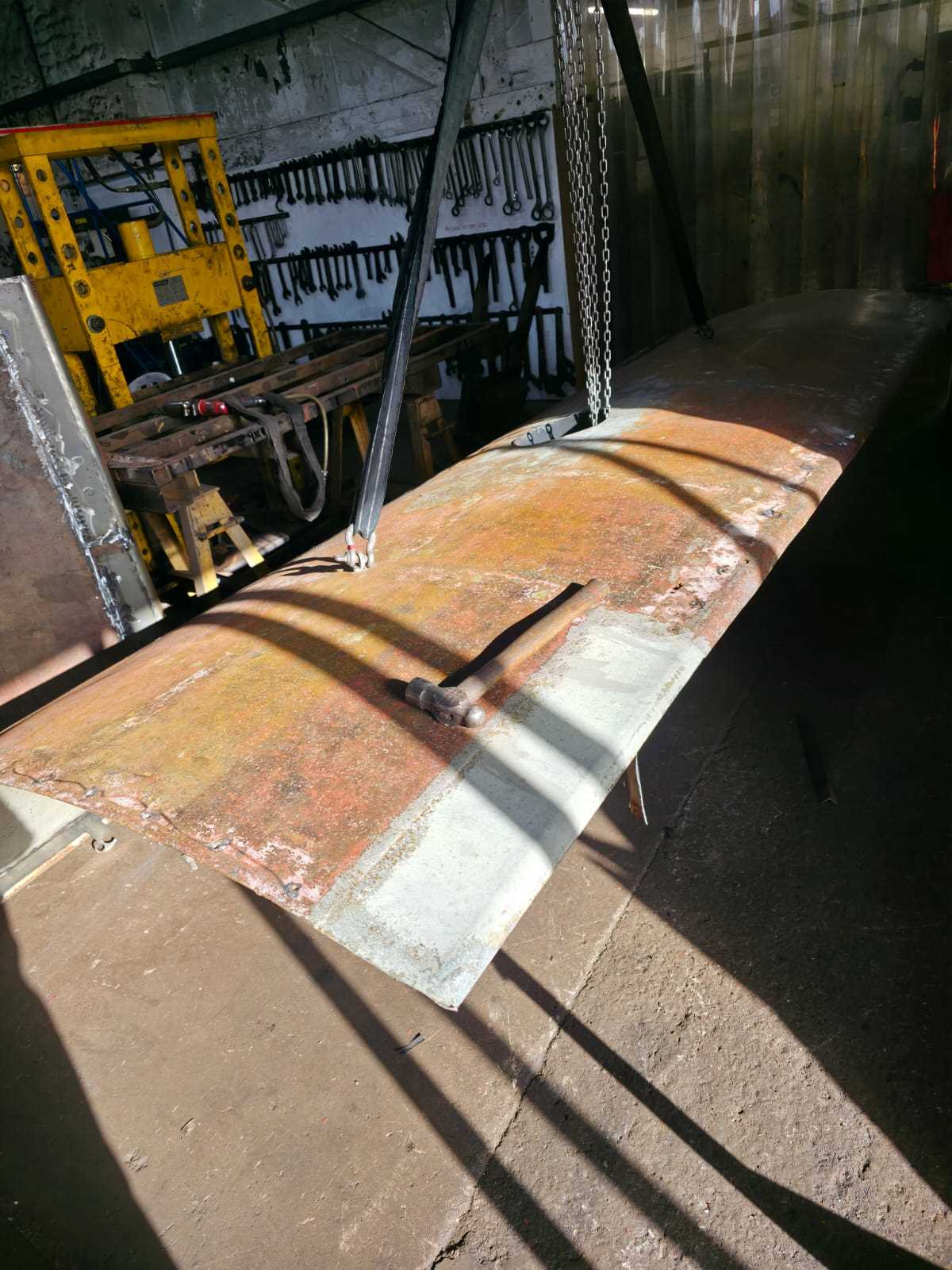
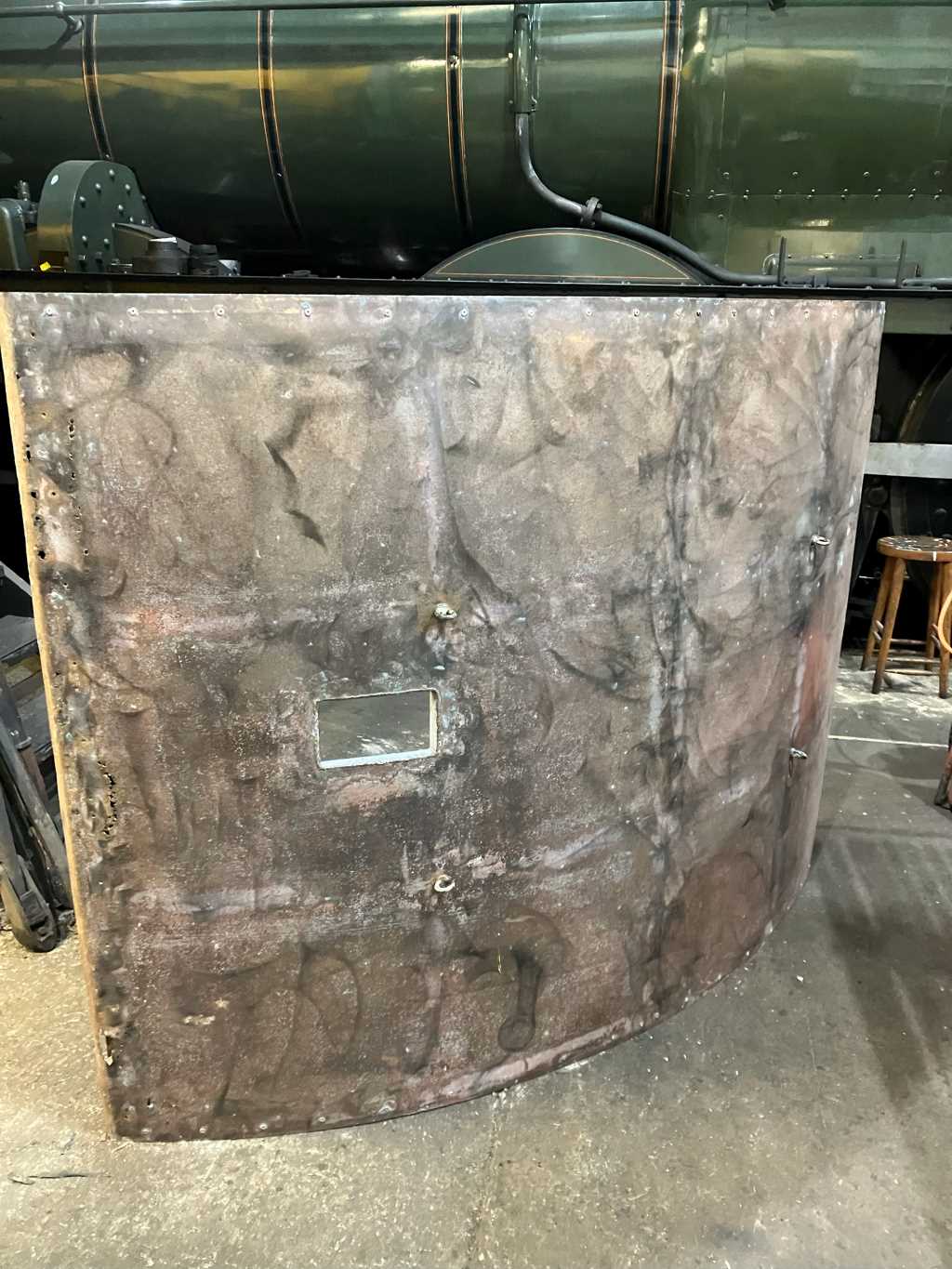
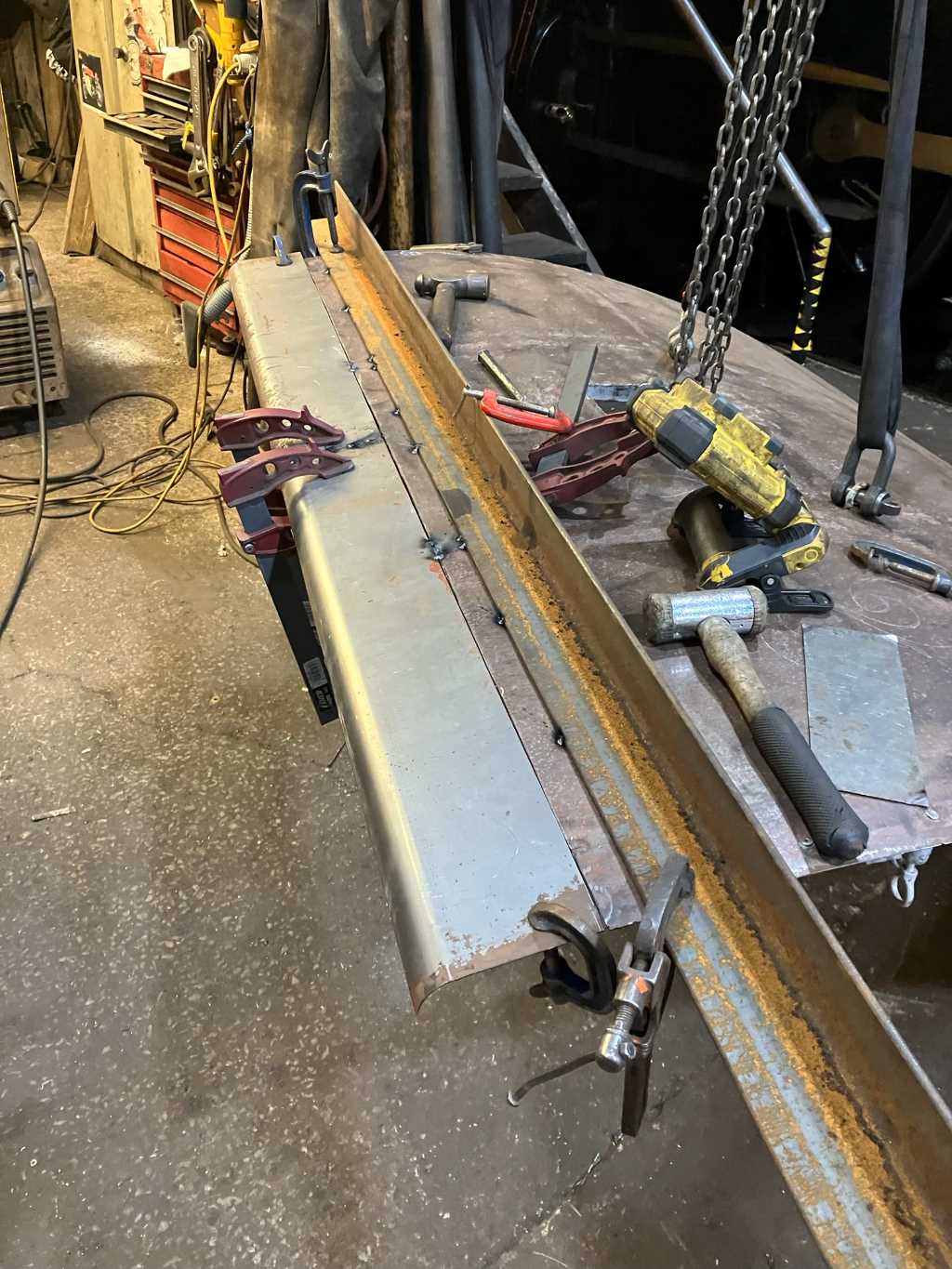
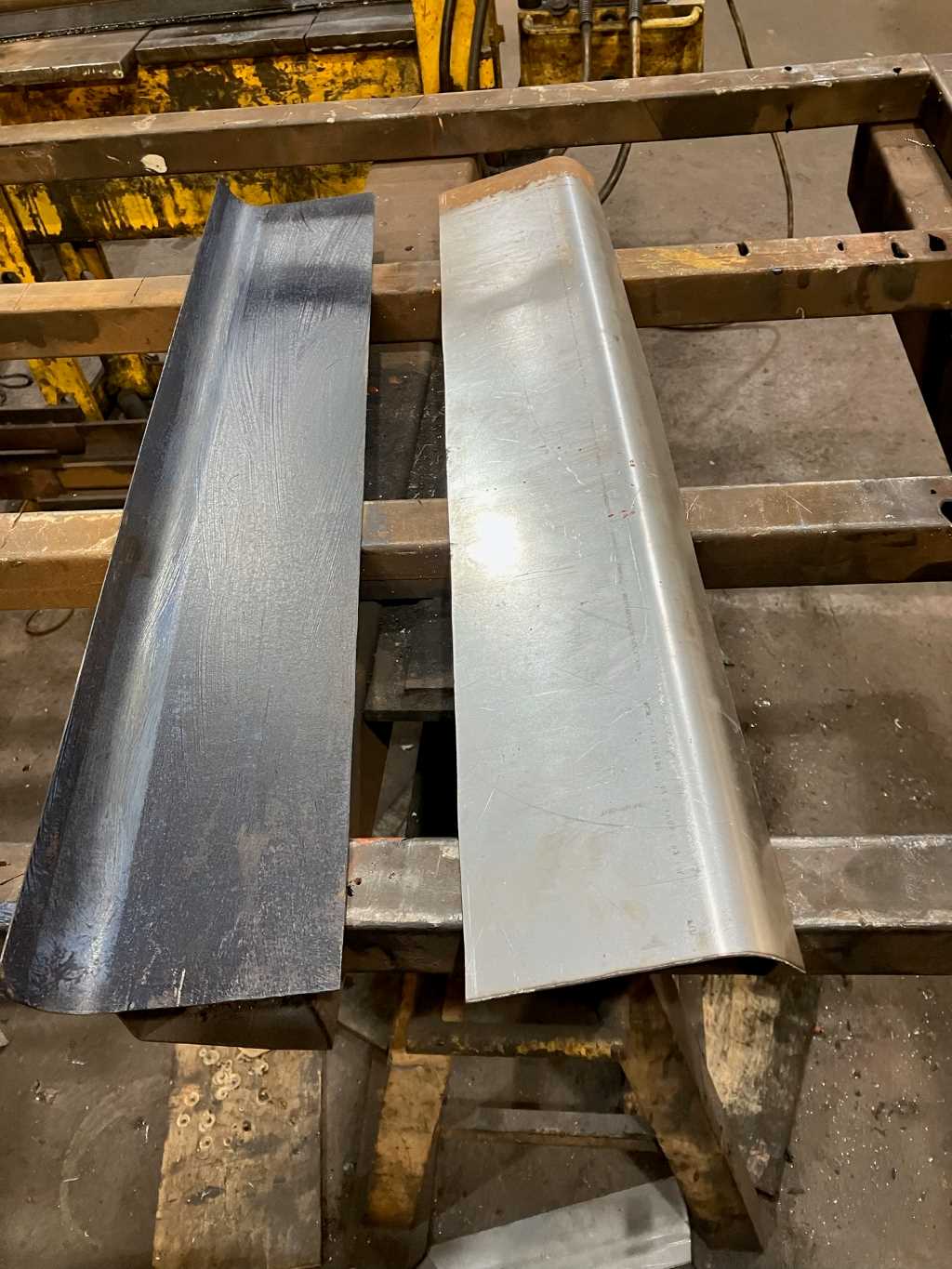
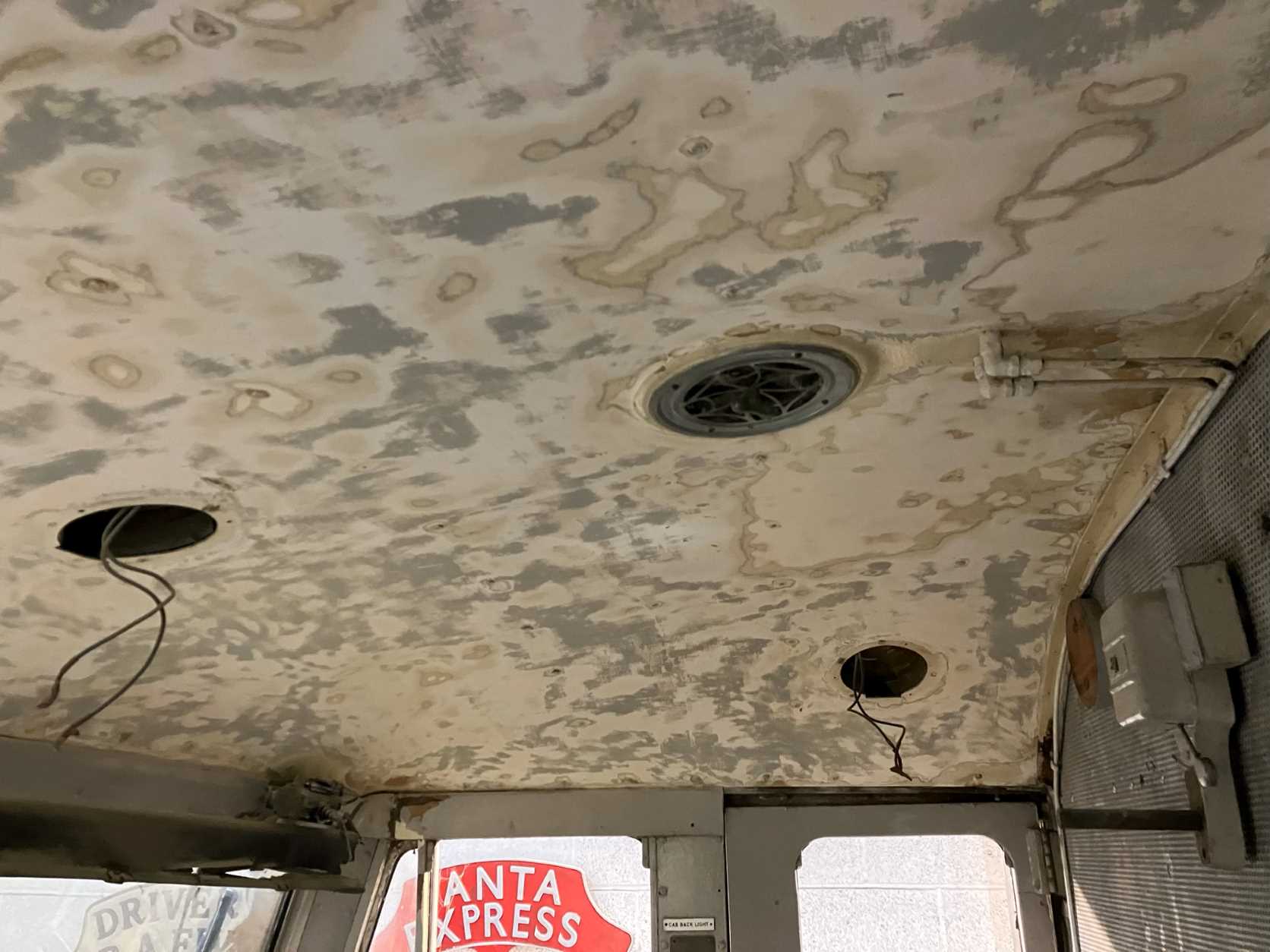
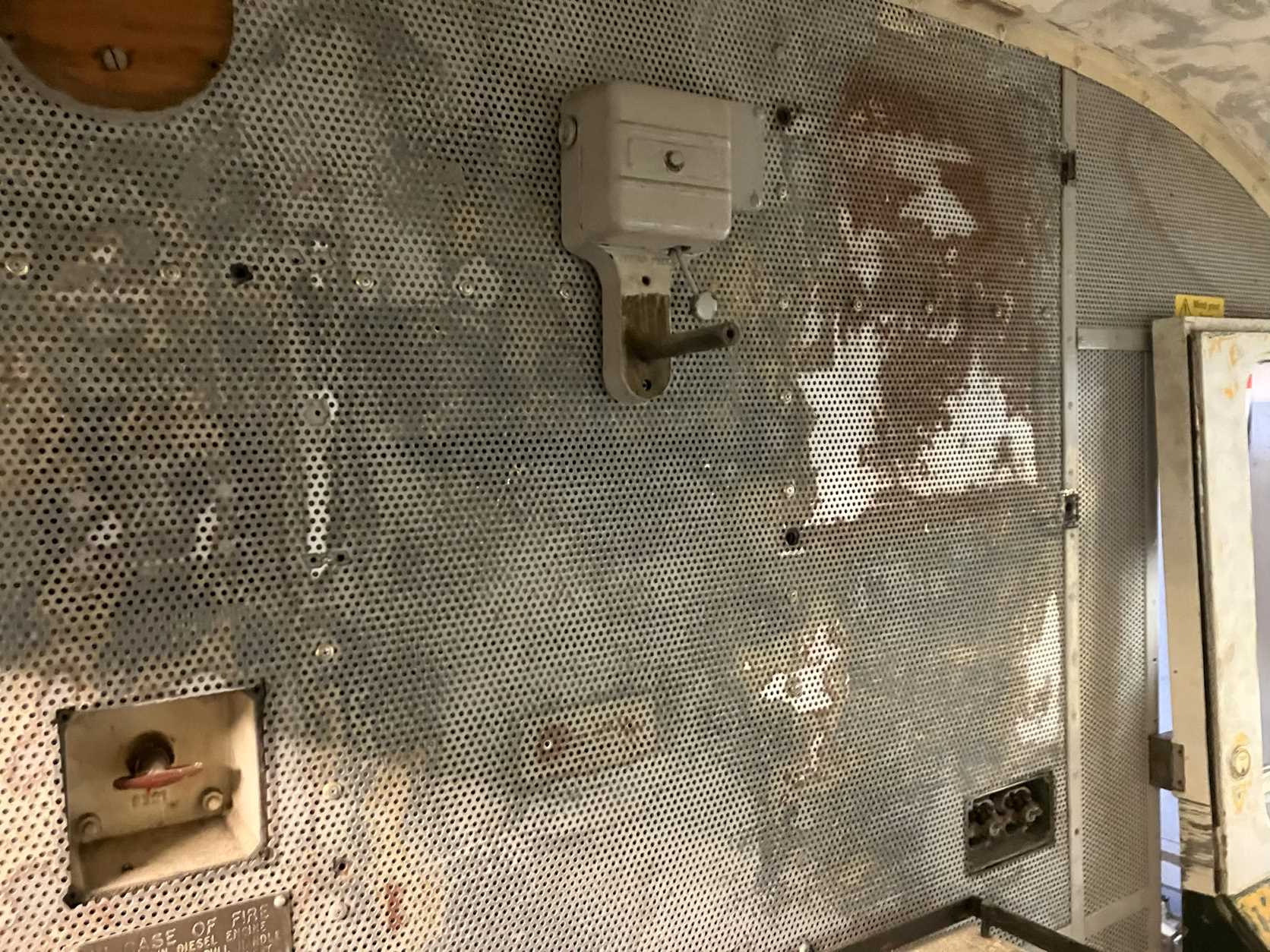
    The WSR engineering team are doing a fine job on D7017 at Minehead, with the old corroded metal being cut out and replaced with new metal, in some cases with specially-formed curvature to match the original profiles. The photos below (all provided by Neil McCannon © CC BY-NC 3.0) showcase the work that is being done by the combined team of staff and volunteers, all of which is very much appreciated:

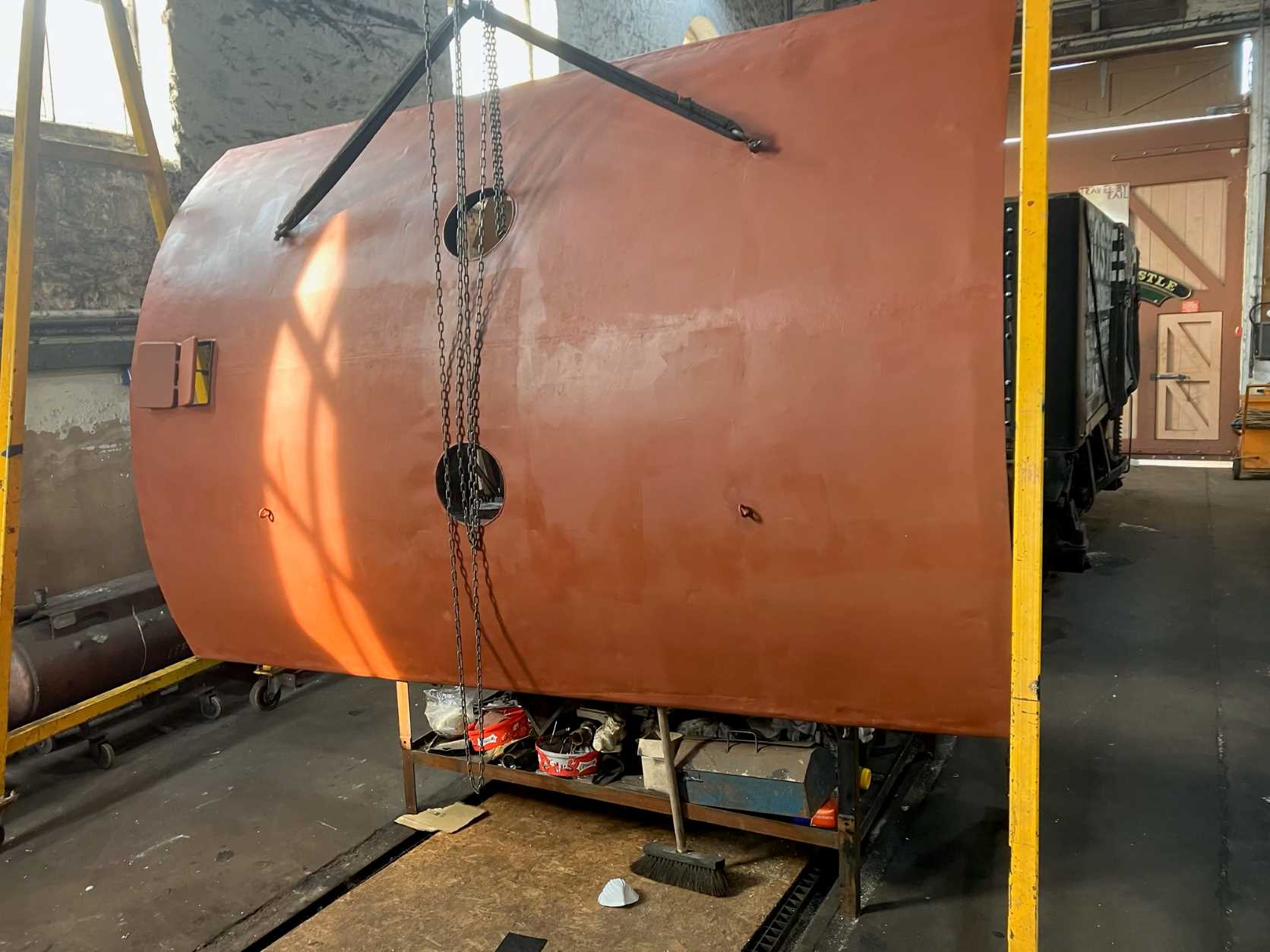
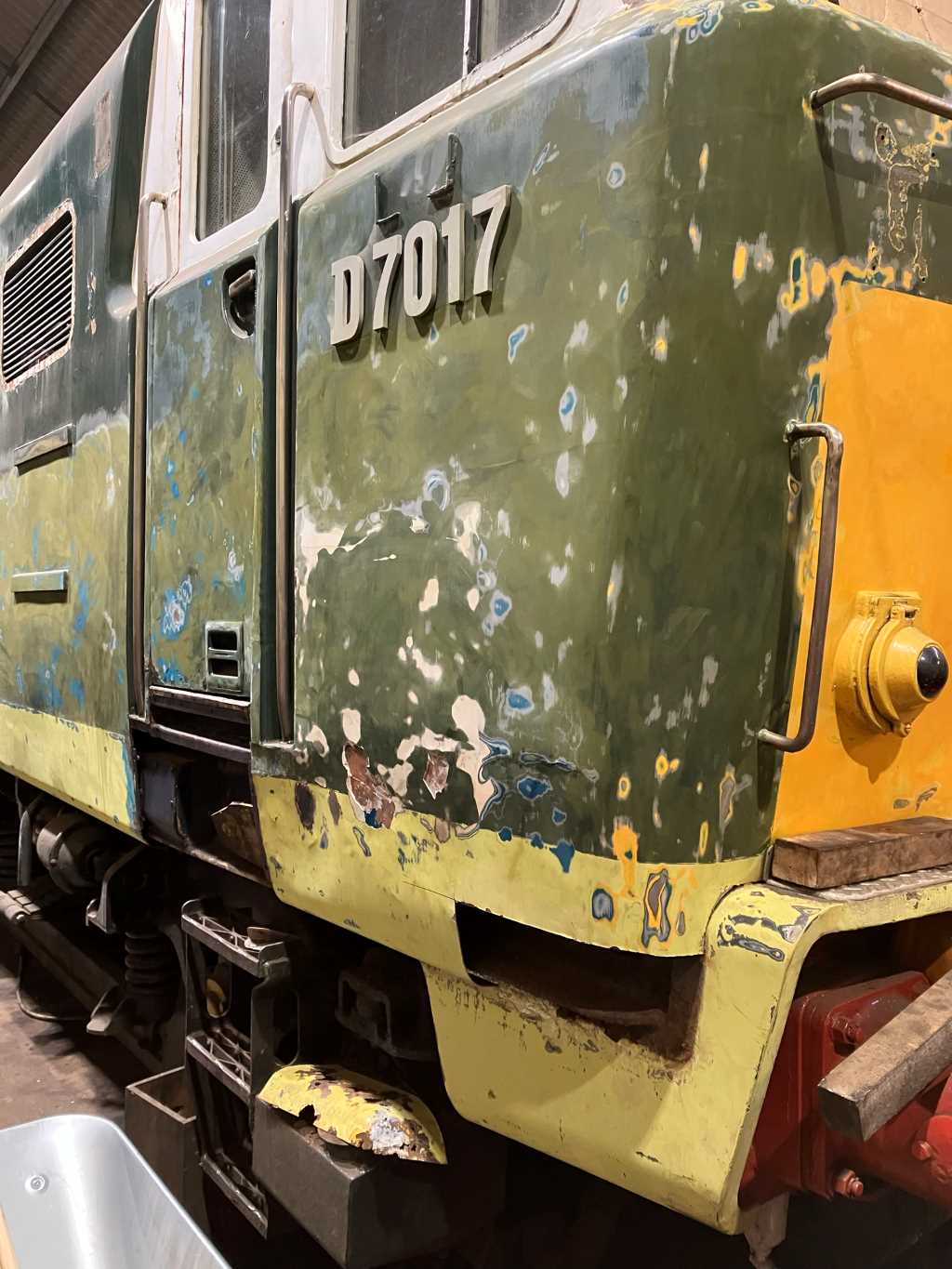
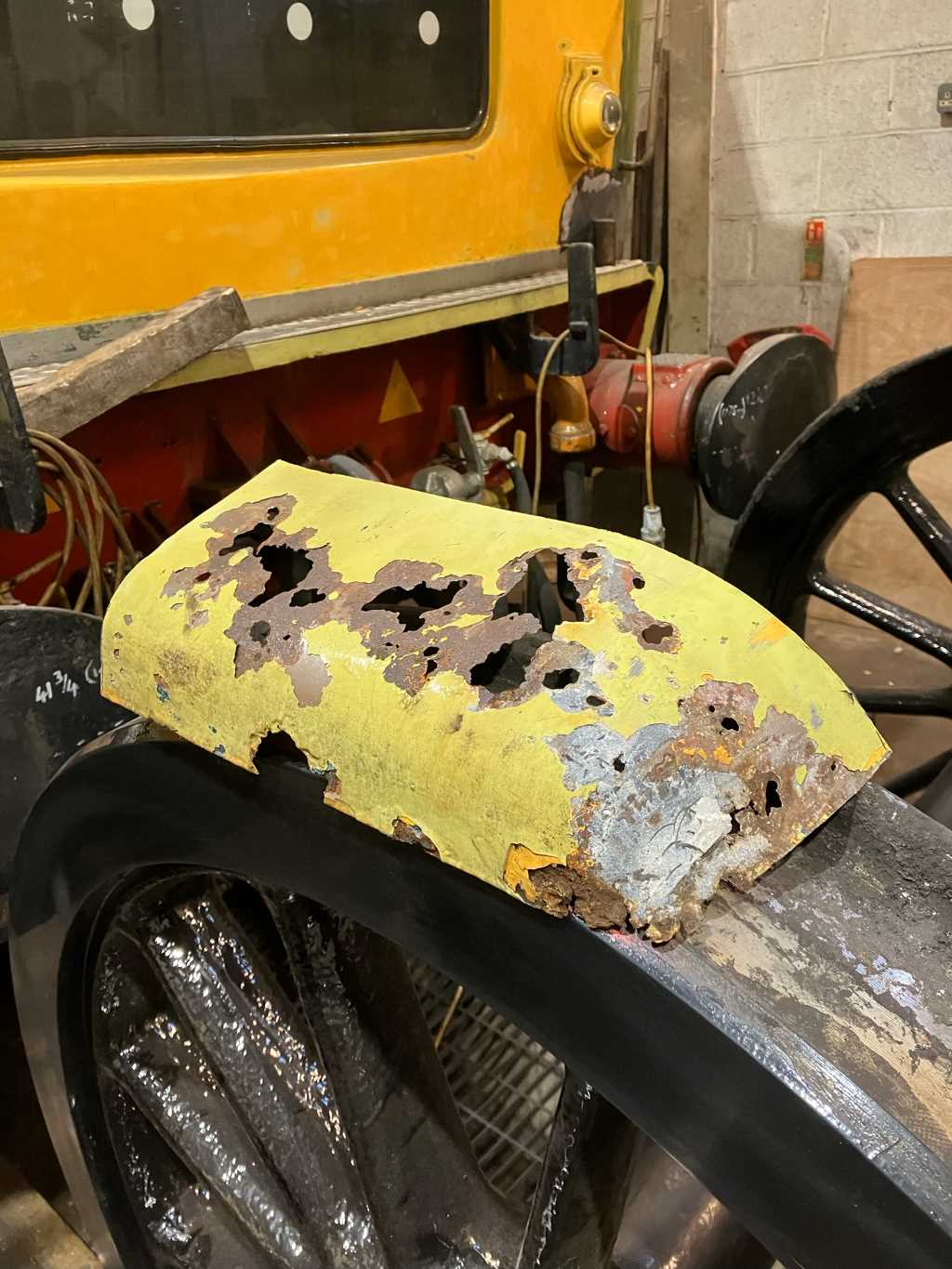
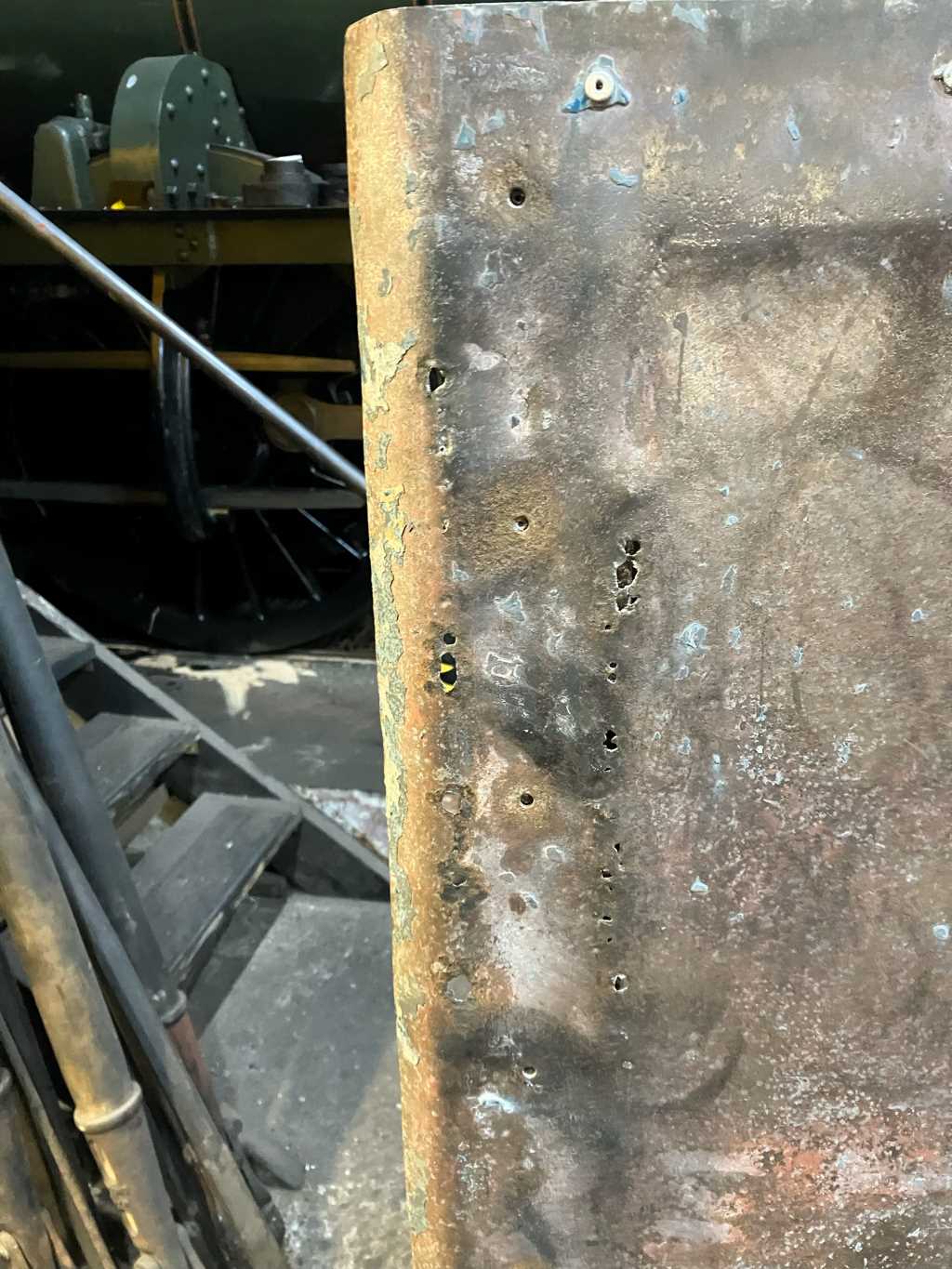
    Above – 11-Feb-25 – The lower part of the valance on the secondman’s side at the the ‘A’ end has been cut out … … and this photo shows the reason why.
    Above – 11-Feb-25 – The roof section that goes over the preheater has been needle-gunned … … which revealed some perforations !
    Above – 14-Feb-25 – new steel sheet being formed to match the curvature of the original … … and ready to be welded into position.
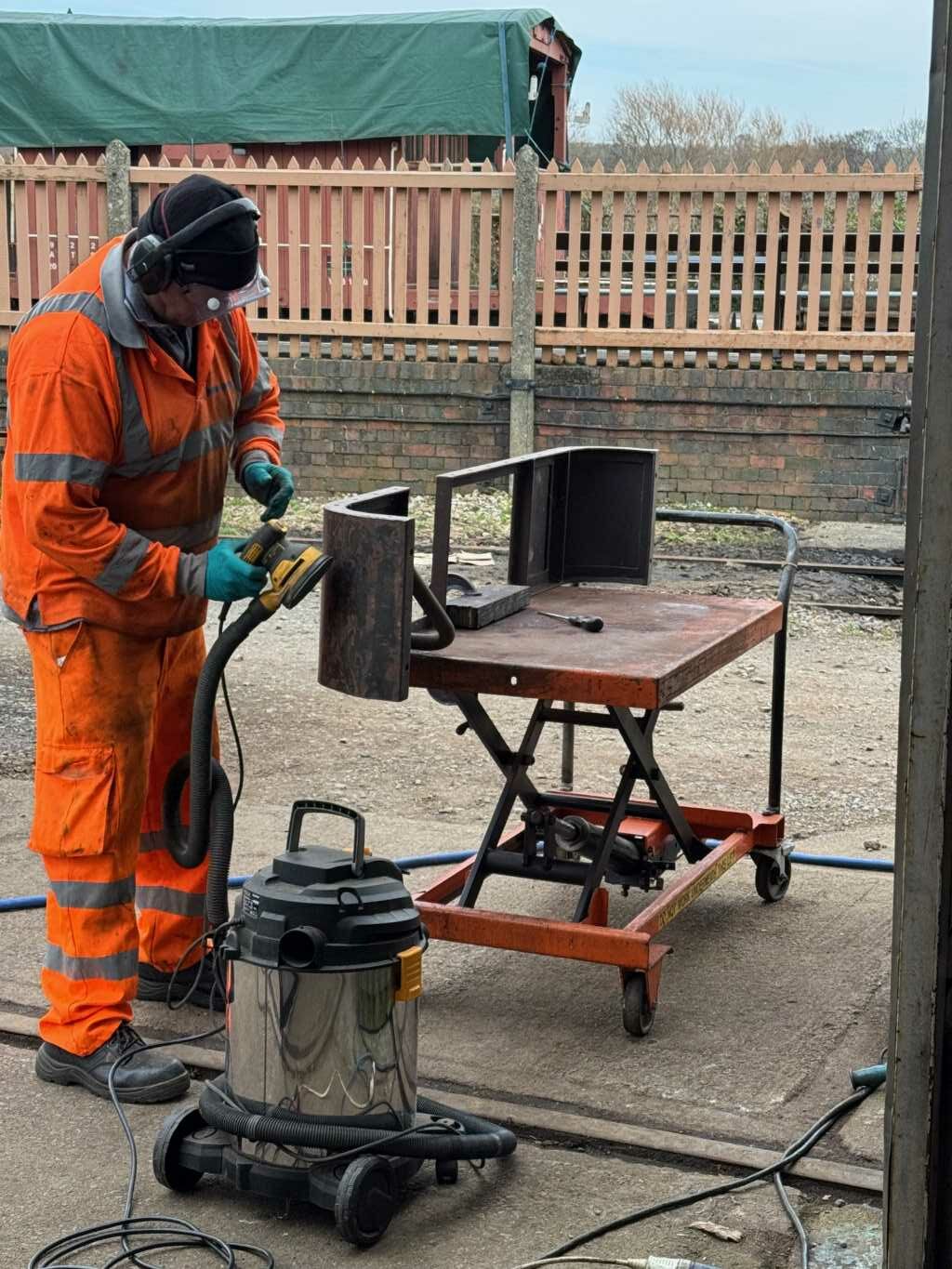
    Above – 11-Feb-25 – the cab interior roof has been sanded back and is ready for painting … … and the bulkhead is being readied for painting.


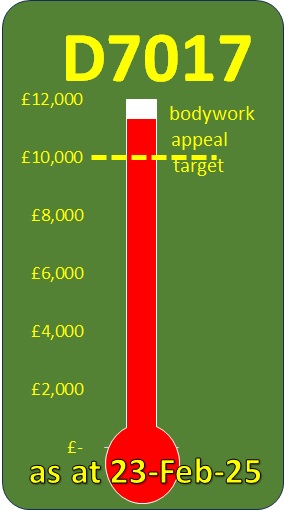
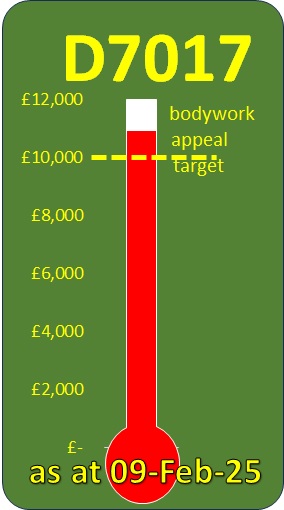
    We continue to receive donations to the D7017 bodywork overhaul fund, so a BIG THANK YOU goes out to the 67 people who have donated to this project so far, keeping it moving forward to ensure that the loco will be back in service in time for the WSR’s Summer Diesel Festival (5-7th June).
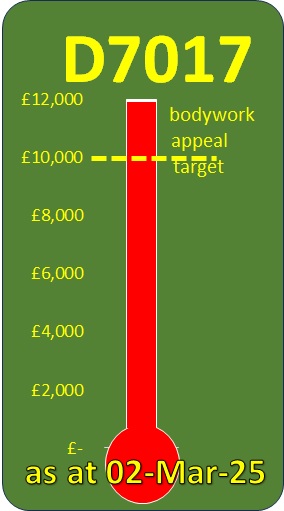
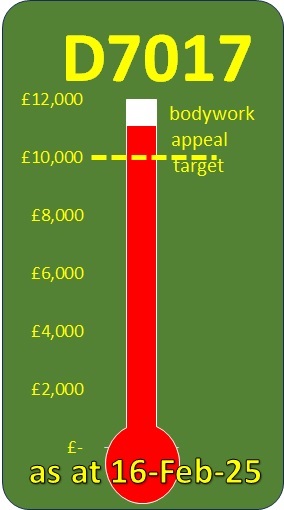
    The fundraiser for the bodywork repairs for ‘Hymek’ D7017 has been kept open with a new target of £12,000 with a total of £11,095 being raised so far.

    THANK YOU FOR YOUR FANTASTIC SUPPORT !

    The new target will cover most of the work being done on the loco, the remaining £3,000 being provided from the DEPG’s general fund. The sub-contract route was taken to make sure that the loco gets repaired during the winter and is able to take pole position in the celebration of 50 years of ‘Hymek’ preservation that will take place on 30th and 31st of August this year.

    The fund will remain open until the work is completed, to make sure that we have sufficient funding to cover any unexpected costs, and make sure that a thorough and long-lasting repair is carried out. All funds donated via this appeal will be allocated to returning D7017 to service in time for the forthcoming season.

     

    Can you help ? Click here to donate £17 to D7017 !


    If you can help with this short-term appeal, please make a donation via our website (click on the icons above or below) or by bank app or by sending a cheque to the DEPG at WillitonTHANK YOU VERY MUCH !


    WSR NEWS

    The refresher training continues with three more days of hand-on training taking place this week involving duty loco Class 33 D6575 (33048) operating between Bishops Lydeard and Norton Fitzwarren. This does deplete the available hours for volunteering at Williton, but it is essential to ensure safe and efficient operation of the railway, so it takes first priority.


    The WSR have published their running calendar for 2025 on their website and social media channels, and we have updated our DIESEL RUNNING DATES page including provisional loco allocations, some of which are subject to change to align with the availability of the locos and the crews. As the information becomes more refined, we will update our page and send out a DIESELGEN bulletin with the clarification. Click here or on the banner below to view the provisional allocations:

    Click here or on the image below to visit the WSR’s timetable page:
     

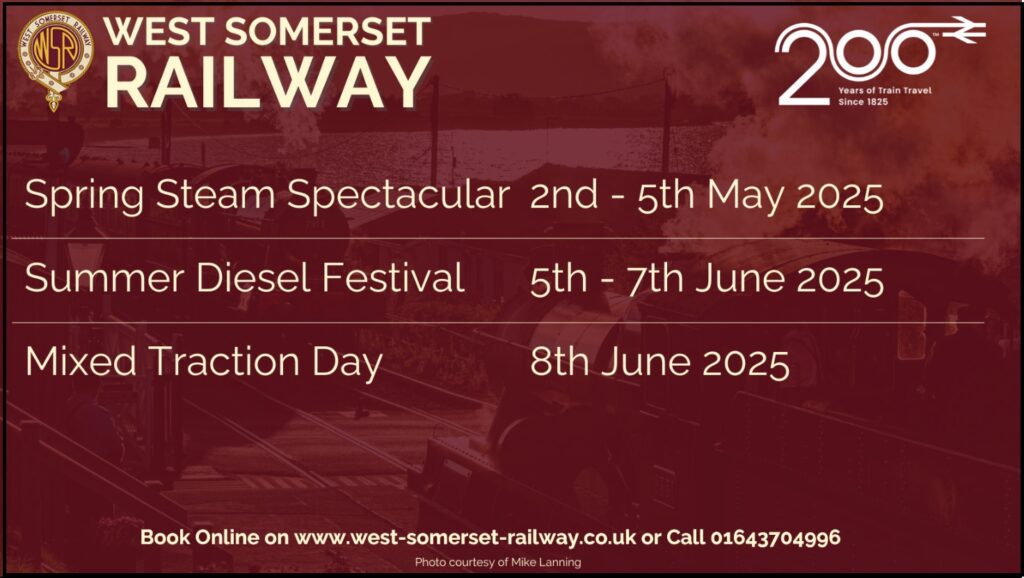
    The WSR’s SUMMER DIESEL FESTIVAL has been confirmed as being Thursday 5th through Saturday 7th with a Mixed Traction Day  on Sunday 8th of June 2025.
     

    Click here to join the DEPG

    Click here to go to our DIESEL RUNNING DATES page

    Click here to go to our ONLINE SHOP

    Thank you very much for your support !


    LOCO NEWS:

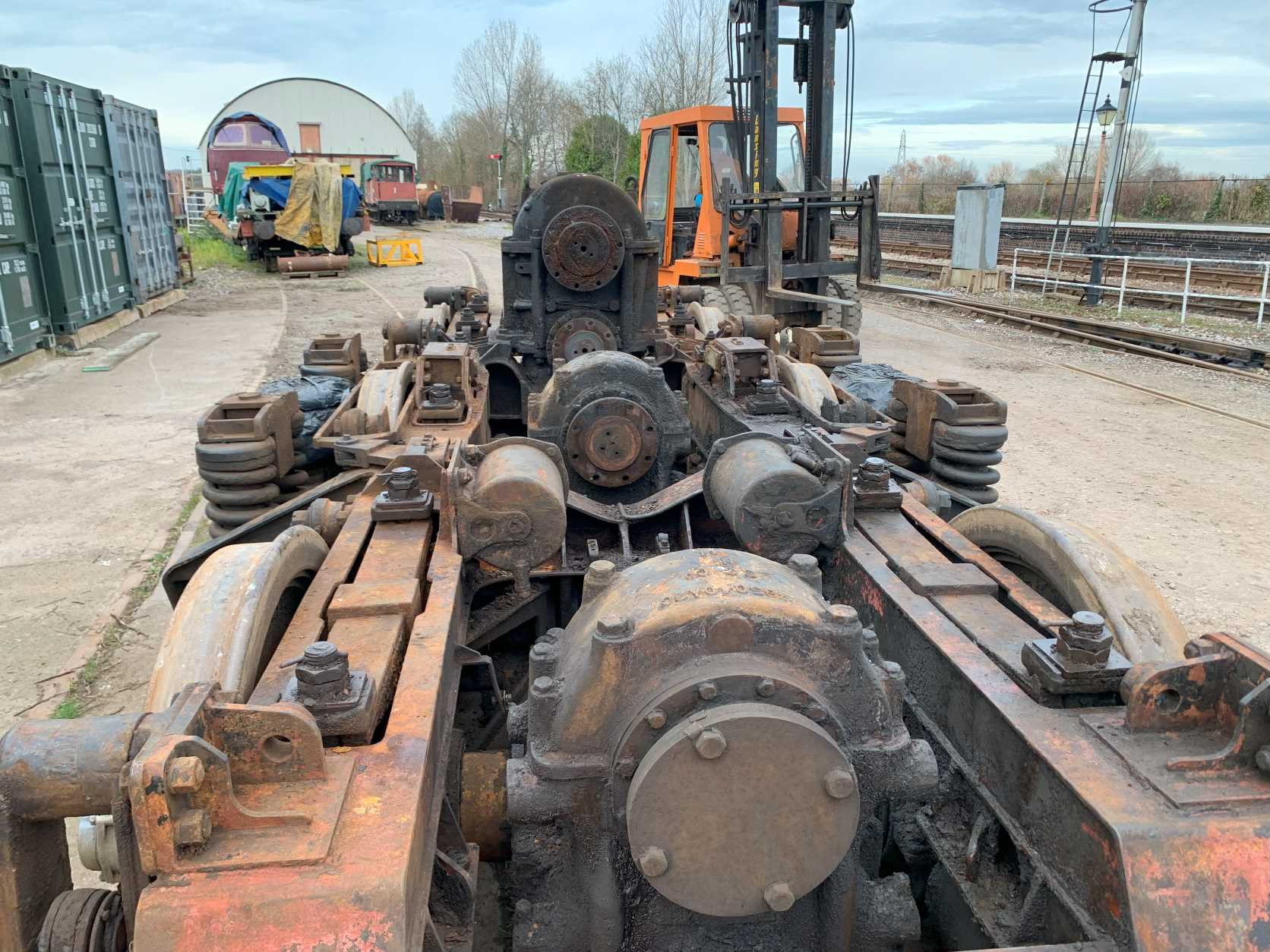
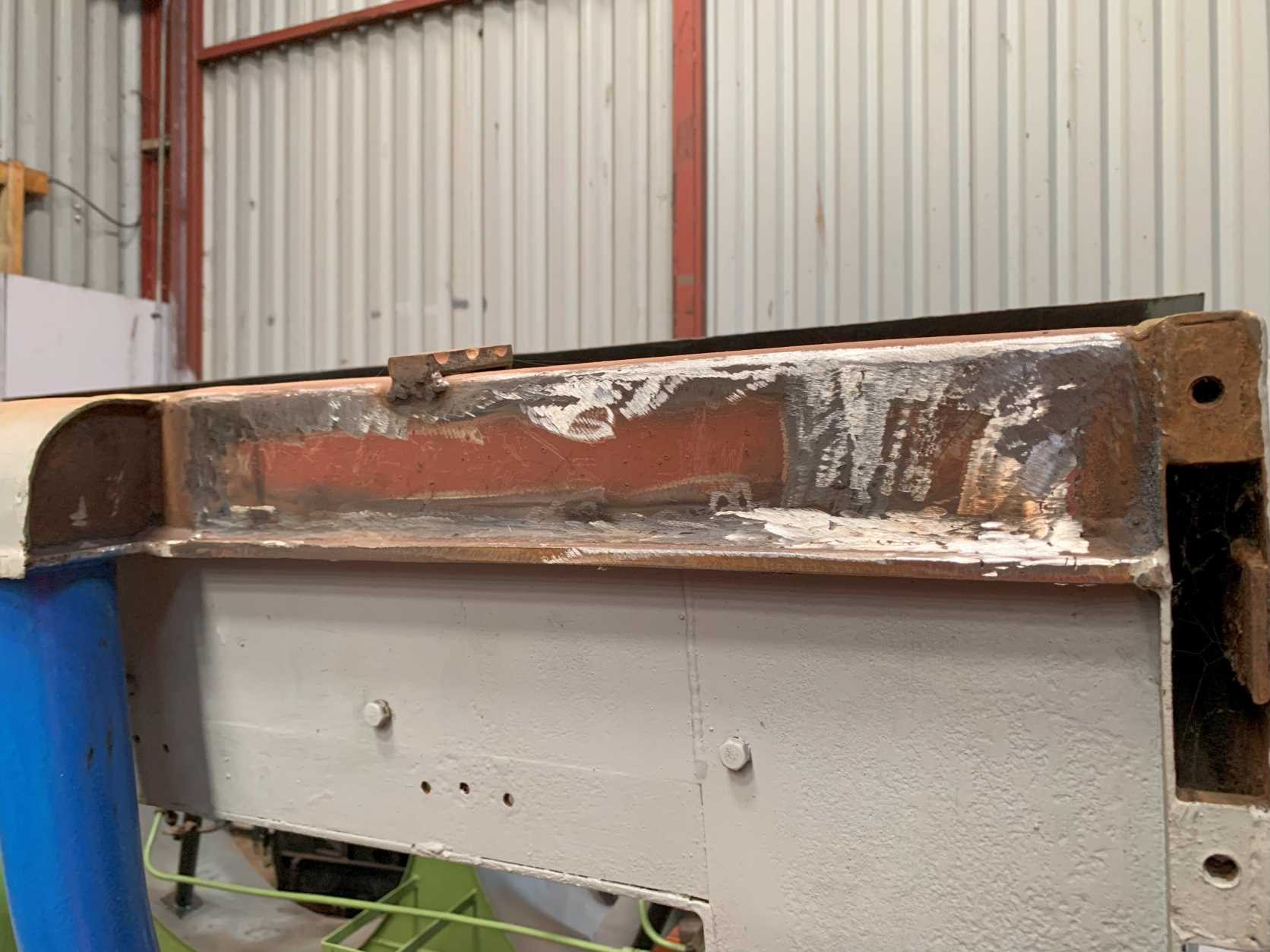
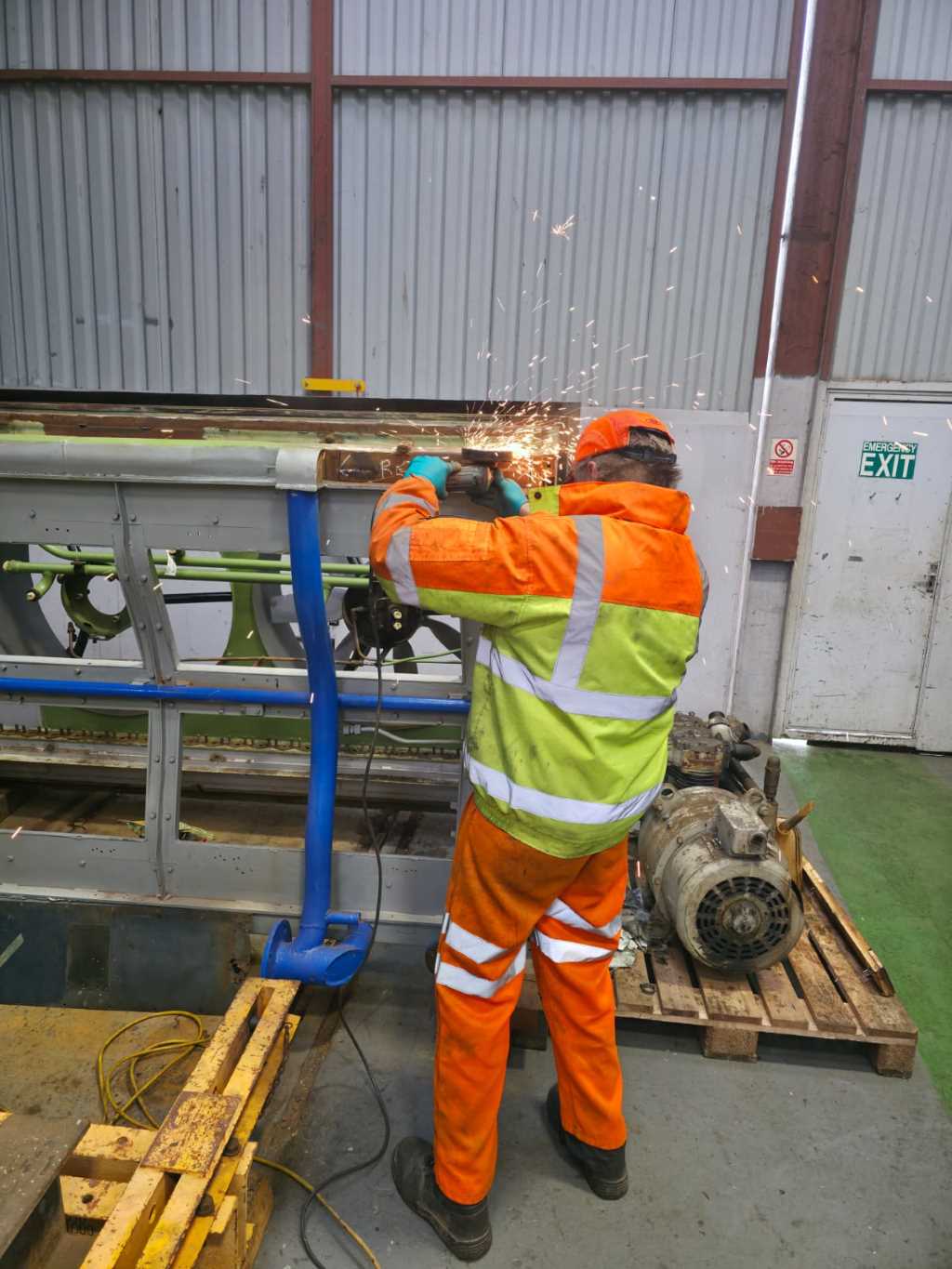
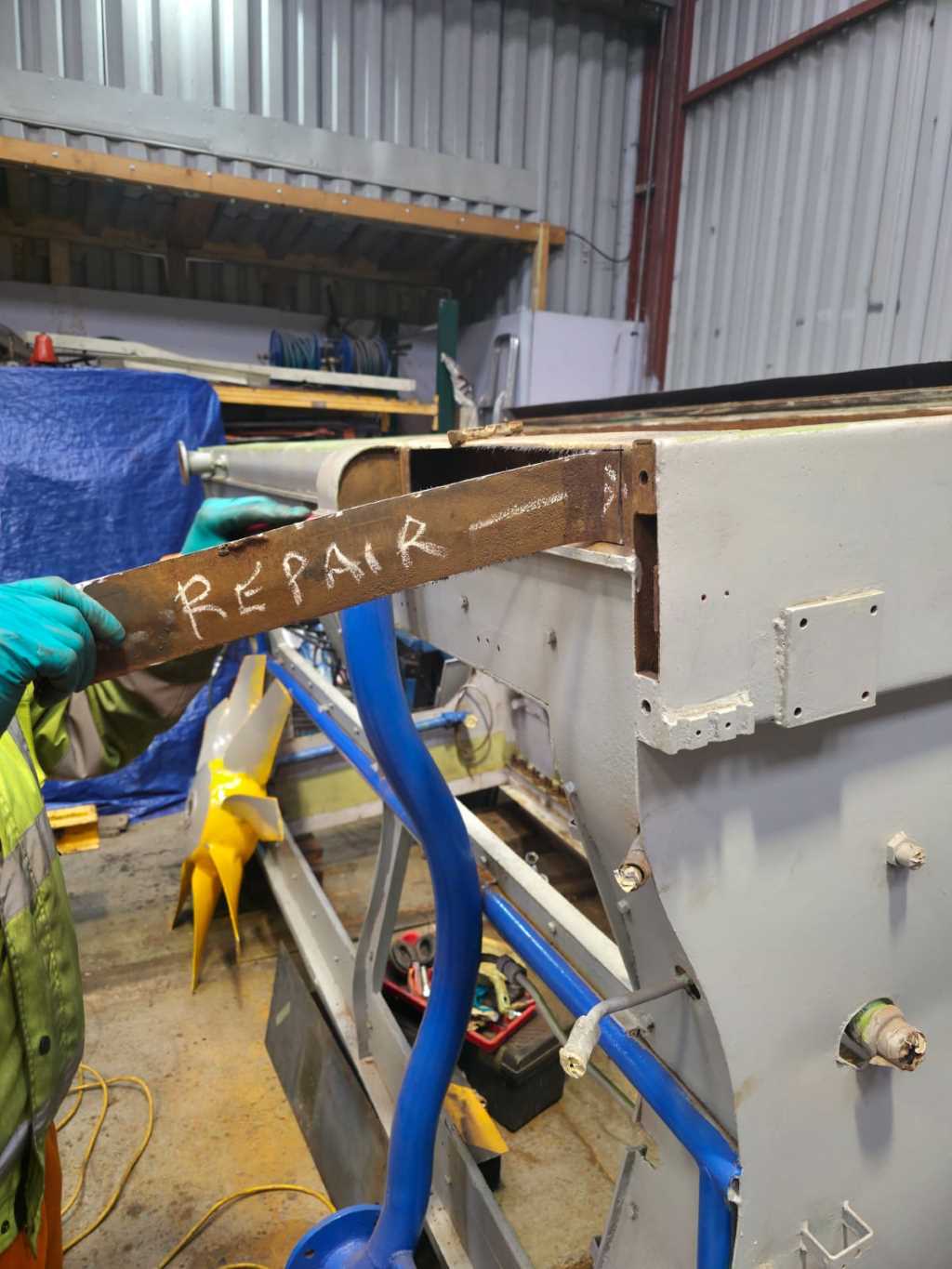
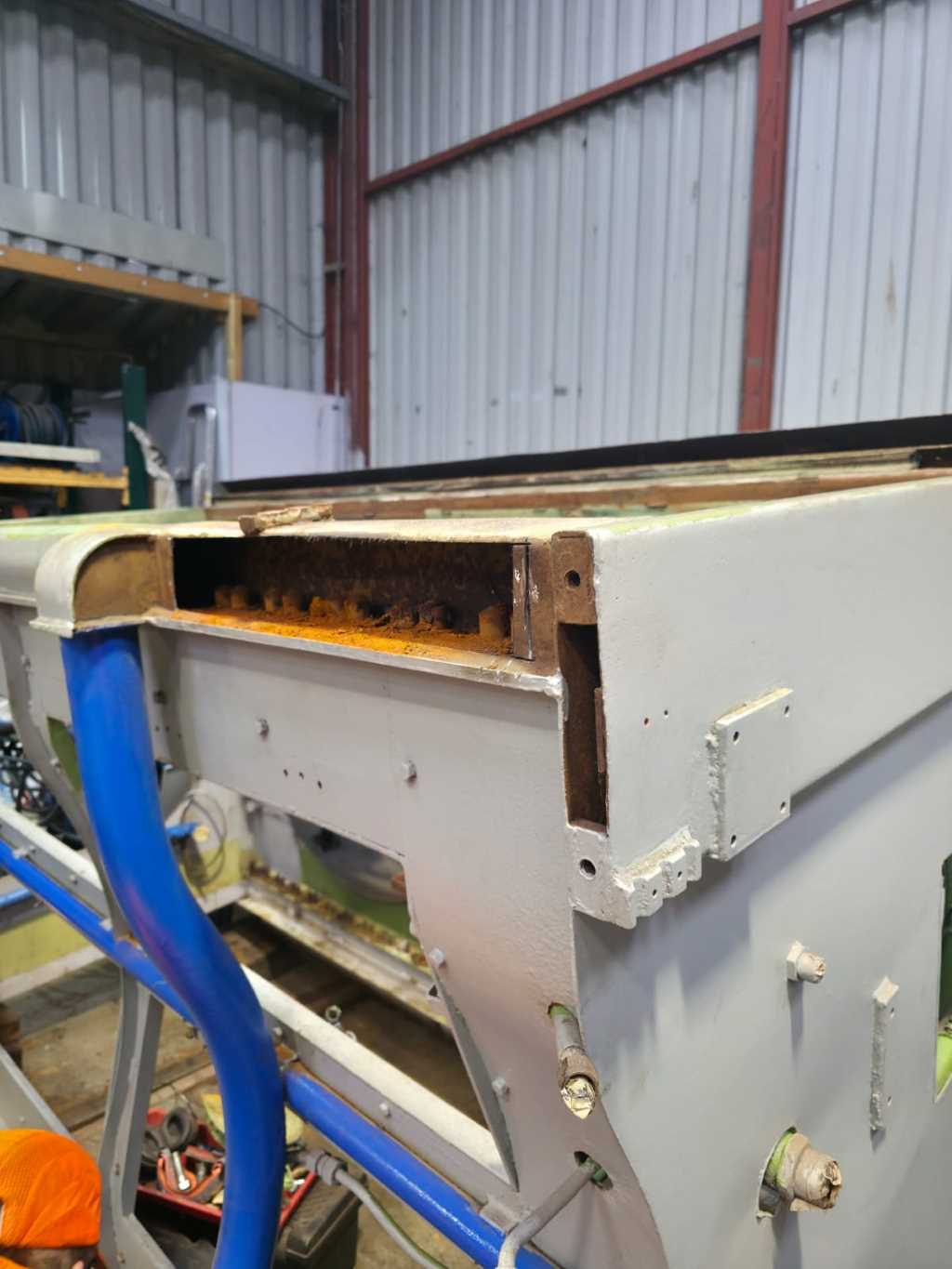
    Class 52 D1010 ‘WESTERN CAMPAIGNER’ – the task of listing and evaluating the many component parts of the ‘B’ bogie is ongoing, the objective being to produce a ‘shopping list’ of parts that we can place on order while we turn our attention to the ‘A’ bogie (which is also likely to need the same or similar, so we will order two sets). The ‘A’ cooler group received attention from Tony, with one of several corroded areas being cut out and prepared for new metal to be welded in (photos taken at Williton on Saturday 15th February 2025 and provided by Leroy Ford © CC BY-NC 3.0). Progress on other parts of the loco has slowed while volunteers are undergoing training, but we do have several new volunteers who are now familiar with the work required and will be back on the case very soon. 

    Step 1 – identify the area requiring repair … Step 2 – cut into the area requiring repair …
    Step 3 – remove the corroded steel … Step 4 – in progress – prepare the area for the new metal.


    Our appeals for MORE VOLUNTEERS are working but WE STILL NEED MORE HELP to get this huge loco back on the rails, so please get in touch by using our CONTACT FORM if you are able to join the team.


    As mentioned before, apologies to those D1010 sponsors who have yet to receive the photos and certificates for the patches that they have sponsored. The bitterly cold and/or wet weather is preventing us from spending outdoor time on the engraving, so we will need to leave this work a little longer, at least until the temperature is back in (positive) double digits.

    Rest assured that every sponsor will receive their certificate and the details of where to find their sponsored patch. We will be making a further push for funds soon, because we have some big ticket items for refurbishment, including the remaining cardan shafts and 32 springs from the suspension system.

    MANY THANKS to all who have sponsored and supported the RESTORATION of D1010 !


    Class 09 D4107 (09019) – contrary to what was reported last week, only ONE of the two Oleo hydraulic buffers have been overhauled by the specialist subcontractor, because the other was corroded and beyond repair. This gives us a problem because Oleo buffers for Class 08/09 are rare indeed. We might have to fit sprung buffers, the same as at the cab end of the loco and the same as when the loco first entered service in 1961.

    Strange question, but worth asking, do you happen to have a spare Oleo buffer for a Class 08/09 ? If yes, please use our CONTACT FORM to get in touch with us.

    Otherwise, the loco is making good progress towards her return to service, which is expected to be in early March, buffers permitting !


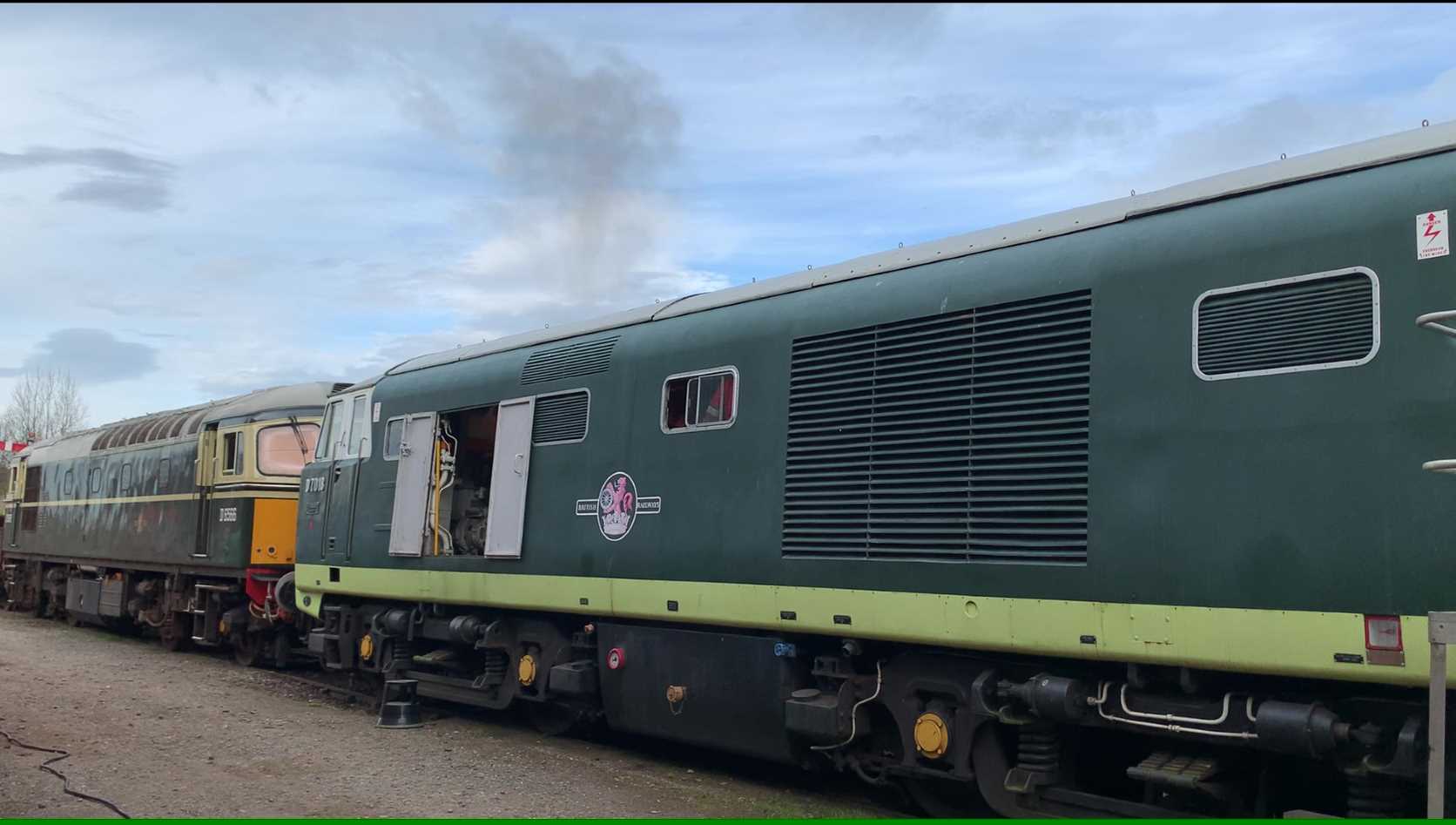
    Class 33 D6566 (33 048) – this loco will undergo some planned maintenance while resident at Williton.


    Class 33 D6575 (33 057) – this loco is the Duty Loco and is based at Bishops Lydeard, which is handy because she will be in use again on 21/22/23 February between Bishops Lydeard and Norton Fitzwarren for crew training purposes.


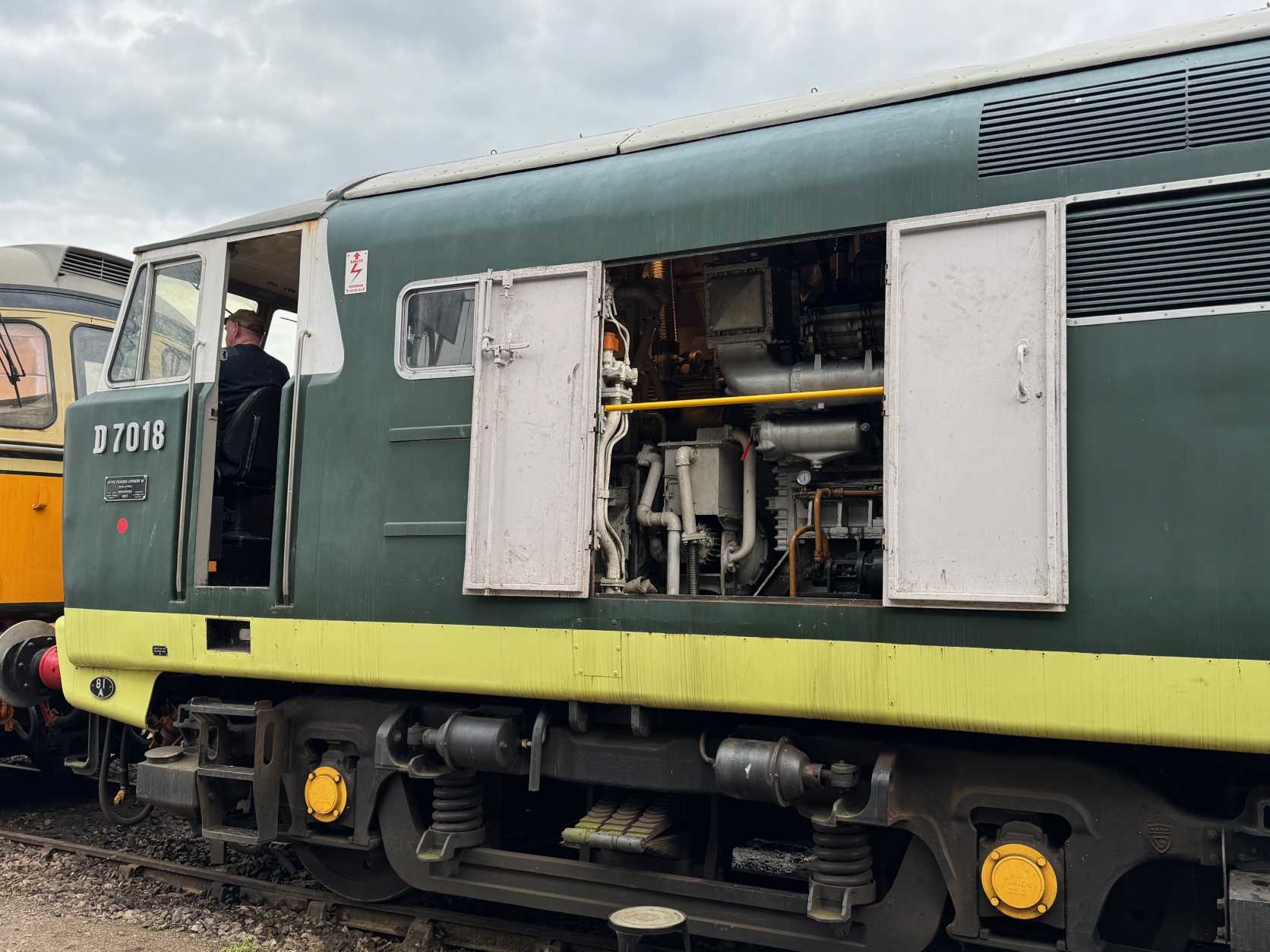
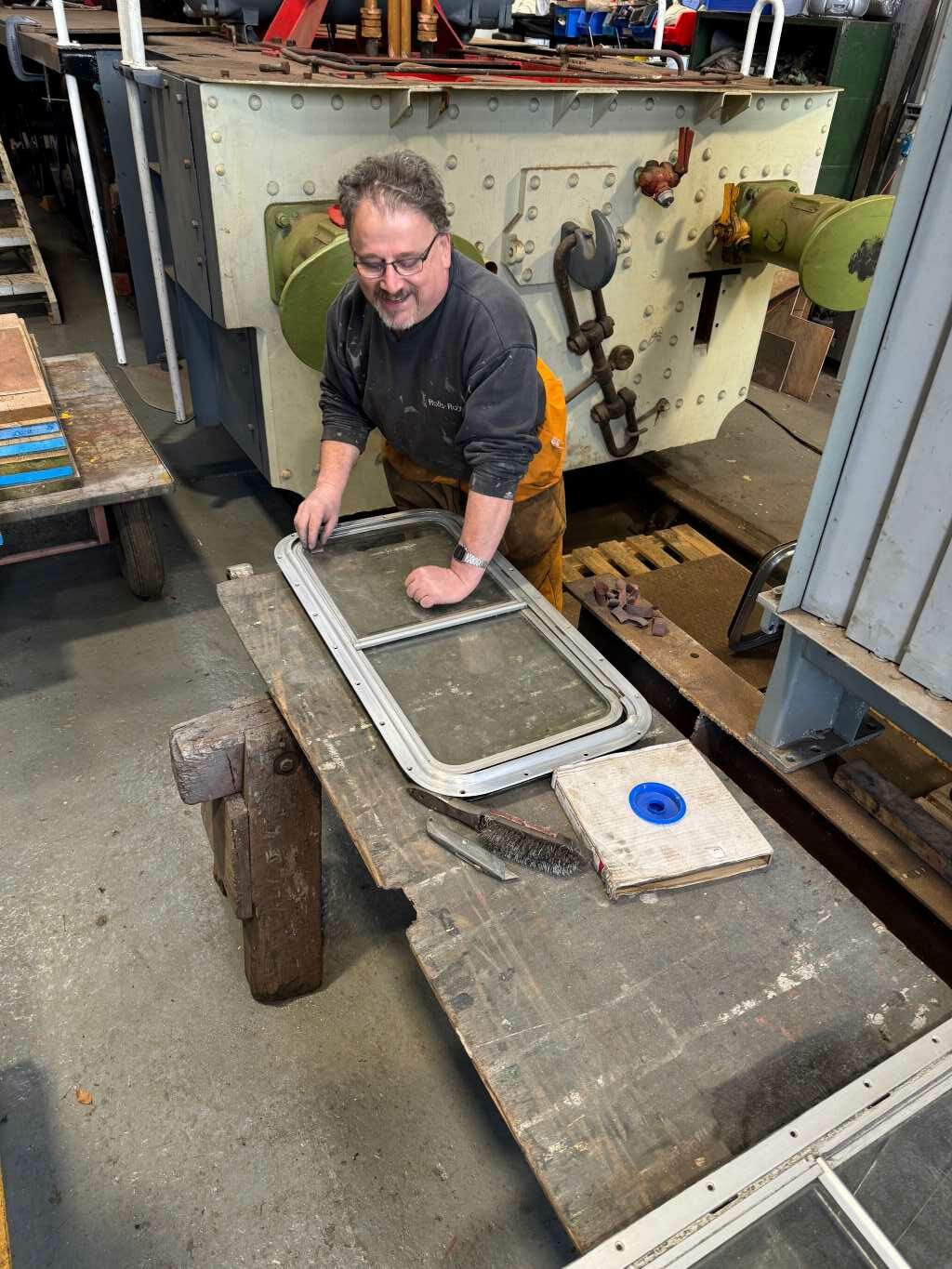
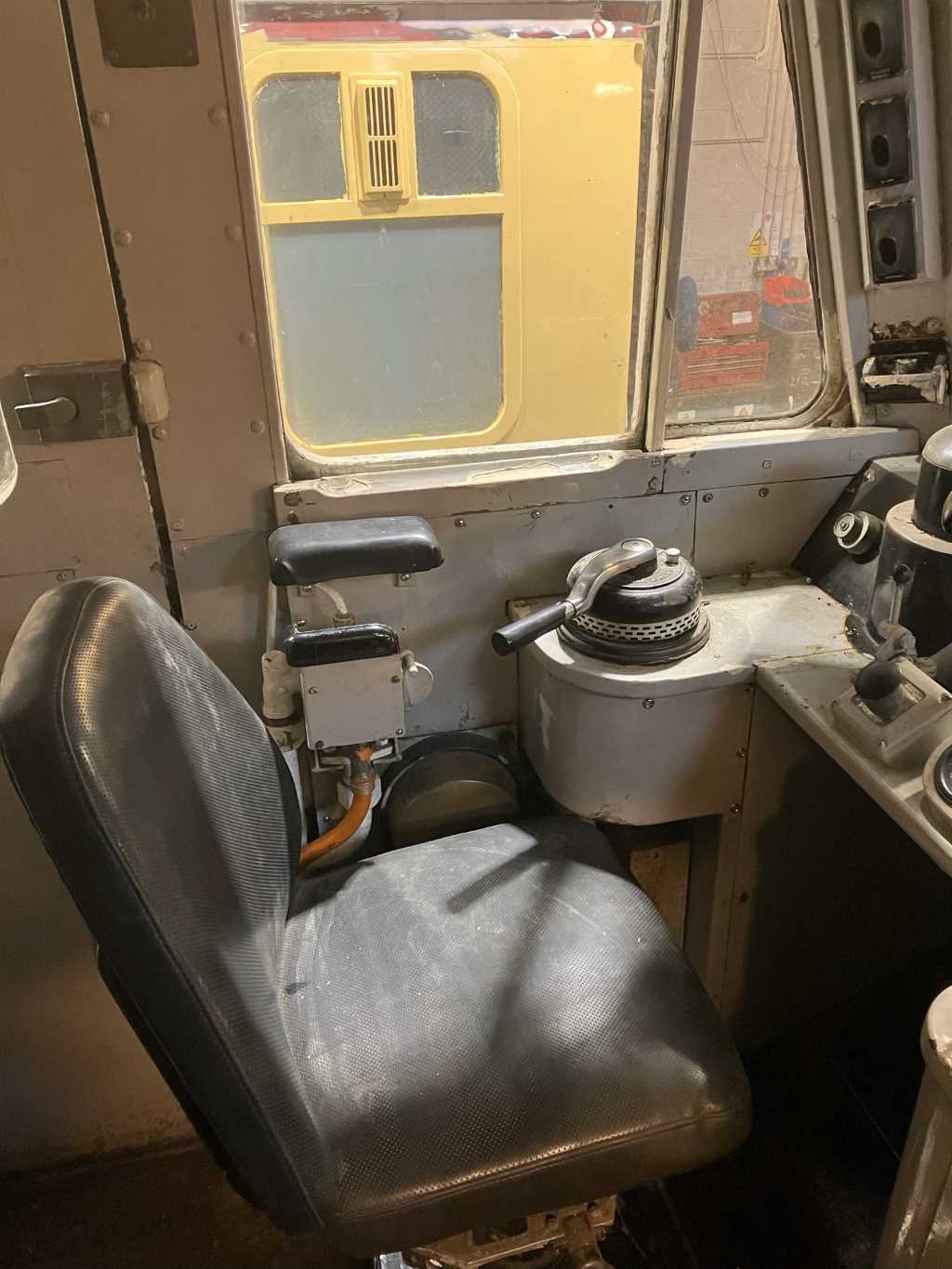
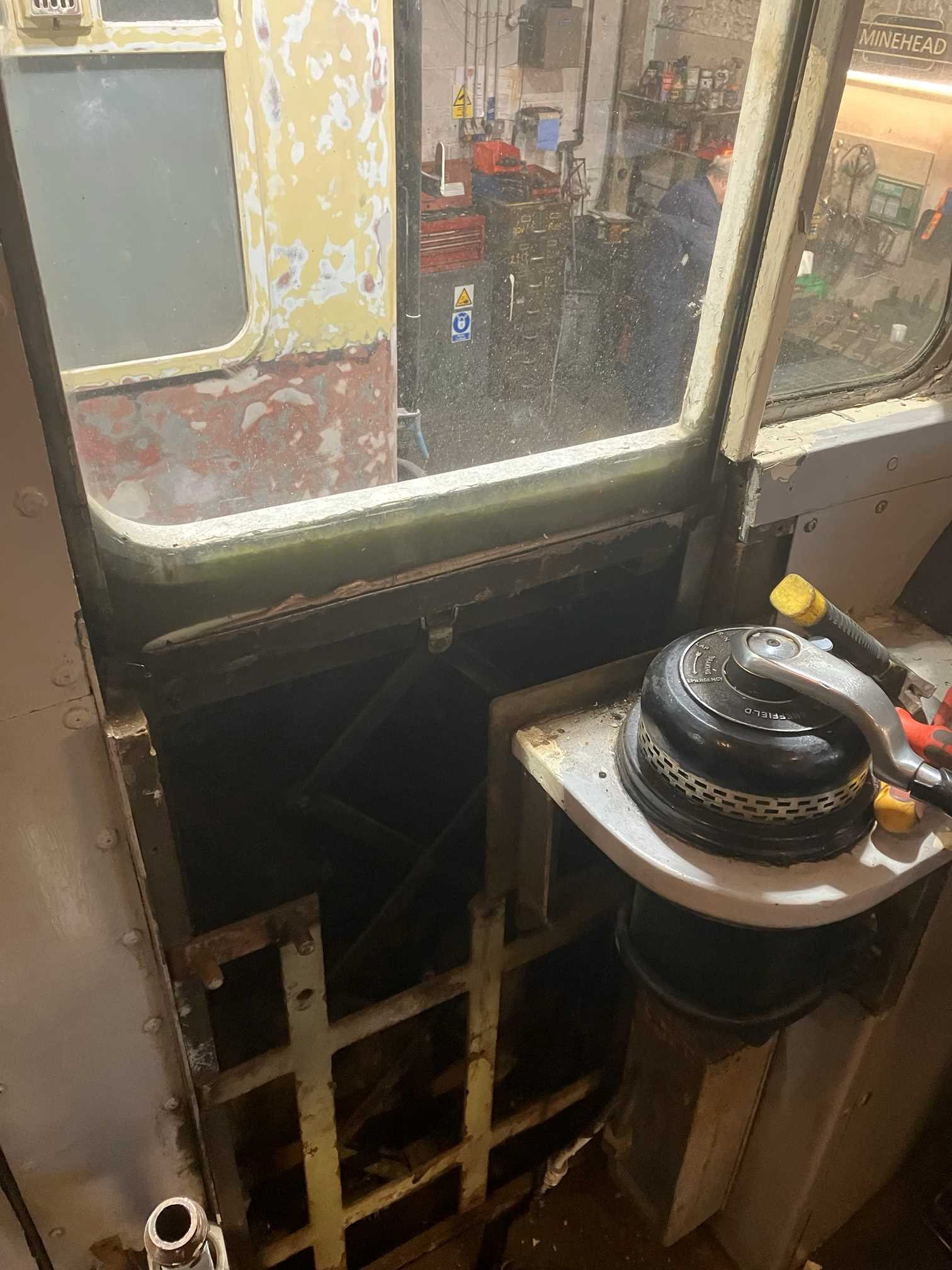
    Class 35 ‘Hymek’ D7017 – in addition to the bodywork overhaul that is taking place in the loco shed at Minehead, volunteer driver and loco manager Neil has sorted out the issue with the driver’s droplight (side) window after finding that corrosion had caused one of the channels to swell and jam the glass. The former BR(WR) Automatic Train Control (ATC) equipment had to be removed from the cab side wall to expose the window mechanism, but repairs have now been completed and the ATC equipment put back in place, so this job can be deleted from the list. Thank you Neil for completing this task !

    D7017 – the driver’s droplight window has received attention and is now working properly again. Pictured at Minehead on Saturday 15th February 2025 by Neil McCannon © CC BY-NC 3.0


    Class 35 ‘Hymek’ D7018 – this loco is getting closer to her return to service in this, the 50th year of ‘Hymek’ preservation. This loco was the last of the Class to be switched off, being withdrawn from service at Old Oak Common on 16th March, 1975. For more details, get a copy of our booklet ‘HYMEK D7018’ by clicking on this link.

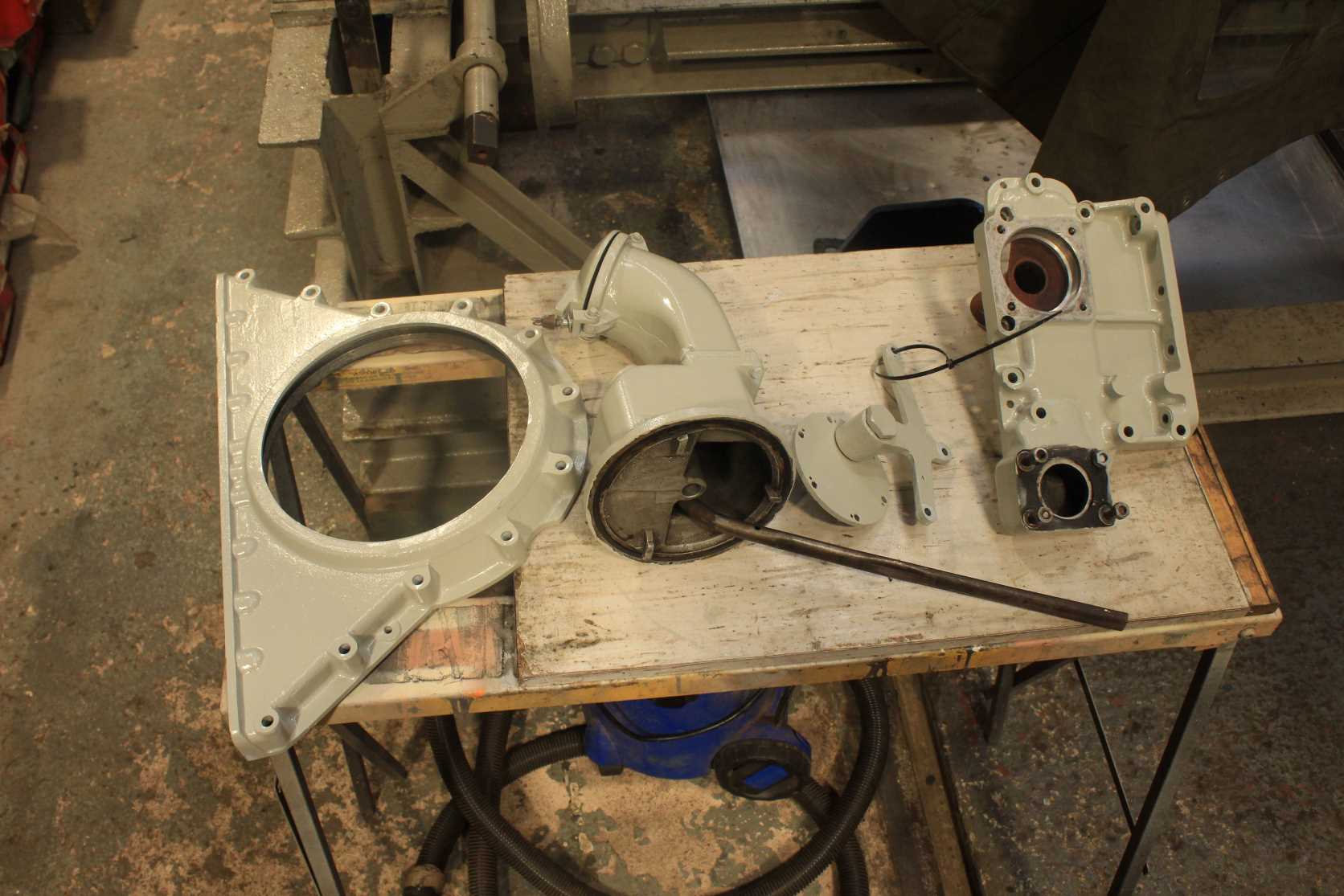
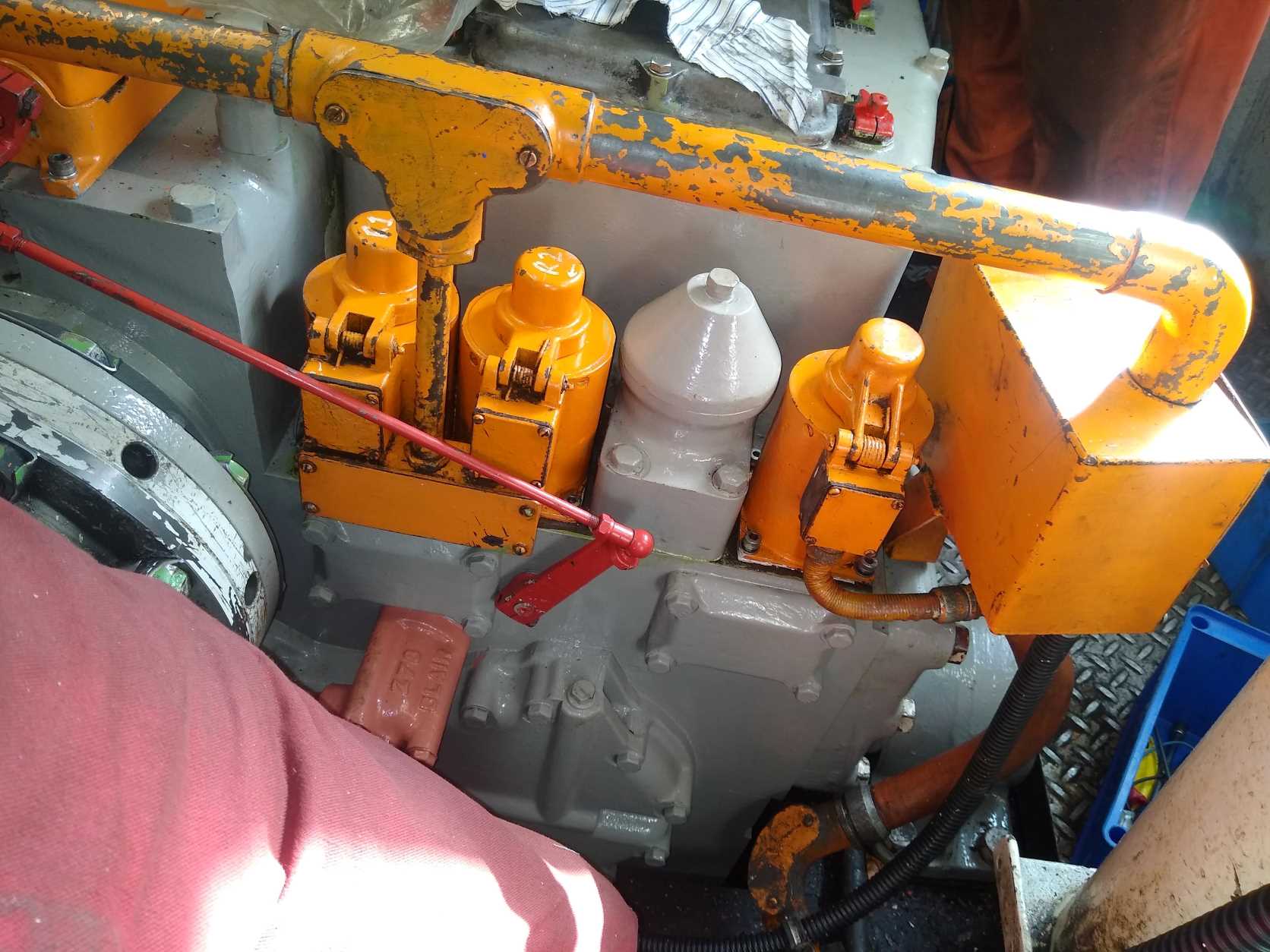
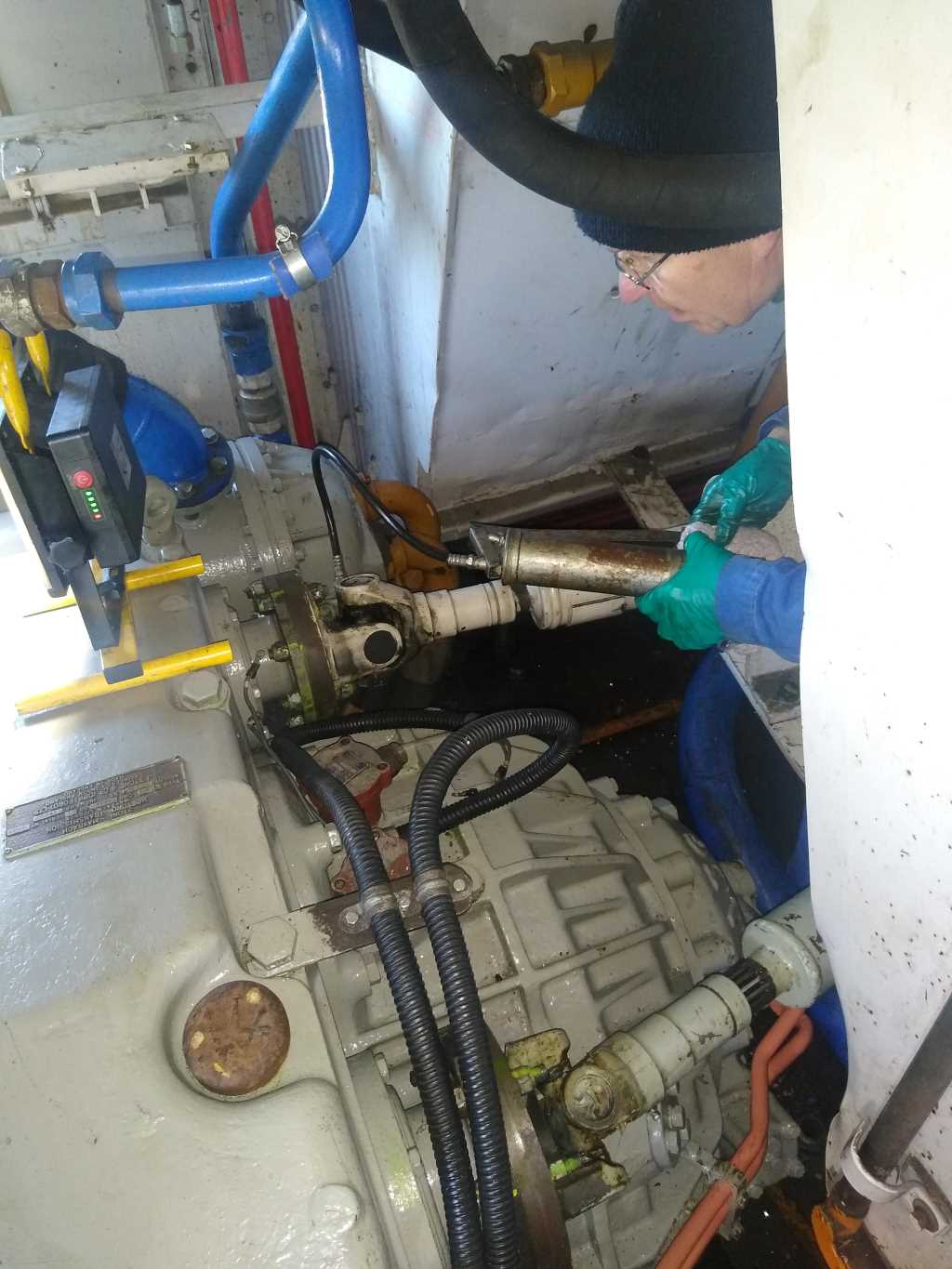
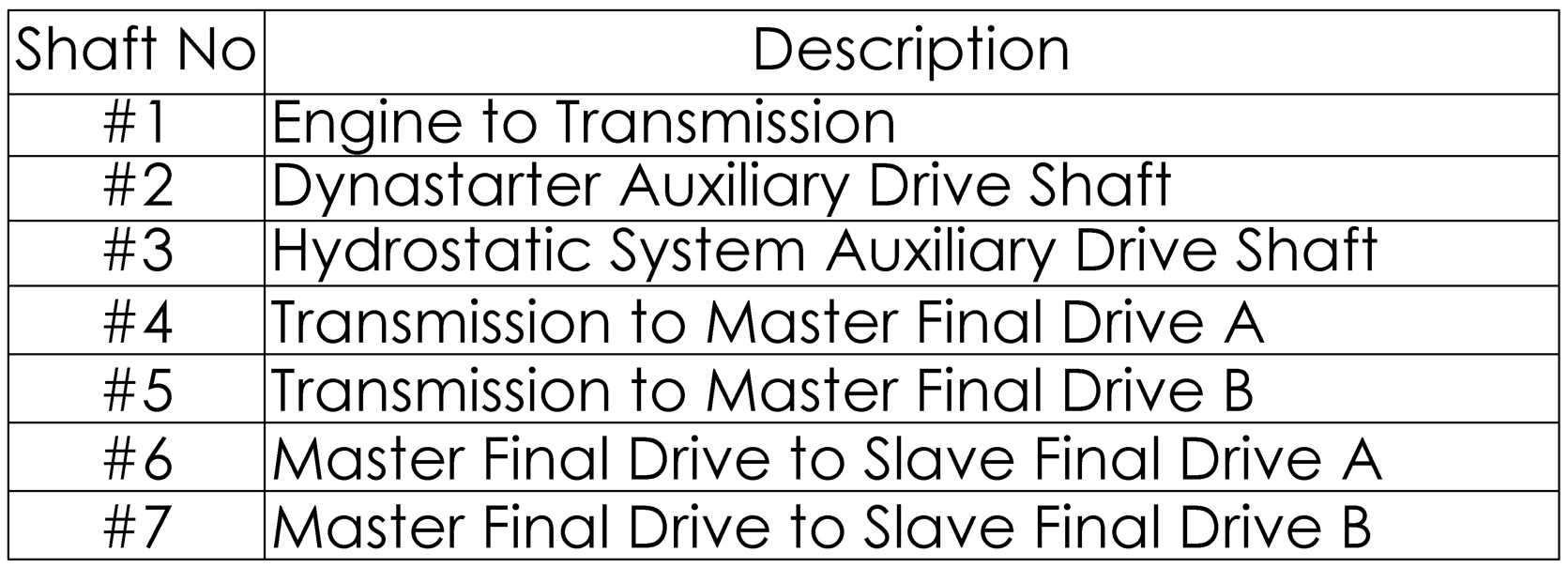
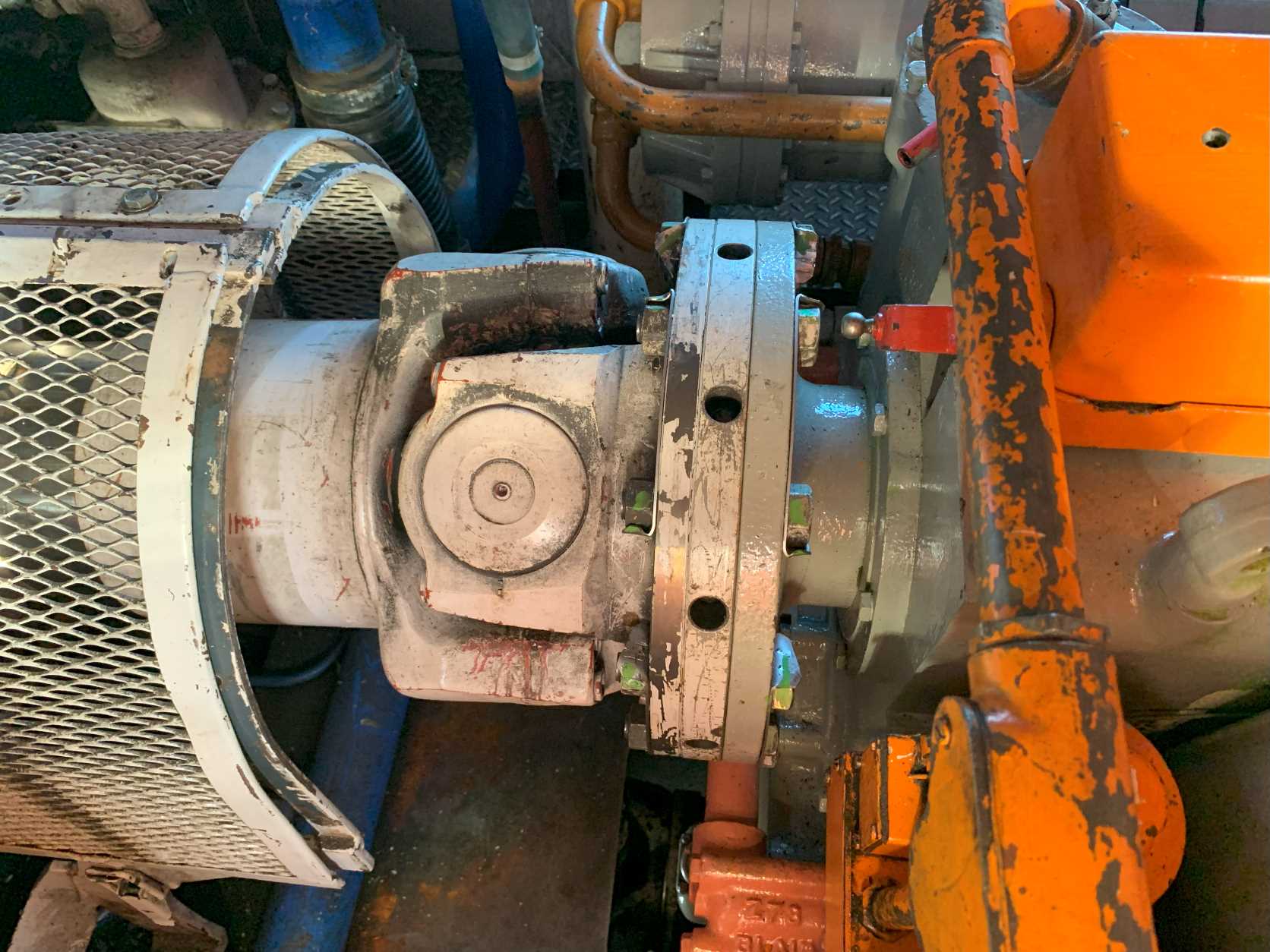
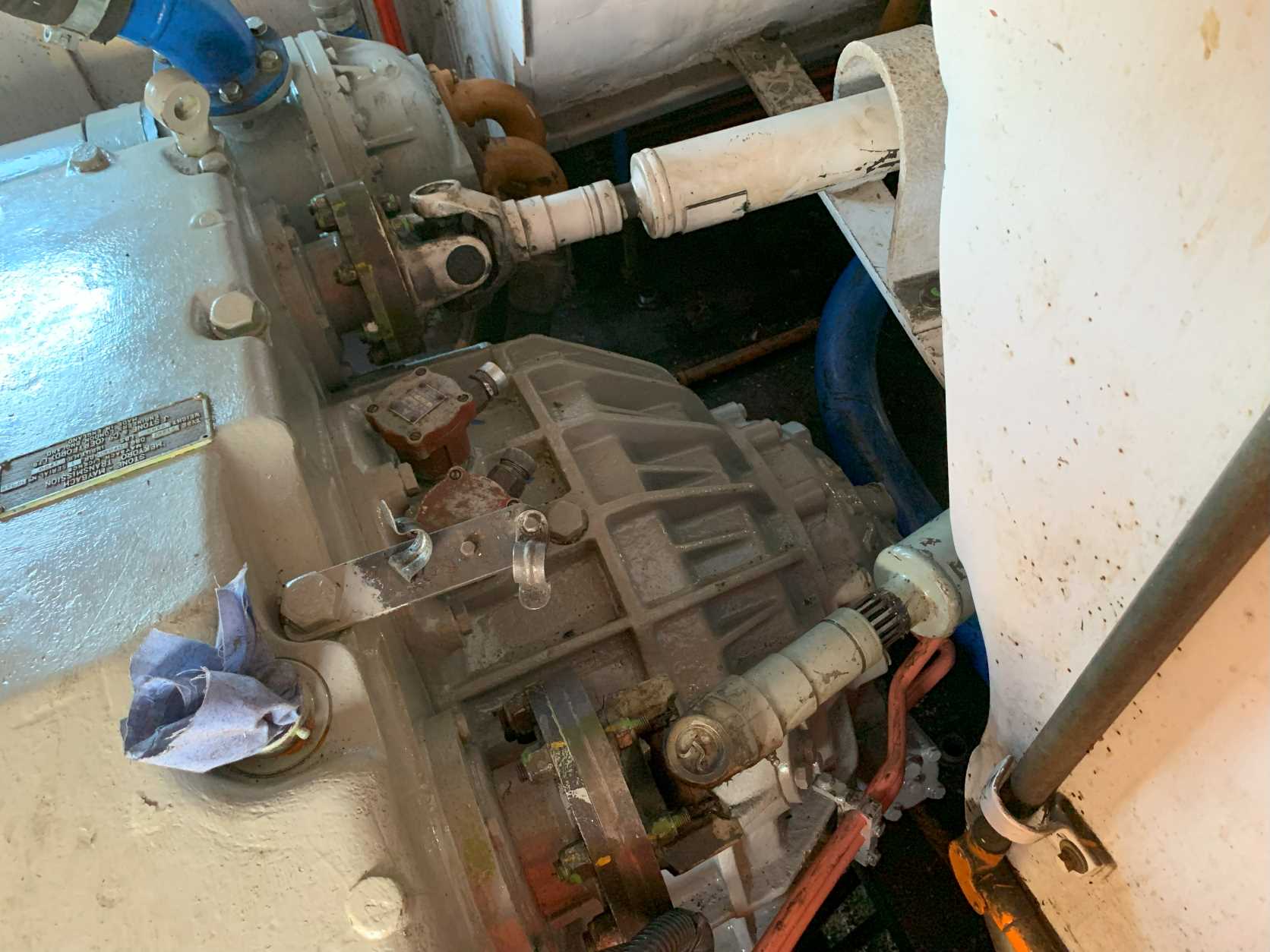
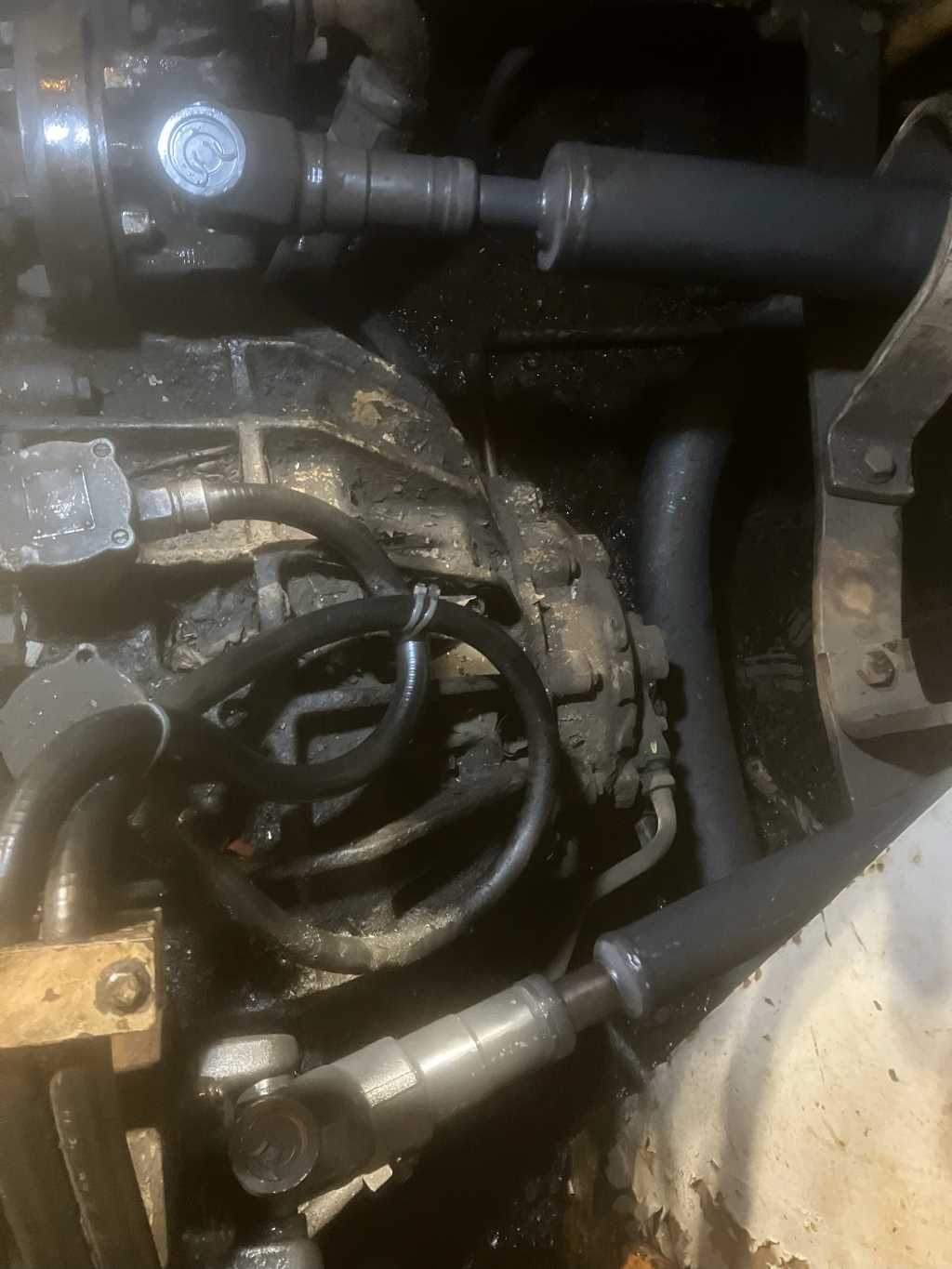
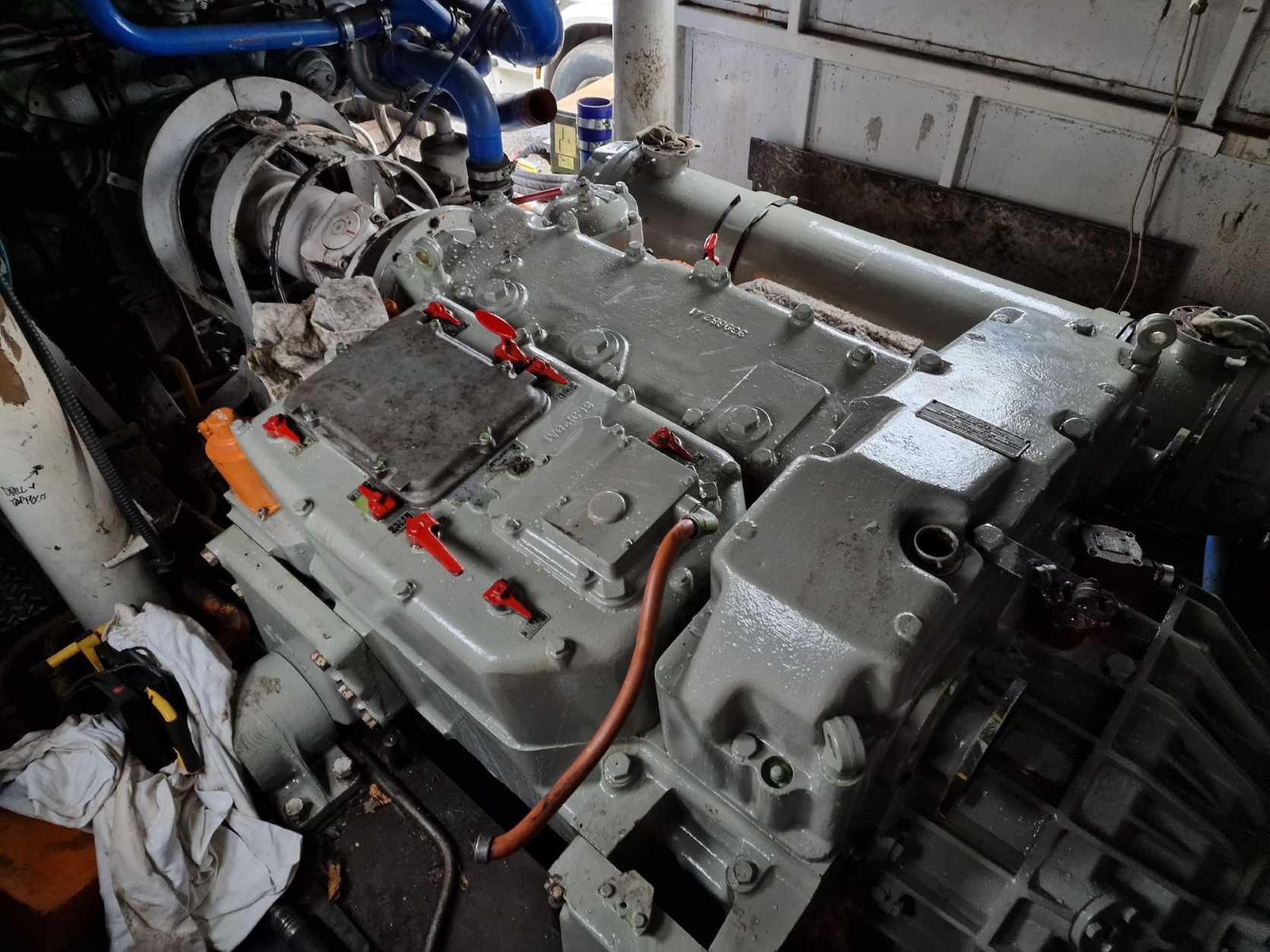
    The transmission has now been put back in position inside the loco but there is still plenty of work to do before the engine can be started. The cardan shafts need to be attached (five in total), the cooling system needs to be connected and filled, the electrical connections need to be re-made and tested. Then, before starting the engine, a massive 290 litres (64 gallons) of oil needs to be pumped in to the transmission!

    A test schedule is being drawn up and all of the necessary risk mitigations will be put in place prior to the big moment – the pressing of the START button in approximately two weeks from now. There will then be a period of static testing and assessment before any test running is contemplated. This is a step-by-step process and there are no short cuts.

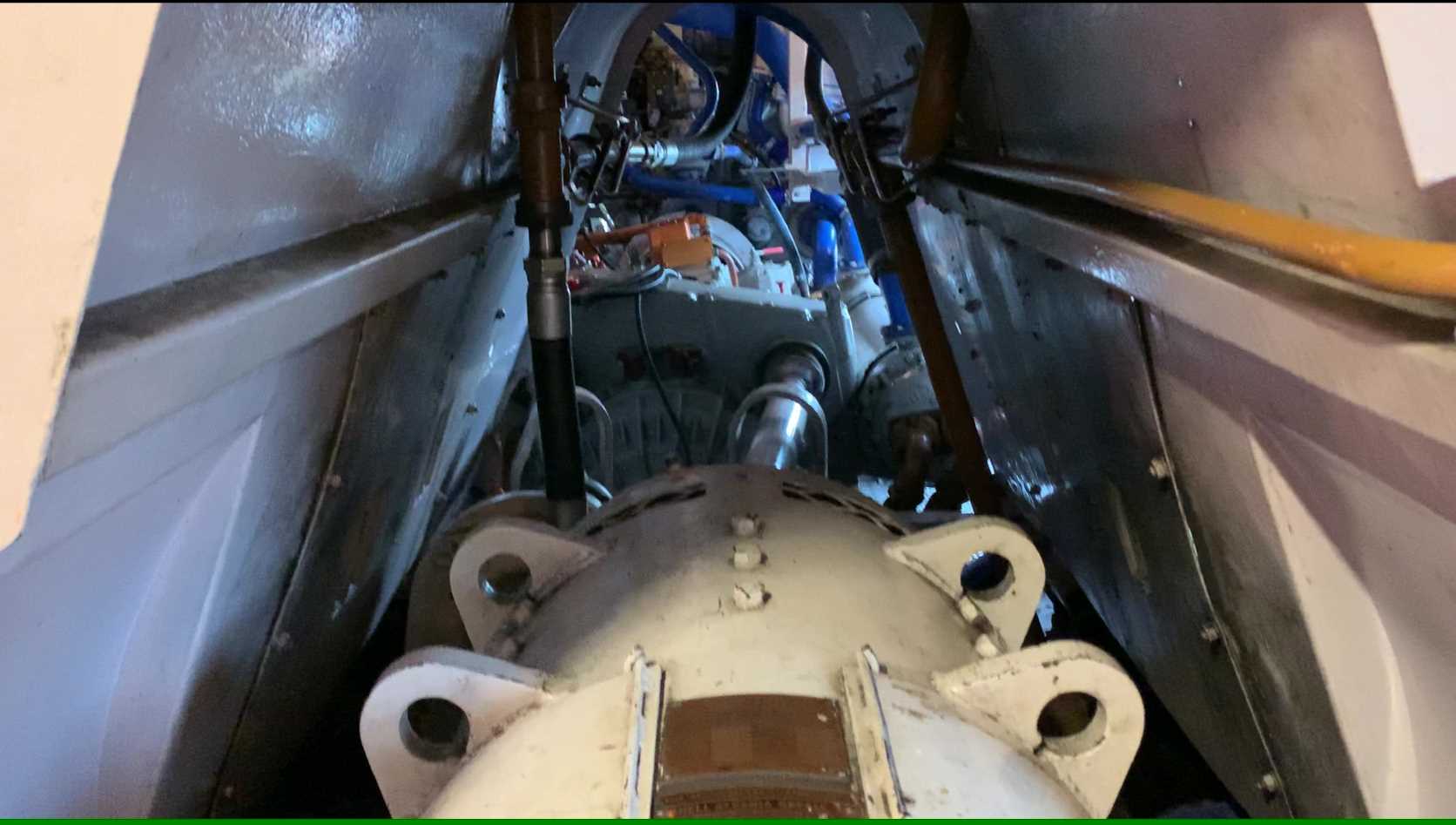
    D7018 – the repaired transmission needs to be coupled up to the five cardan shafts (engine, dynastarter, Serck pump, bogie A and bogie B) and needs to be re-connected to the cooling system and electrical system of the loco. Pictured at Williton on Tuesday 11th February 2025 by Colin Foxhall © CC BY-NC 3.0


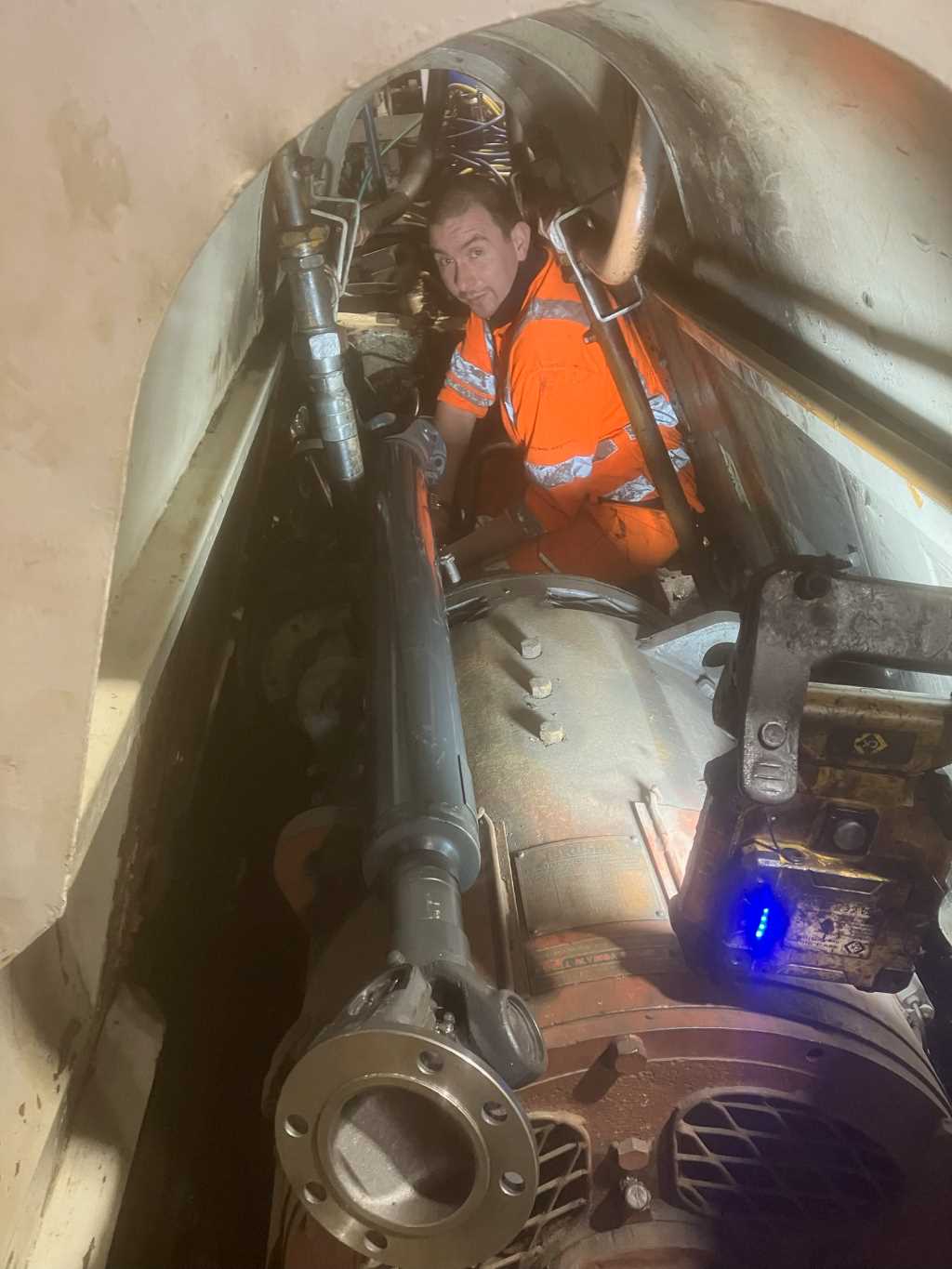
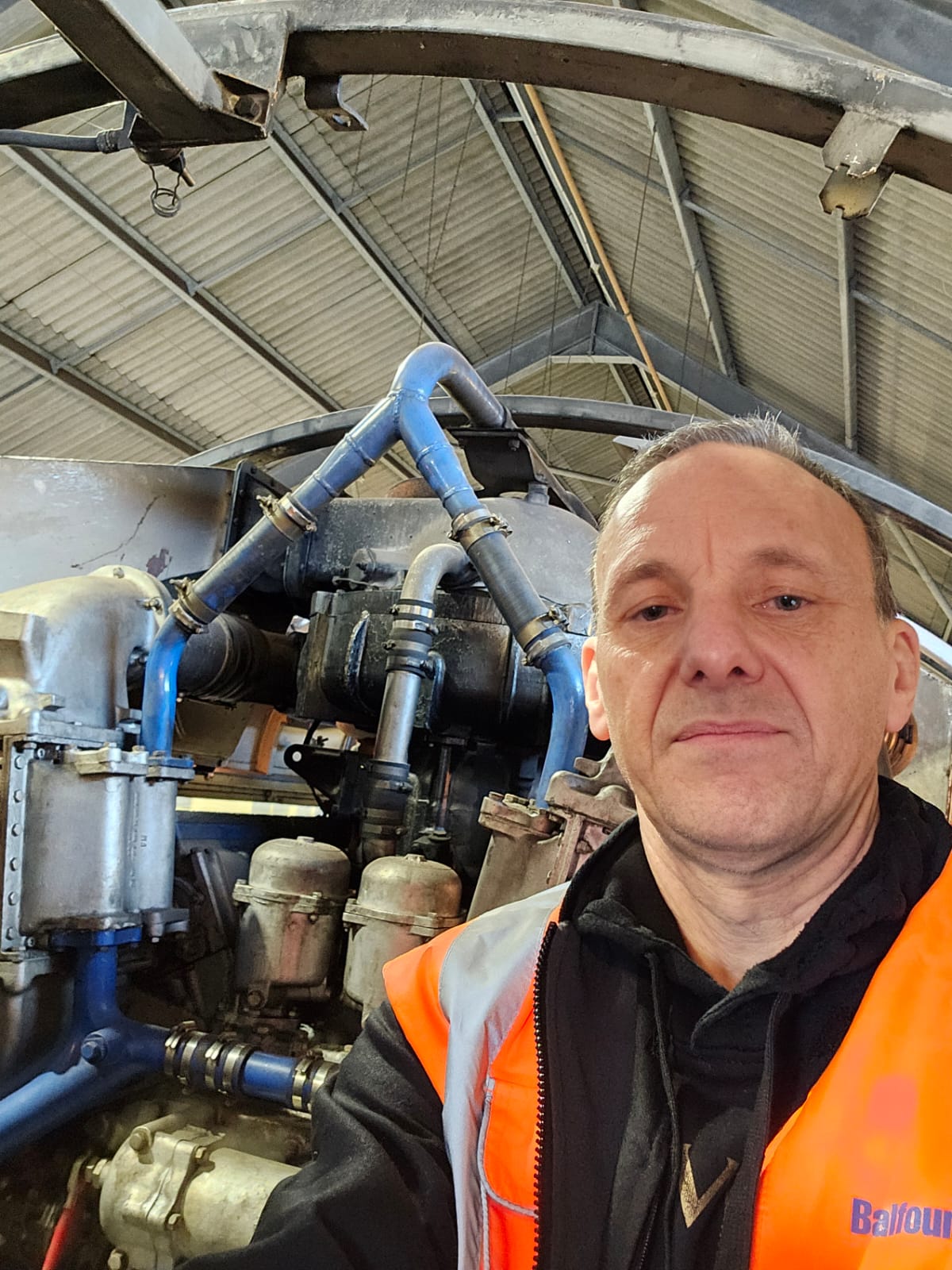
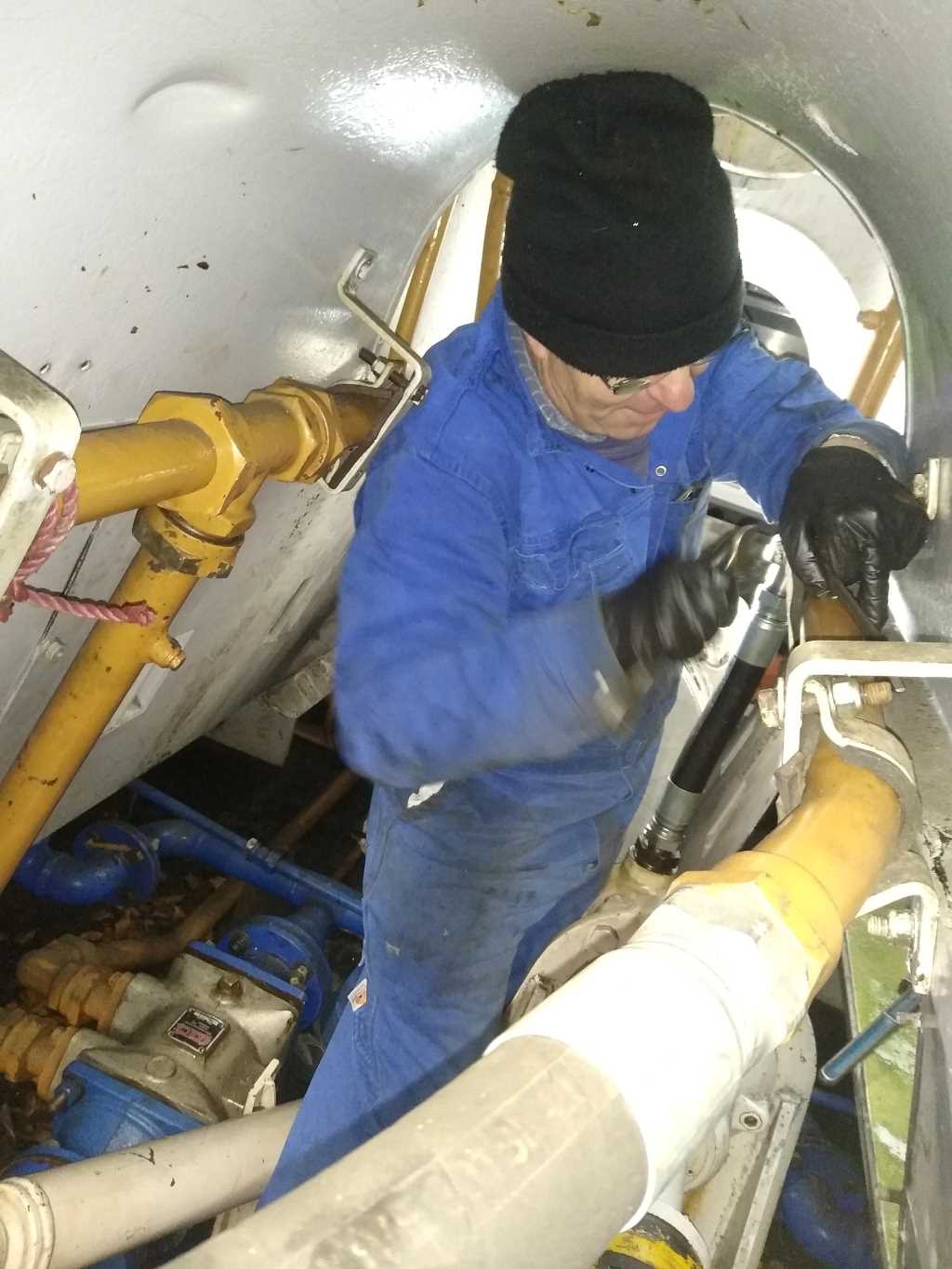
    D7018 – transmission team volunteer Tim was at work in the ‘tunnel’ formed by the two banks of radiator elements of the cooler group. Pictured at Williton on Tuesday 11th February 2025 by Colin Foxhall © CC BY-NC 3.0


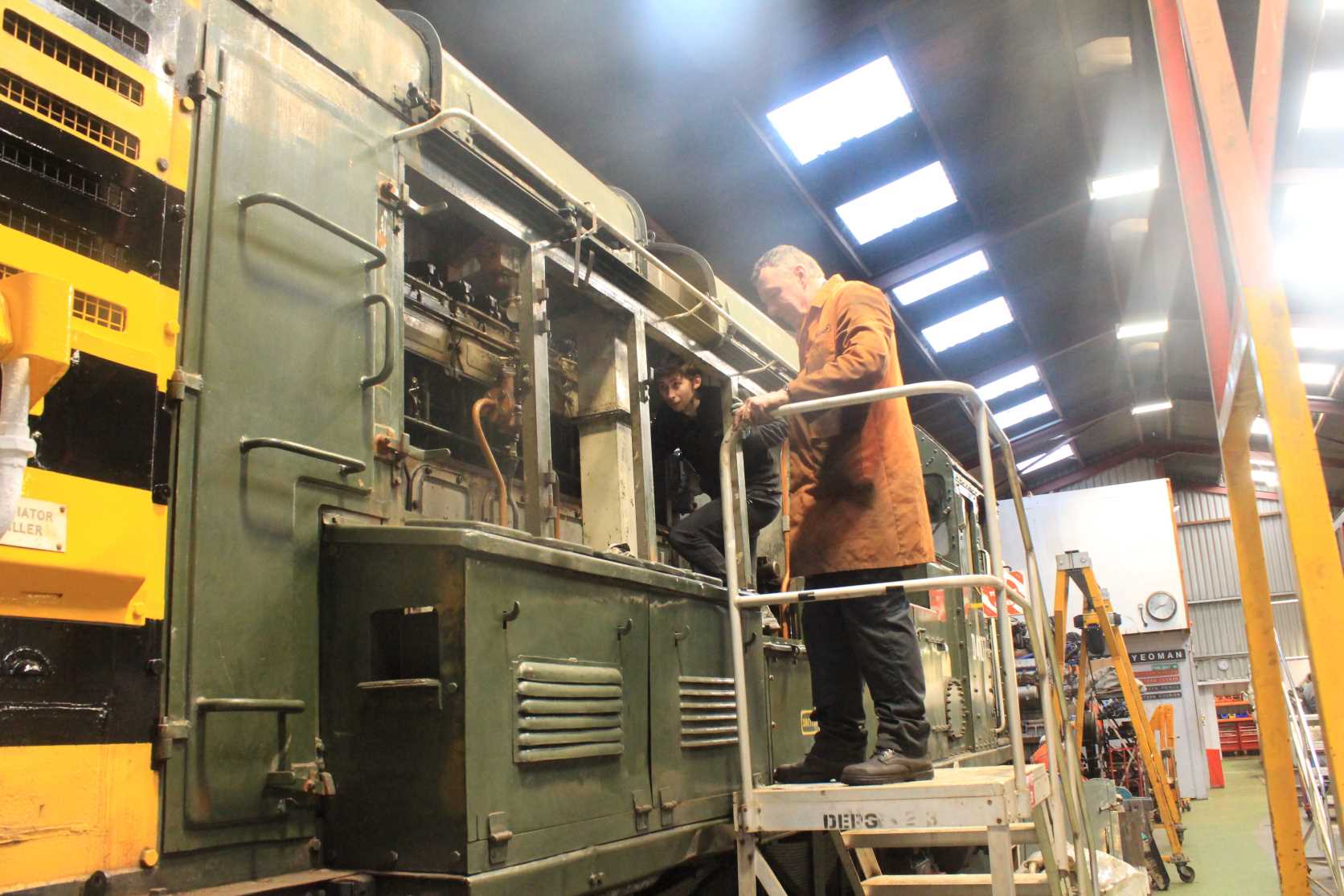
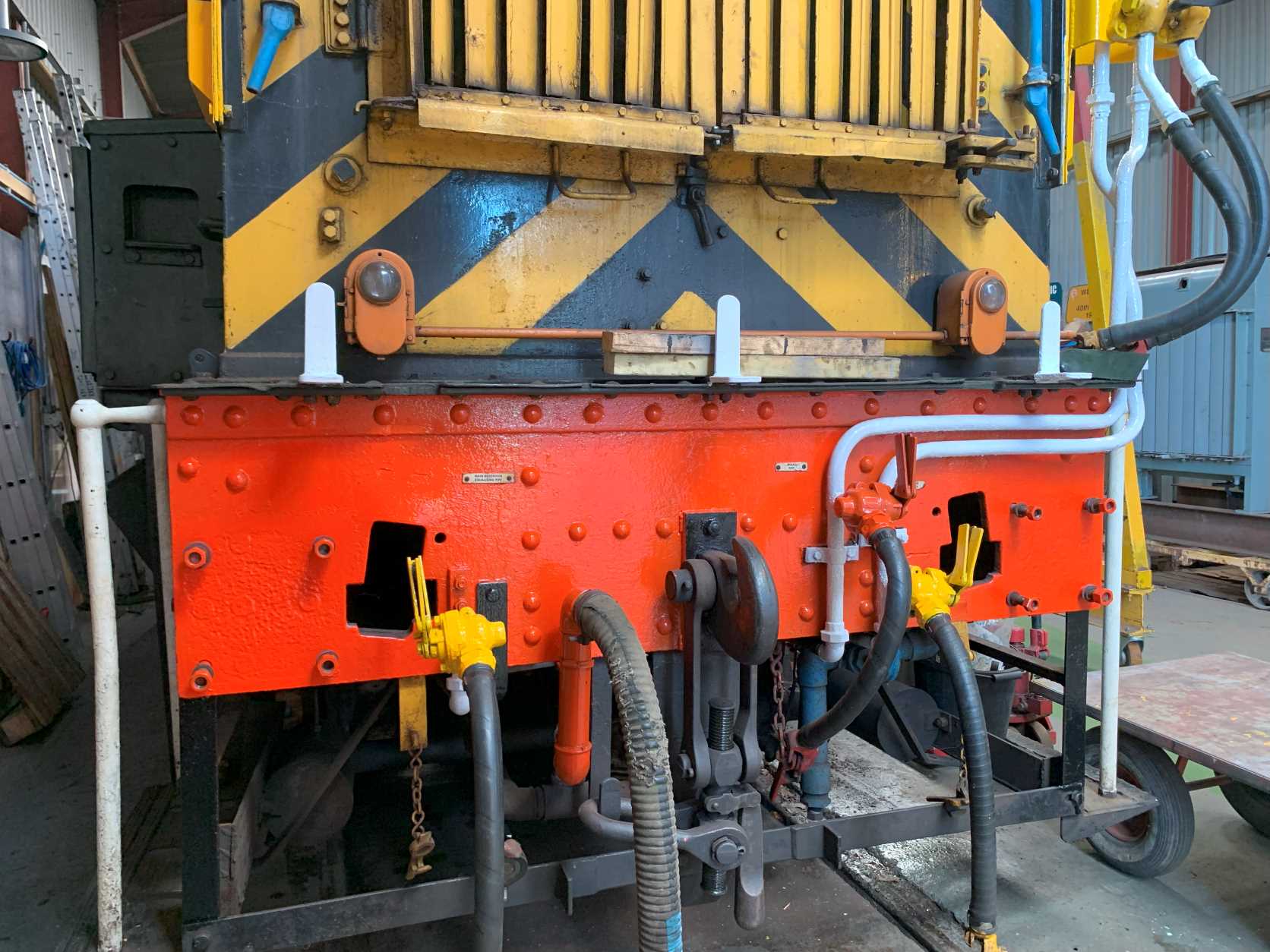
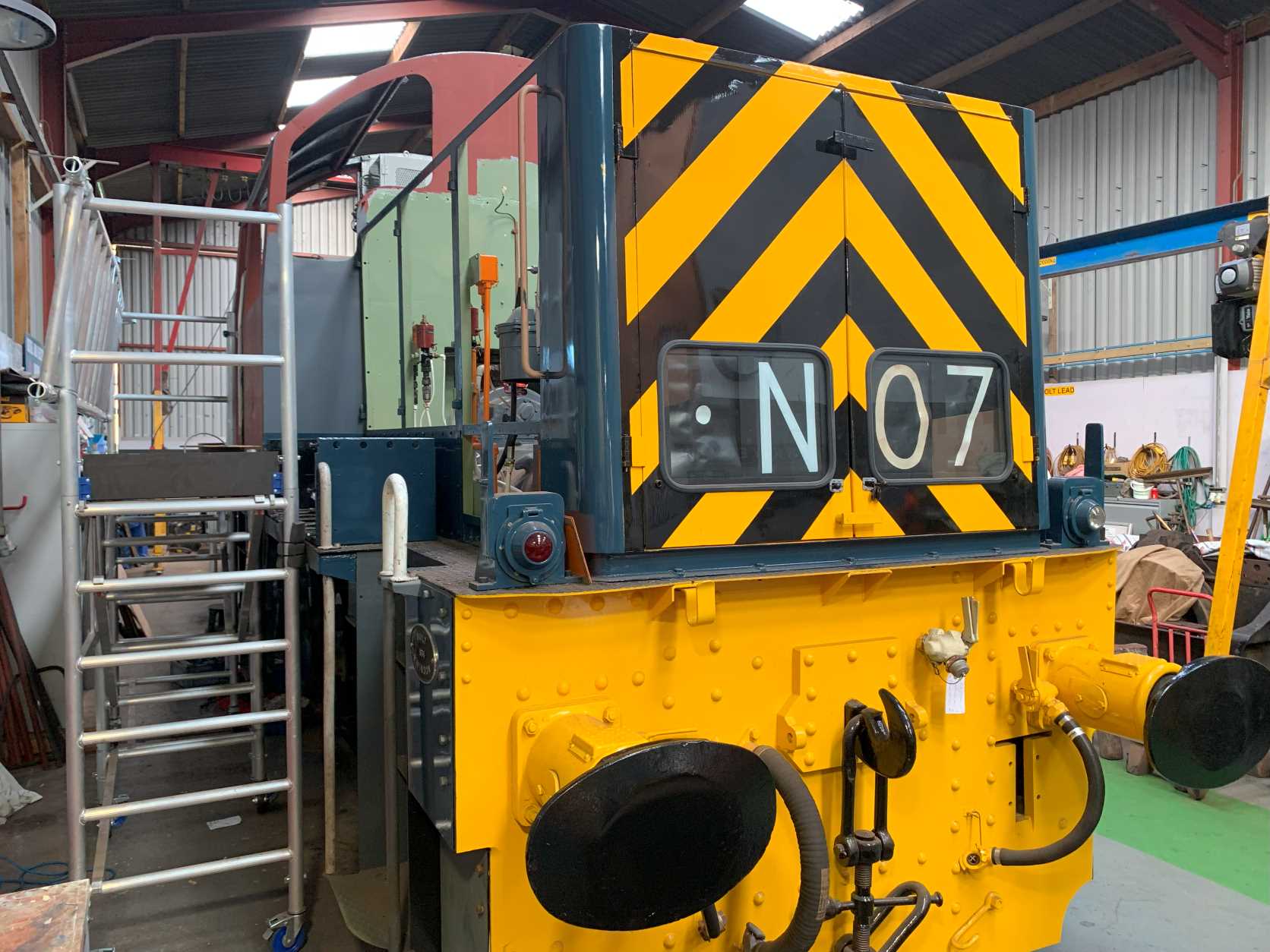
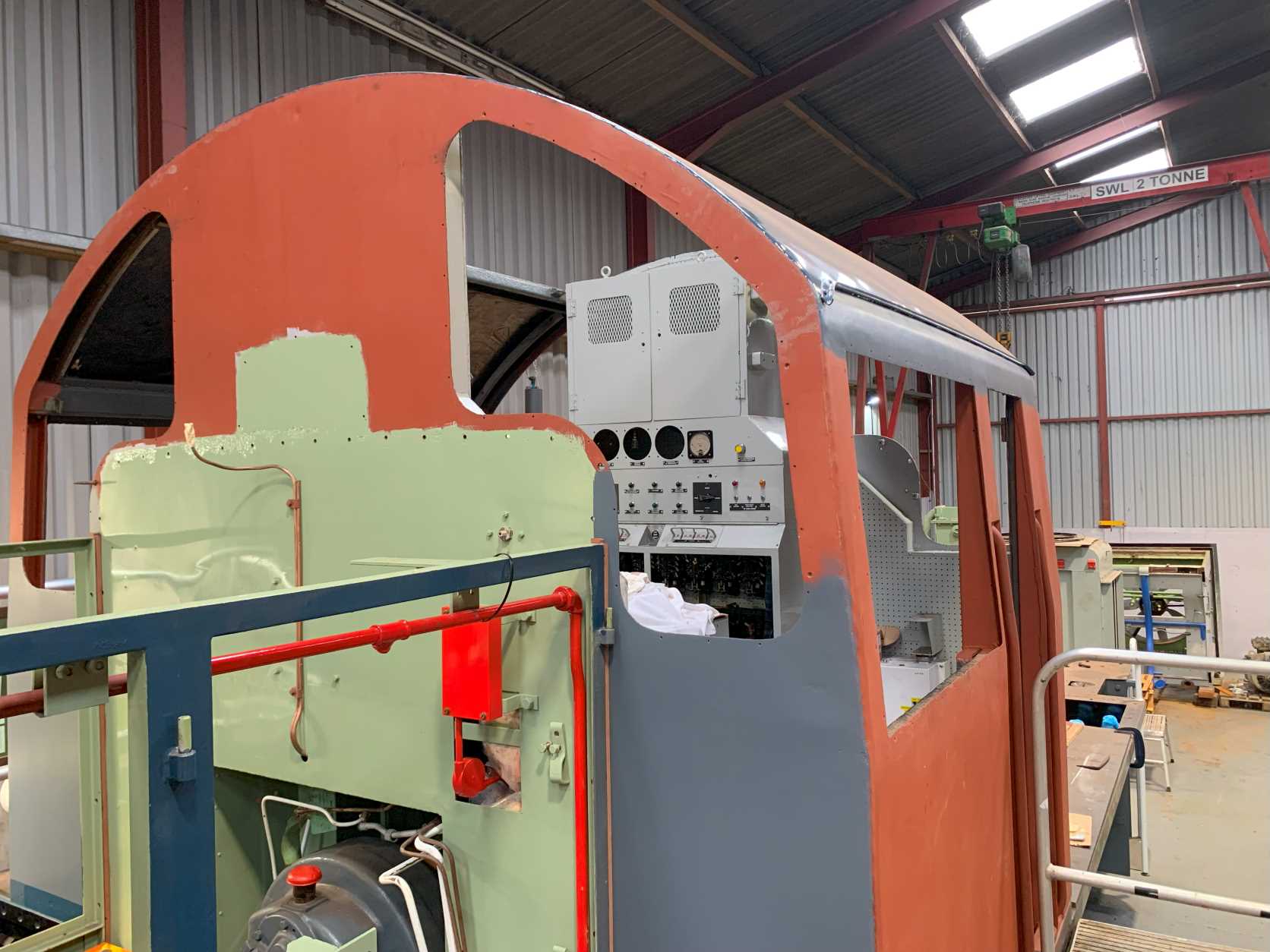
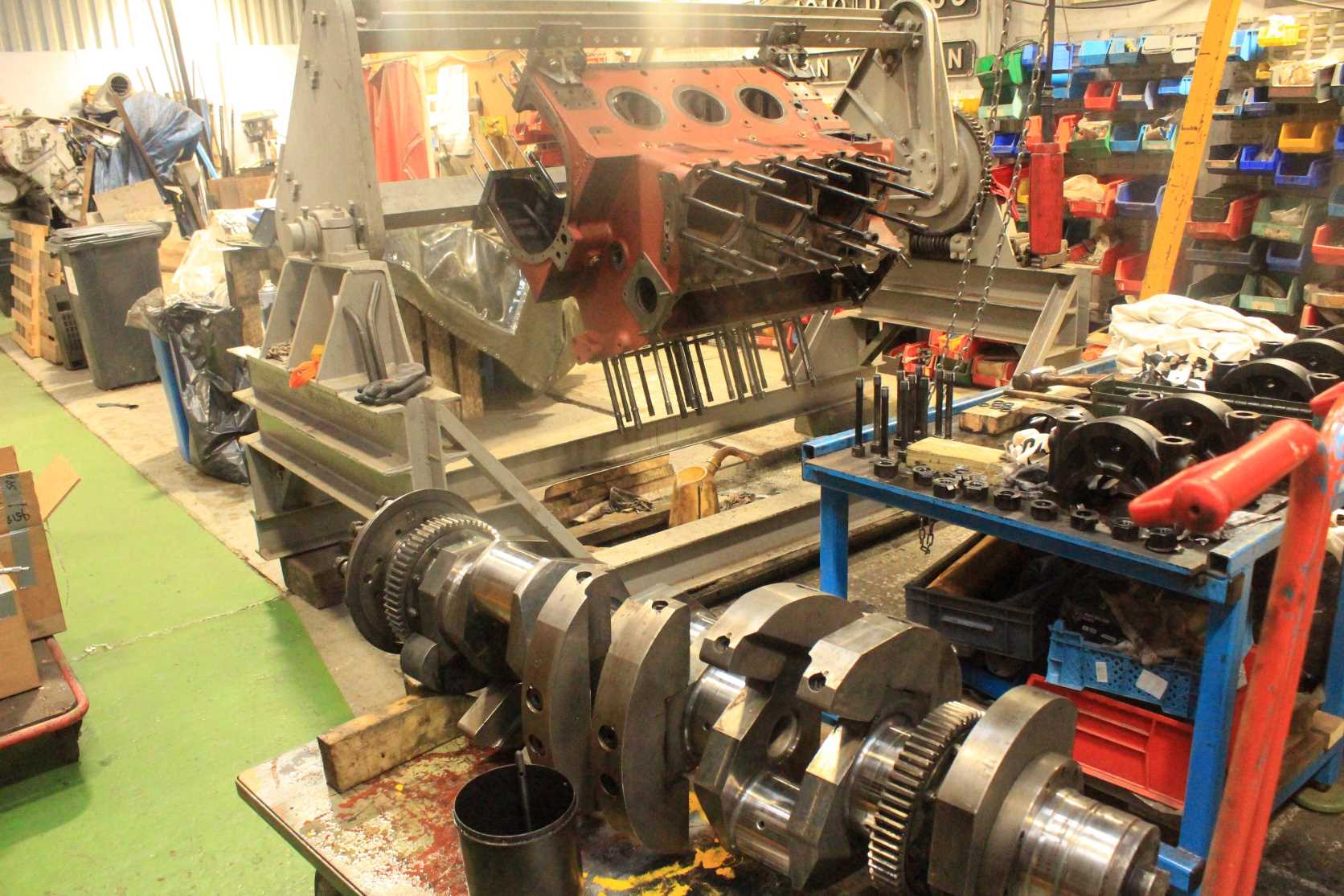
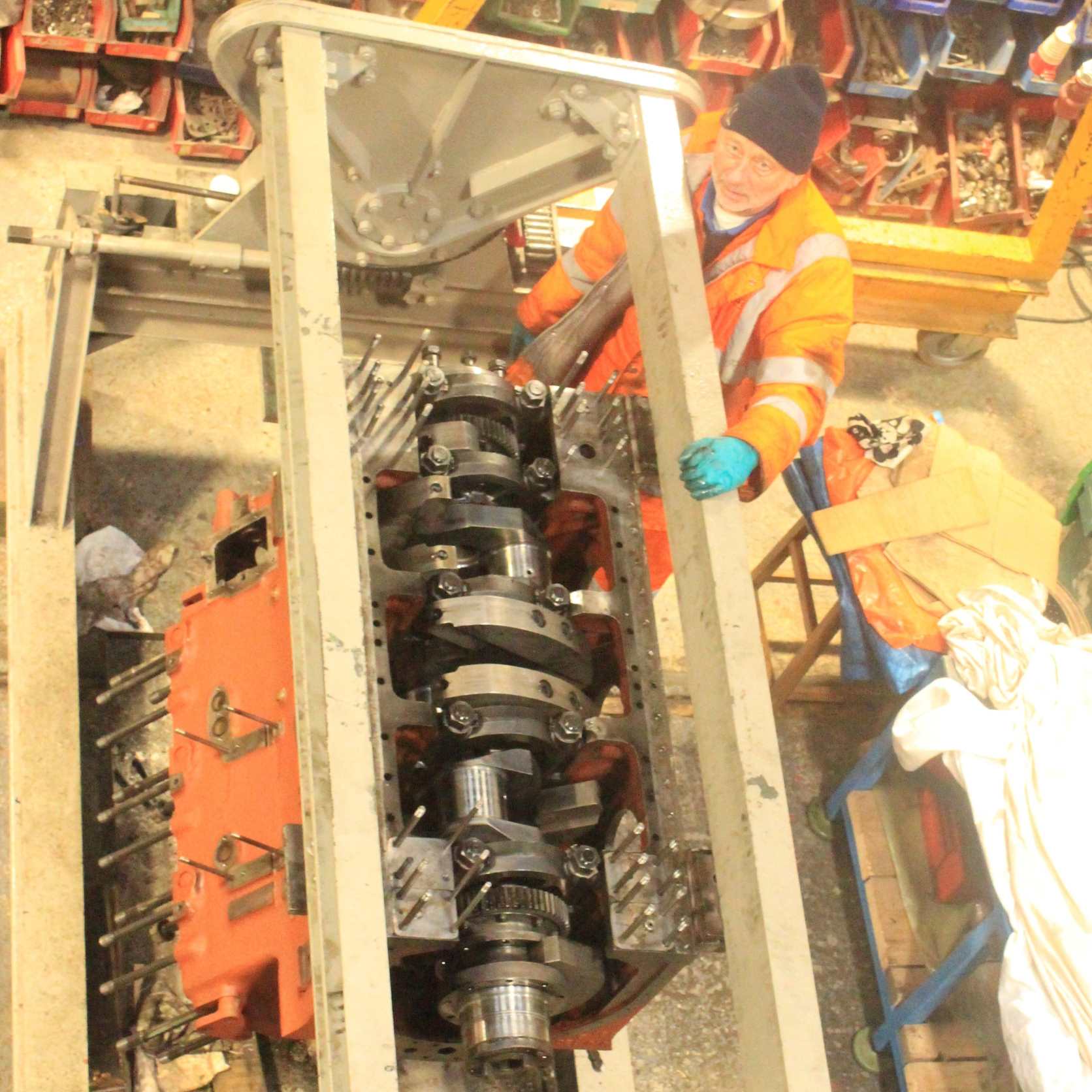
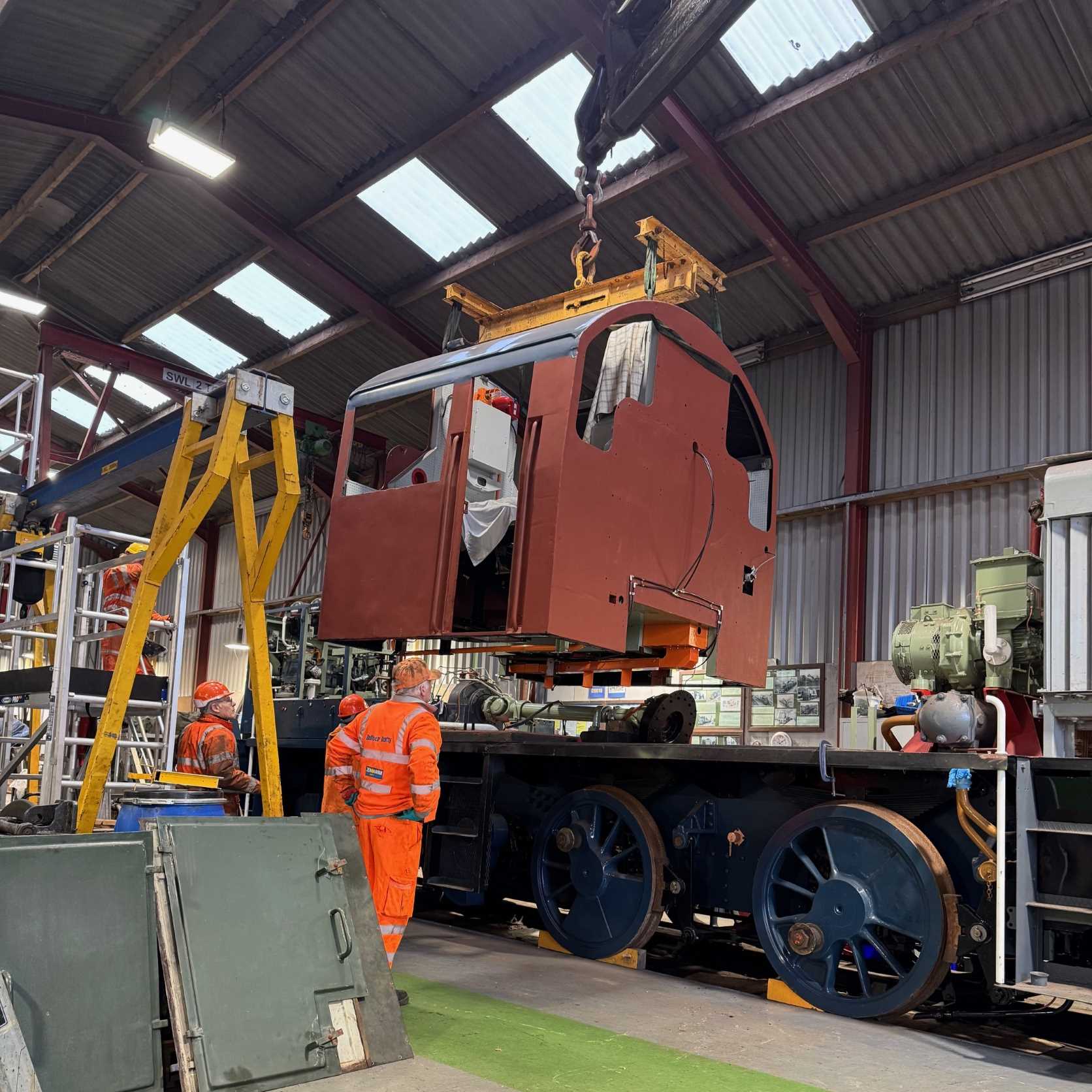
    Class 14 ‘Teddy Bear’ D9518 – the cab assembly has now been remounted onto the loco frames and the work of bolting it down and re-attaching the various parts is in process. One side of the loco has been surrounded by the mobile work platforms so that the task of wiring up the cab to the rest of the loco systems can take place safely. The engine rebuild is proceeding rapidly – the crankshaft has been re-fitted, the photos below showing the value of the turnover rig that allows the engine block to be safely rotated and locked in position, to allow easy access.

    D9518 – the cab is now back on the loco, giving it a much more recognisable shape. Work on bolting the cab to the frames has already begun. Pictured at Williton on Saturday 15th February 2025 by Andy Royal © CC BY-NC 3.0


    D9518 – the crankshaft in the foreground was pictured before being hoisted into the engine block that is being held in a partially inverted position in the turnover rig behind. Pictured at Williton on Tuesday 11th February 2025 by Terry Deacon © CC BY-NC 3.0


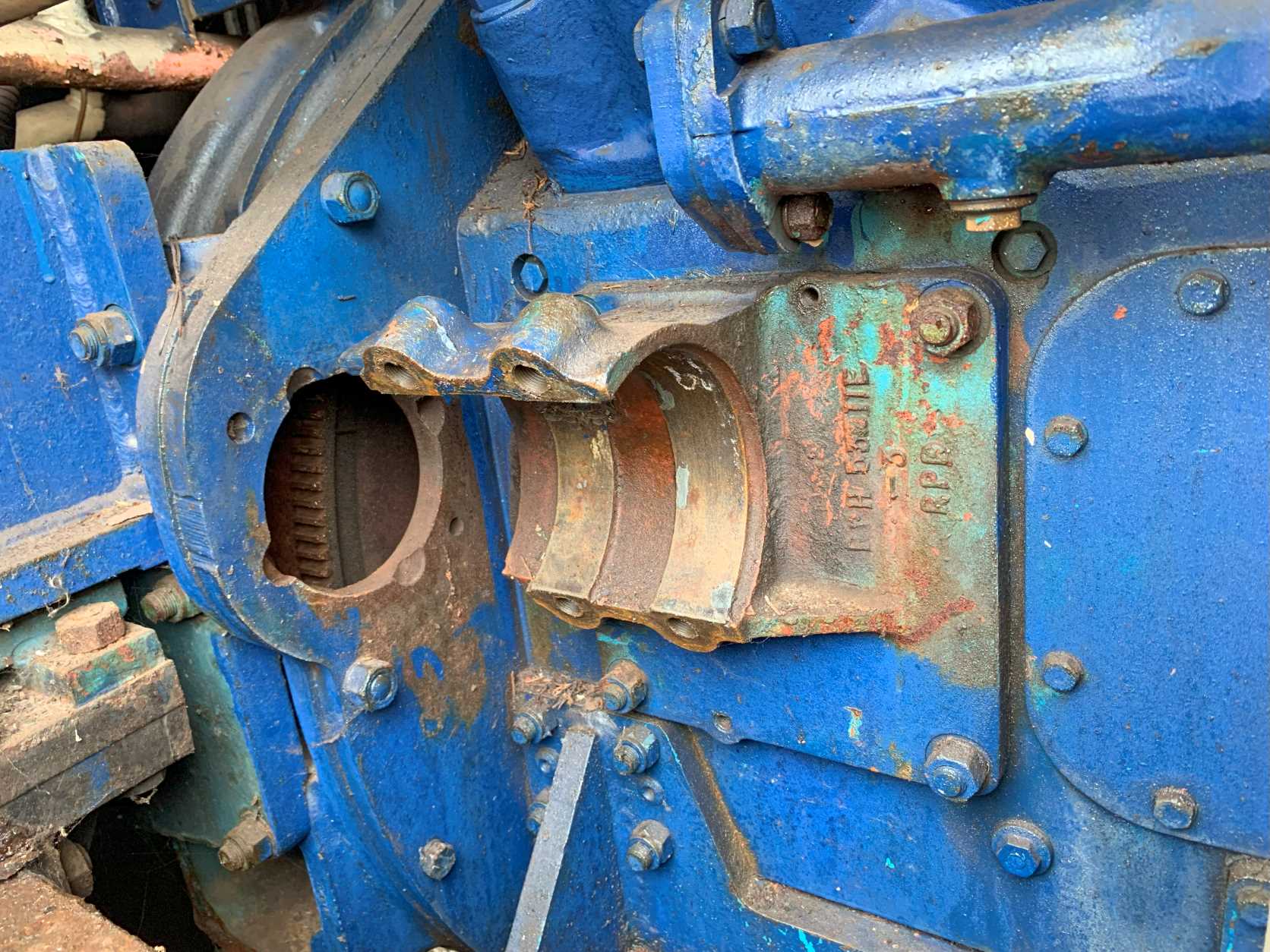
    D9518 – the crankshaft is now safely back in the engine block with the main bearing caps refitted and torqued down. The benefit of the turnover rig is apparent in this view at Williton on Tuesday 11th February 2025, with volunteer Nick standing guard. Photo by Terry Deacon © CC BY-NC 3.0


    Quality work needs to be funded, so we will continue to appeal for funds to support the work, right up to the point where the loco is completed. Any surplus will then be used to ensure her proper care and upkeep. If you like what we are doing, please make a donation via our website (click on the icon below) or by bank app or by sending a cheque to the DEPG at WillitonTHANK YOU VERY MUCH FOR YOUR SUPPORT !


    Class 14 ‘Teddy Bear’ D9526 – this loco celebrated her 60th birthday on Monday 6th January, as announced in an earlier post (click here for the post and for a video clip of her most recent engine run). This loco will enter the loco shed some time in the spring and will undergo engine maintenance and receive a paint refresh in time for her appearance at the WSR’s SUMMER DIESEL FESTIVAL 2025.


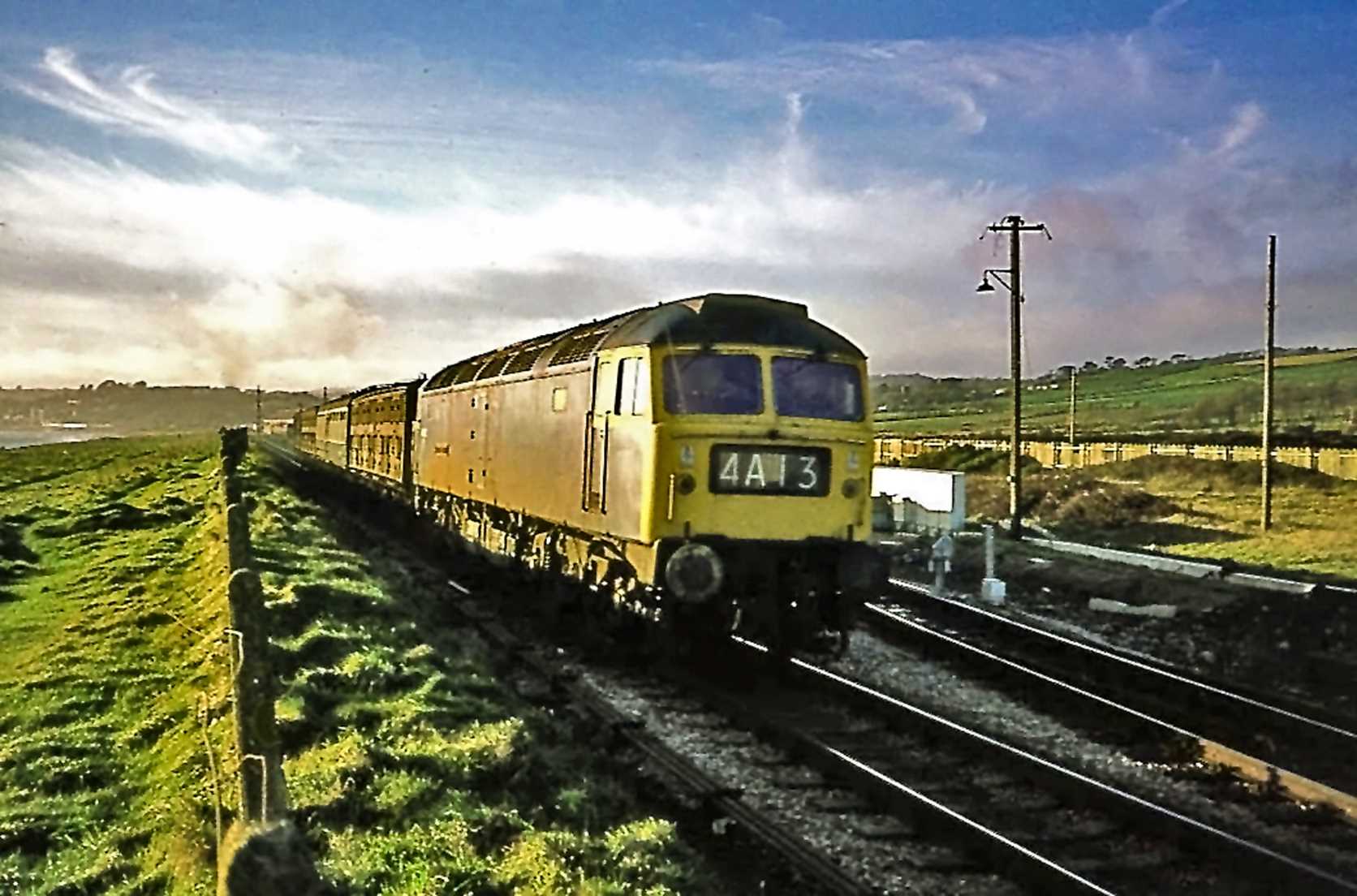
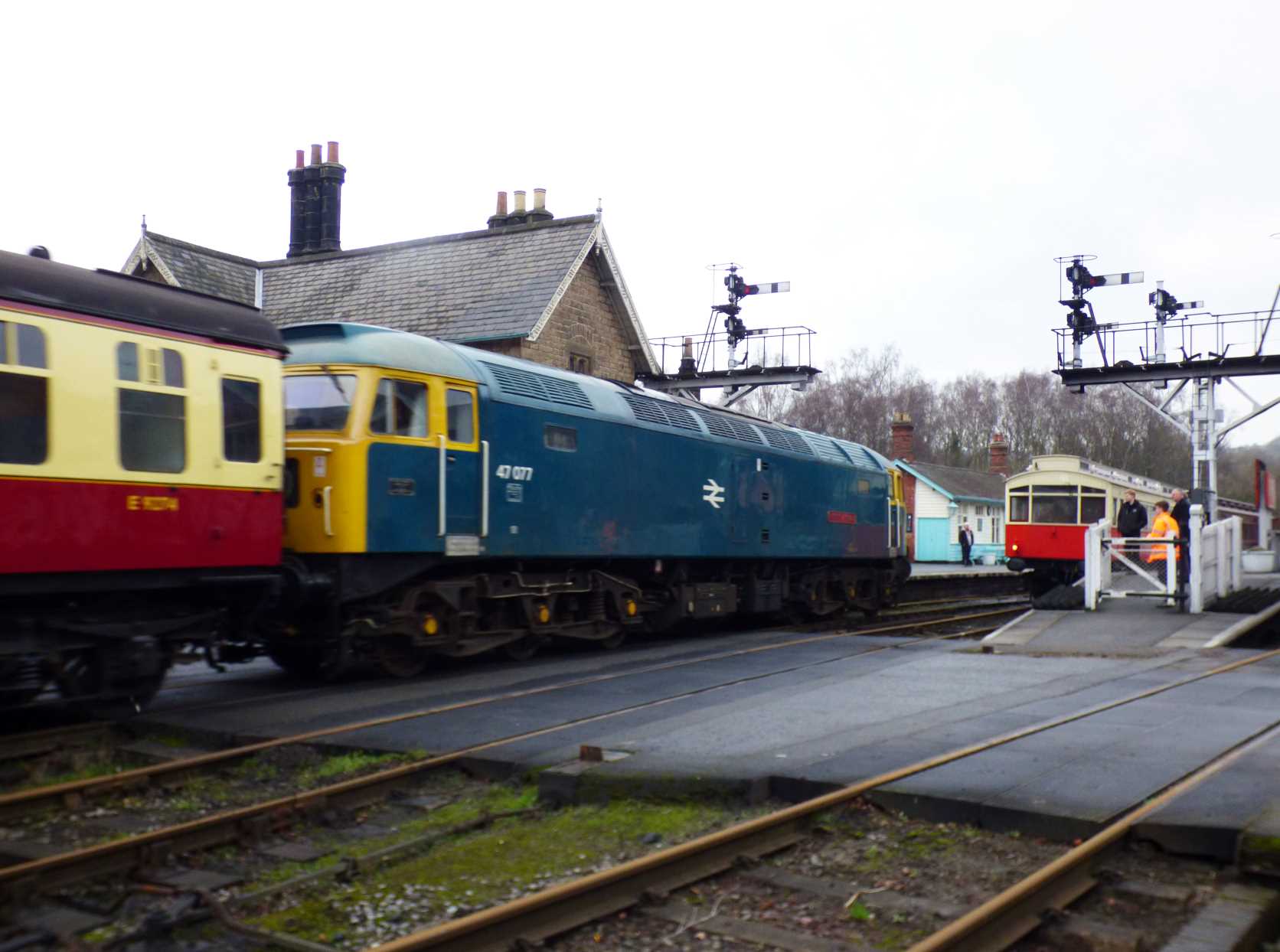
    Class 47 47077 ‘NORTH STAR’ – this loco is based at Grosmont on the North Yorkshire Moors Railway and was in use on Wednesday 12th February 2025 when it worked a rake of Empty Coaching Stock (ECS) from Pickering to Grosmont to put it in place for the half-term running. Upon arrival at Grosmont, our loco passed the unique and wonderfully-restored NER Electric Autocar number 3170. This machine dates back to 1903 and was the first petrol-electric railway vehicle in the world, the forerunner of the modern diesel-eletric ‘unit’ train. Read more about this vehicle by clicking this link.

    Many thanks to DEPG member Martin Fisher for rushing over to Grosmont to capture this view at short notice !

    47077 (D1661, 47613, 47840) ‘NORTH STAR’ arrives at Grosmont with a rake of Empty Coaching Stock while restored NER ‘autocar’ 3170 waits to depart on a test run to Pickering. Pictured on Wednesday 12th February 2025 by Martin Fisher © CC BY-NC 3.0


    Andrew Barclay 0-4-0DH 578 – as previously stated, this loco is now back in service after having an issue with her starter motor !


    If you can help by donating your time to any of these projects, then please JOIN US and come along to the depot for an introduction to what we do and how we do it. We currently have people on site from Saturday through to Tuesday and we can open on other days if we can be sure of getting at least two volunteers on site at all times, so there is plenty of scope. We have tasks of all types to suit most capabilities, both skilled and unskilled.

    Many thanks to all of our volunteers who give up so much of their time to work on the cleaning, painting, maintaining, restoring, managing and fund raising for our fleet of heritage locomotives !


    BOOK REVIEW: This is a new release from Pen & Sword, another in the series of locomotive studies by ANTHONY P. SAYER and no doubt destined for similar positive reviews, as has been the case for other publications from this author (click here for details). His target this time is the short-lived Class 23 ‘Baby Deltic’, a rare example of a product from the English Electric stable that did not deliver on it’s promises. Anthony digs deep into the background and presents the story in his usual style, complete with fine detail.

    Here’s the description text that has been provided by the publisher, Pen & Sword:

         “The British Railways ‘Pilot Scheme’ orders of 1955 included ten English Electric Type 2 diesel-electric locomotives deploying Napier ‘Deltic’ engines. These locomotives, more colloquially known as the ‘Baby Deltics’, were introduced into traffic during 1959 for use on the Eastern Region of British Railways. This book looks at the history of the Class 23s, making extensive use of available but previously unpublished archive material, covering their introduction, technical idiosyncrasies, appearance design and performance. Issues with the original ‘Deltic’ engines were ultimately dealt with via a major rehabilitation exercise during the 1963-65 period; whilst various re-engining options were considered , including a new ‘U’ series English Electric high-speed engine design, the original Napier engines were ultimately retained. The work involved in the whole rehabilitation process is discussed in detail using internal English Electric archive material and forms a central focus of research. The fleet survived intact until 1968, when withdrawal commenced as a direct result of declining traffic levels across the UK, with successive National Traction Plans progressively selecting the less successful, non-standard and ‘numerically-challenged’ classes for removal from traffic. All ten locomotives were withdrawn by March 1971. Individual locomotive histories, allocations, fire and accident incidents, liveries and detail differences, storage and disposals are provided for each locomotive.”

    Price £32 – NOTE: RRP is £35 so save £3 by buying from the DEPG !

    Click here to obtain your copy of this new book.

    Other books in this popular series are also available from the DEPG online store (classes 1417 and 22)

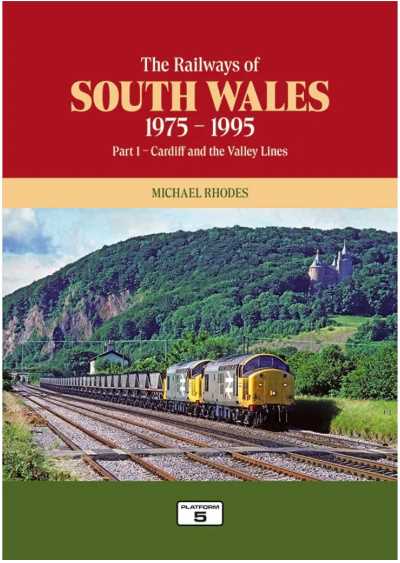
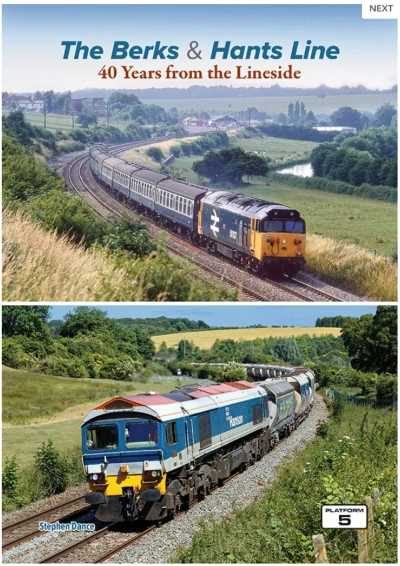
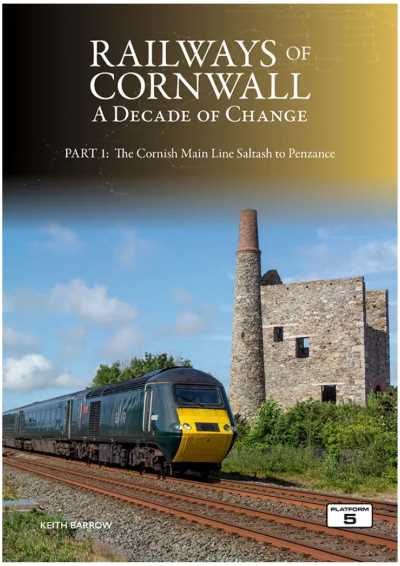
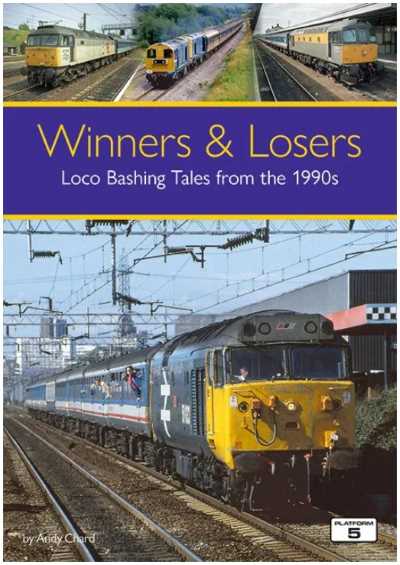
    Four new books have just been added to our online store – click on the images below for details:

    The Railways of South Wales 1975-1995 Part 1 – by Michael Rhodes – price £21.95 The Berks & Hants Line – 40 Years from the Lineside – by Stephen Dance – price £22.95
    Railways of Cornwall – A Decade of Change – Part 1 – by Keith Barrow – price £20.95 Winners & Losers – Loco Bashing Tales from the 1990s – by Andy Chard – £18.95


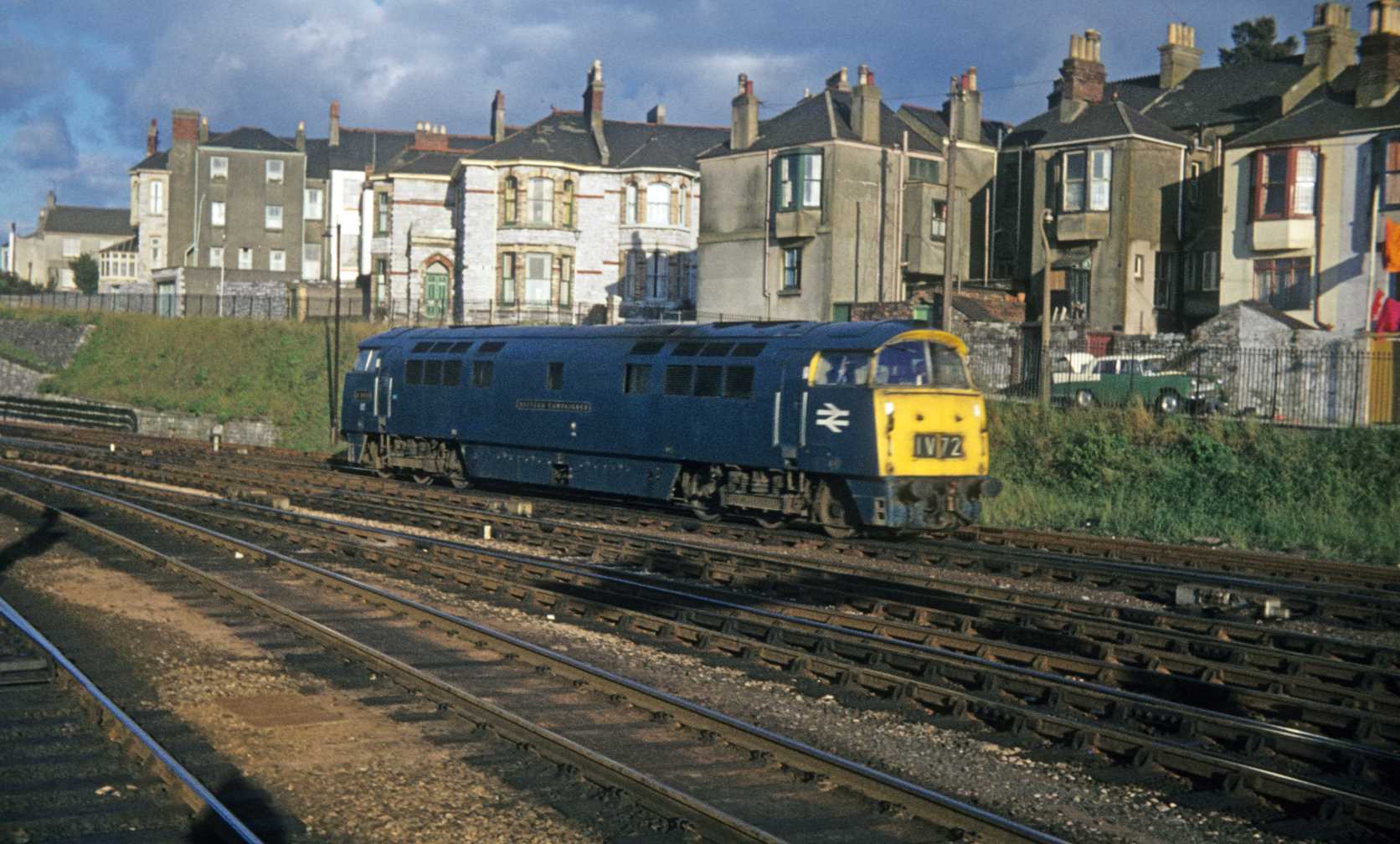
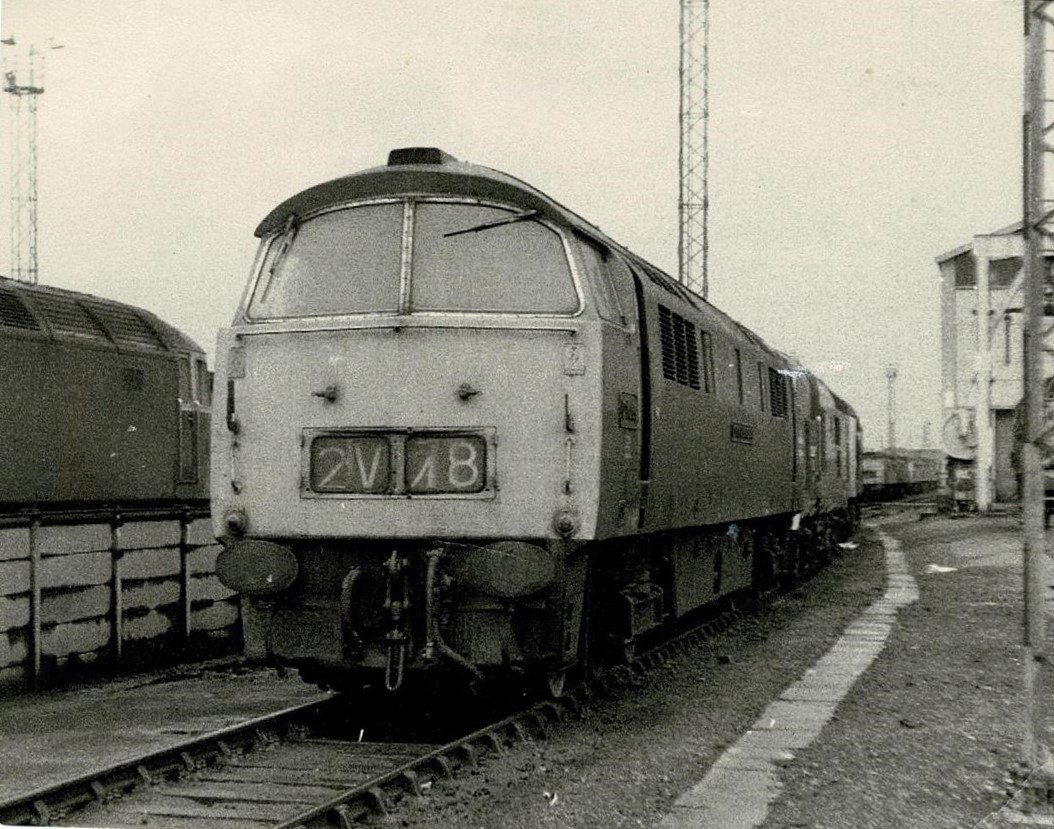
    ON SHED: many thanks to ROGER GEACH for providing us with this view of our very own Class 52 D1010 ‘WESTERN CAMPAIGNER’ at Plymouth on Sunday 30th September 1973. The loco is carrying the 1V72 headcode of the Leeds to Penzance service, which she will work from Plymouth to Penzance. It was common practice for ‘Westerns’ to shuttle back and forth between Plymouth and Penzance, providing some ‘guaranteed’ and entertaining mileage for followers of the class. Many thanks to Roger for sharing his photo with us all.

    Class 52 D1010 ‘WESTERN CAMPAIGNER’ was pictured ‘light engine’ at Plymouth in preparation to work the 1V72 Leeds to Penzance service forward from Plymouth through to Penzance. Pictured on Sunday 30th September 1973 by Roger Geach © CC BY-NC 3.0


    DEPG NEWS – the February edition of the quarterly DEPG Newsletter has been produced on schedule by editor Mark Bladwell and has been mailed or emailed (according to member preferences). The paper copies were mailed on Saturday 8th February, but an issue has arisen where an effort to save cost has backfired ….

    The labels used were old stock and have lost their ‘stickyness’ and some have become detached in the post, resulting in the newsletters being returned to the sender without address labels. Unfortunately, we don’t know who has received their newsletters and who hasn’t !

    So, if you are a member and want a paper copy of the newsletter and haven’t yet received it, please get in touch by using our CONTACT FORM and we will get another copy in the mail for you. Apologies for any delay !


    The DEPG is a charity and is run entirely by volunteers, many of whom give both their time and their money to the continuance of work on the locos in the DEPG fleet. If you have been enjoying the roundup for free, have you considered joining us for just £1 a month ? You can then add your name to all of those helping out on the above projects and play your part in the future of our locos for a lot less than the price of a cup of coffee!


    JOIN US using whichever membership class is appropriate for your situation and means. CLICK HERE or on the image below or use the QR code to get the details.


    If you would like to go one step further and come along to help with the work on the locos in our fleet, then please use our CONTACT FORM to let us know that you would like to volunteer and we will respond with more details.

    We look forward to hearing from you !


    Go to the previous Weekly Roundup post

  • Weekly Roundup – 09-Feb-25

    Another milestone in the restoration of Class 14 D9518 was reached on Saturday 8th February 2025 when the part-restored cab assembly was re-mounted on the loco frames at Williton using a 66-ton-metre truck-mounted crane and a highly skilled operator, both provided by HEAVER BROTHERS of Exeter. Photo by Martin Howard © CC BY-NC 3.0


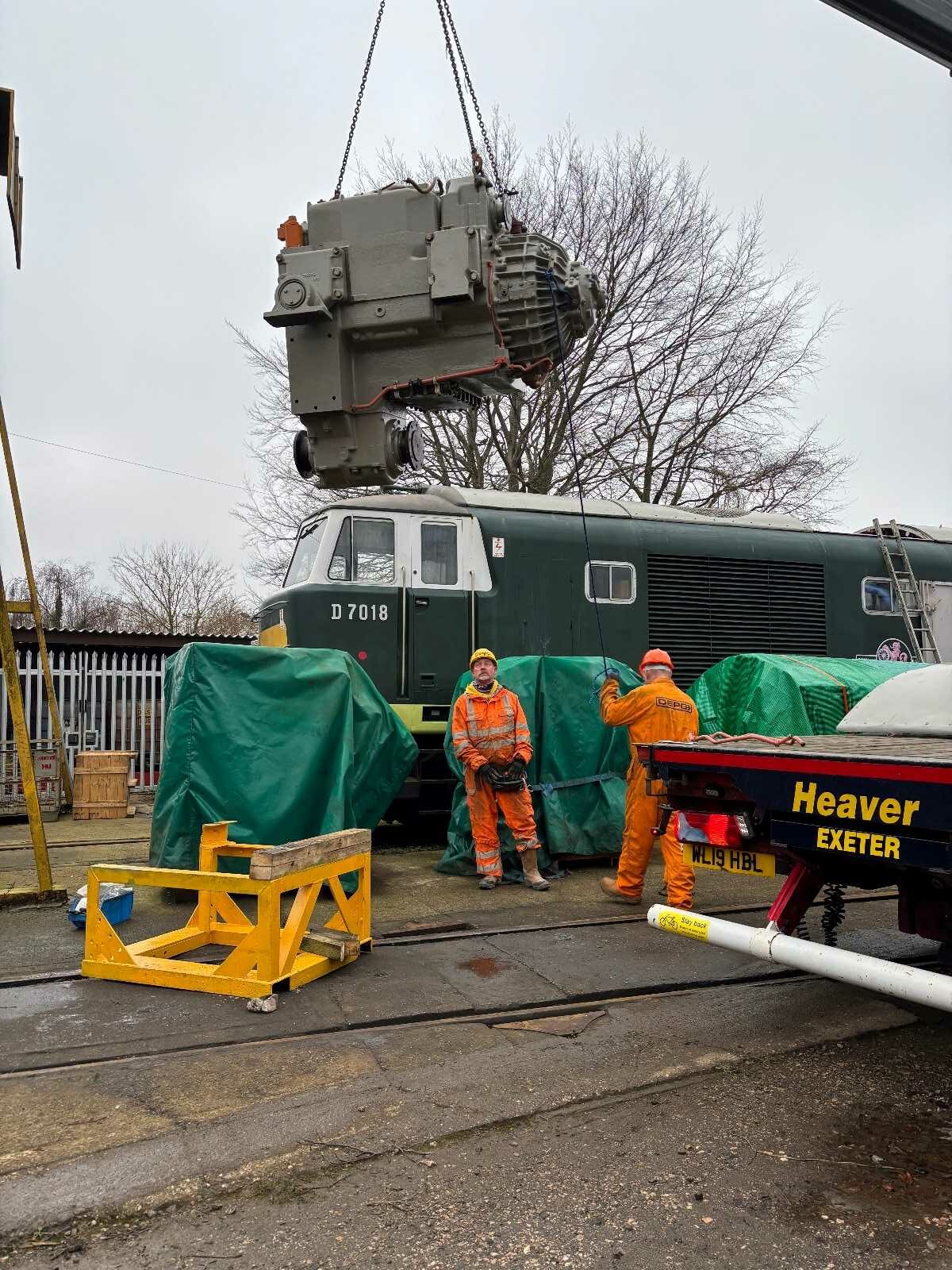
    Also on Saturday 8th February 2025, a major step was taken towards the return to service of Class 35 ‘Hymek’ D7018 when the repaired transmission was re-installed in the loco at Williton using the 66-ton-metre truck-mounted crane that was provided by HEAVER BROTHERS. Photo by Julie Tucker © CC BY-NC 3.0


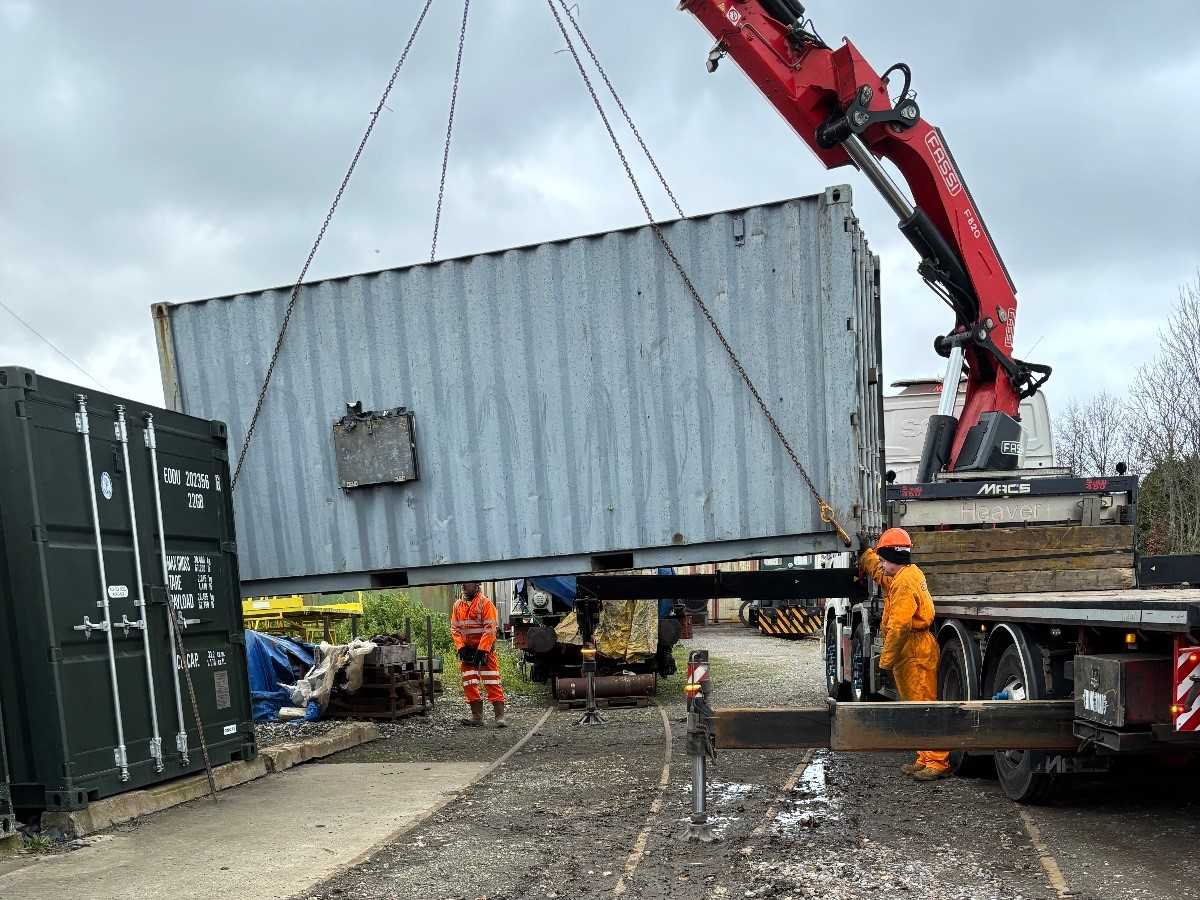
    A 20-ft ISO container was collected from a donor and delivered to Williton on Friday 7th February 2025 using a 66-ton-metre truck-mounted crane that was provided by HEAVER BROTHERS. Photo by Julie Tucker © CC BY-NC 3.0


    Another busy time at Williton with three major lifting activities being carried out with the help of a very capable 66-ton-metre truck-mounted crane and a highly skilled operator, both provided by HEAVER BROTHERS of Exeter. The three lifting tasks took place over two days and were completed with several hours to spare, even though the lifting of the cab assembly of Class 14 D9518 had to be carried out inside the loco shed because our yard shunter, Barclay 578 (ROF 1) developed a starter motor fault and could not be used to haul D9518’s frames out of the shed, as had been intended.

    Rather than abandon the lift and have to incur the expense of another crane visit on another day, the crane operator carried out a risk assessment on site and determined that the lift could take place inside the loco shed, taking advantage of the ability of the crane to lift the required load (4 tonnes including the x2 factor of safety) at a radius of up to 16 metres (52 feet). The crane had built-in load and moment sensors and was operated by remote control, allowing precise and safe operation within the confines of the loco shed. WELL DONE to HEAVER BROTHERS and their staff for getting the job done safely, at minimum cost to the DEPG !

    These lifts clear the way for our volunteers to make the next steps with both of these projects, and move us significantly closer to the return to service of these two locomotives. WELL DONE TO ALL INVOLVED!

    The part-restored cab assembly of Class 14 D9518 was re-mounted onto the loco frames at Williton on Saturday 8th February 2025. Photo by Jon Tooke © CC BY-NC 3.0
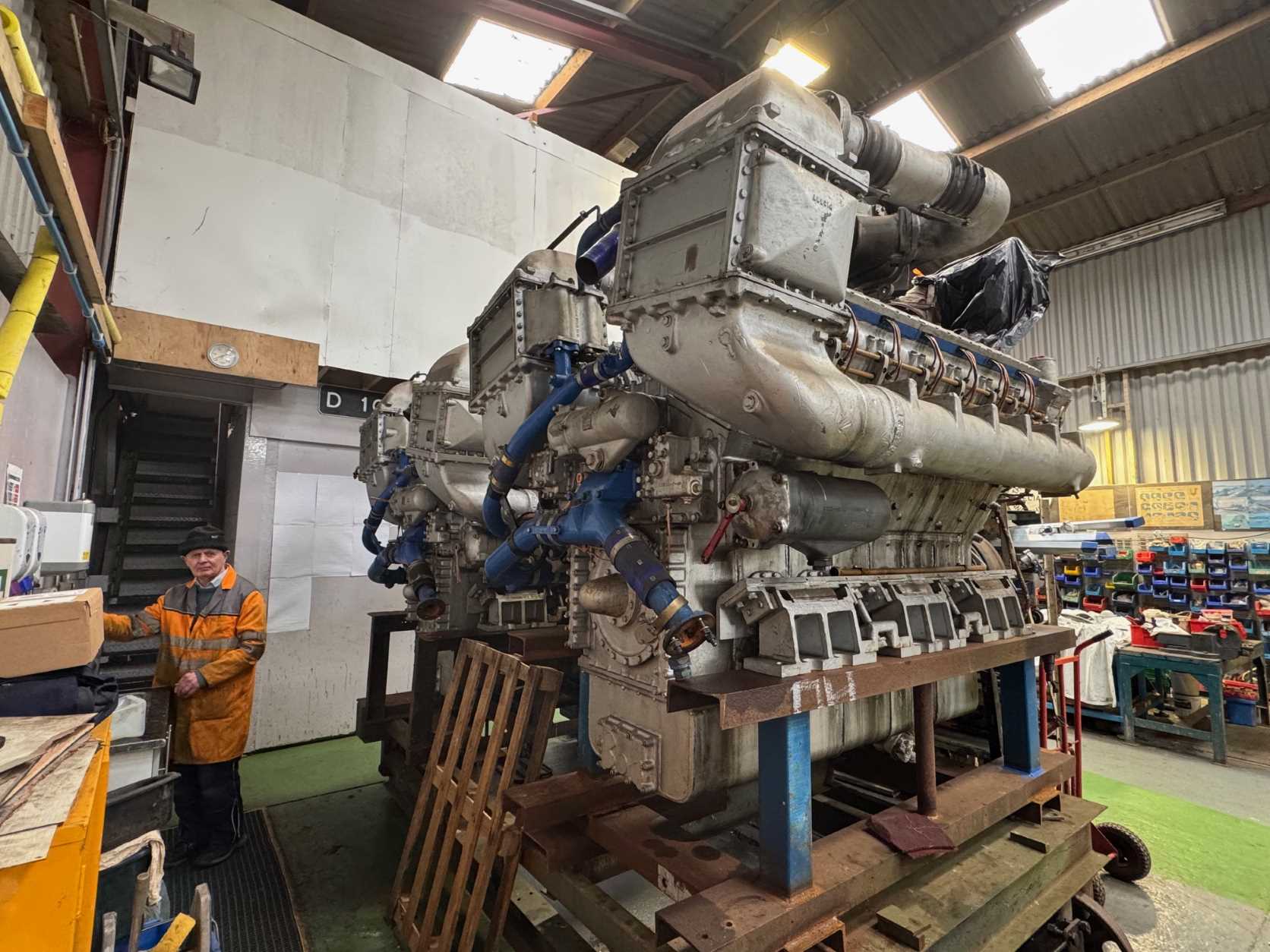
     

    The repaired and repainted transmission and heat exchanger of Class 35 ‘Hymek’ D7018 were re-installed in the loco at Williton on Saturday 8th February 2025. Photo by Martin Howard © CC BY-NC 3.0


    D7017 UPDATE

    The repair work continues apace at Minehead, as the WSR engineering team makes daily progress on the replacing of corroded metal with new metal. The additional funding that has been made possible by the tremendous response from members and supporters is being put to good use, ensuring that the repairs are thorough and substantial, and capable of lasting for decades. We continue to receive donations to the D7017 bodywork overhaul fund, so a BIG THANK YOU goes out to all of the 64 people who have donated to this project, keeping it moving forward to ensure that the loco will be back in service in time for the WSR’s Summer Diesel Festival (5-7th June).

    As we reported last week, the fundraiser for the bodywork repairs for ‘Hymek’ D7017 has been kept open with a new target of £12,000 with a total of £10,927 being raised so far.

    THANK YOU FOR YOUR FANTASTIC SUPPORT !

    The new target of  £12,000 will cover most of the work being done on the loco, the remaining £3,000 being provided from the DEPG’s general fund. The sub-contract route was taken to make sure that the loco gets repaired during the winter and is able to take pole position in the celebration of 50 years of ‘Hymek’ preservation that will take place in the summer of this year.

    The initial target was reached on 1st January 2025, but we are keeping the fundraiser open until the work is completed, to make sure that we have sufficient funding to cover any unexpected costs, and make sure that a thorough and long-lasting repair is carried out. All funds donated via this appeal will be allocated to returning D7017 to service in time for the forthcoming season.


    Can you help ? Click here to donate £17 to D7017 !


    If you can help with this short-term appeal, please make a donation via our website (click on the icons above or below) or by bank app or by sending a cheque to the DEPG at WillitonTHANK YOU VERY MUCH !


    WSR NEWS

    The WSR are heavily involved in training sessions for all operational staff and volunteers, with more training taking place this coming week involving duty loco Class 33 D6575 (33048) between Bishops Lydeard and Norton Fitzwarren. This work is being supplemented by communications days taking place on weekends at Wellington School, where the plans for the year are being presented to all volunteers and the roles and objectives of the support organisations are being outlined. This does deplete the available hours for volunteering at Williton, but it is a short-term loss that is balanced against the need for the railway to perform at a higher level, and we welcome the WSR efforts.

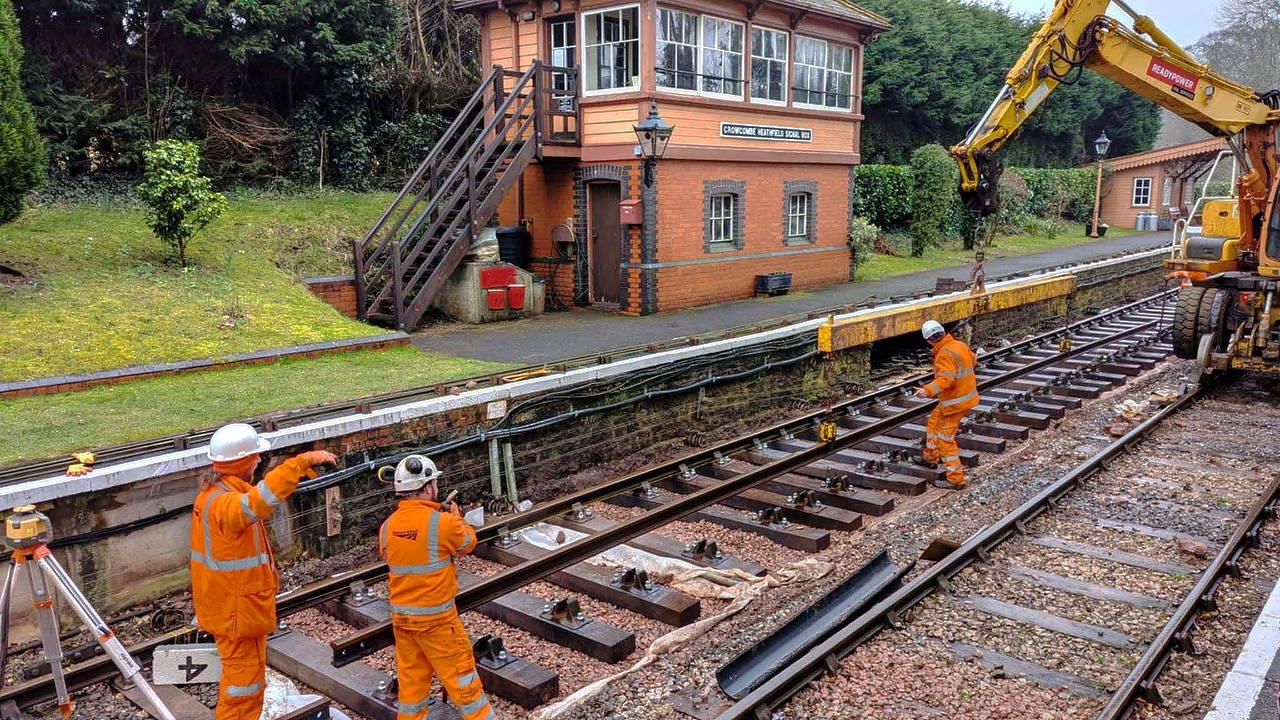
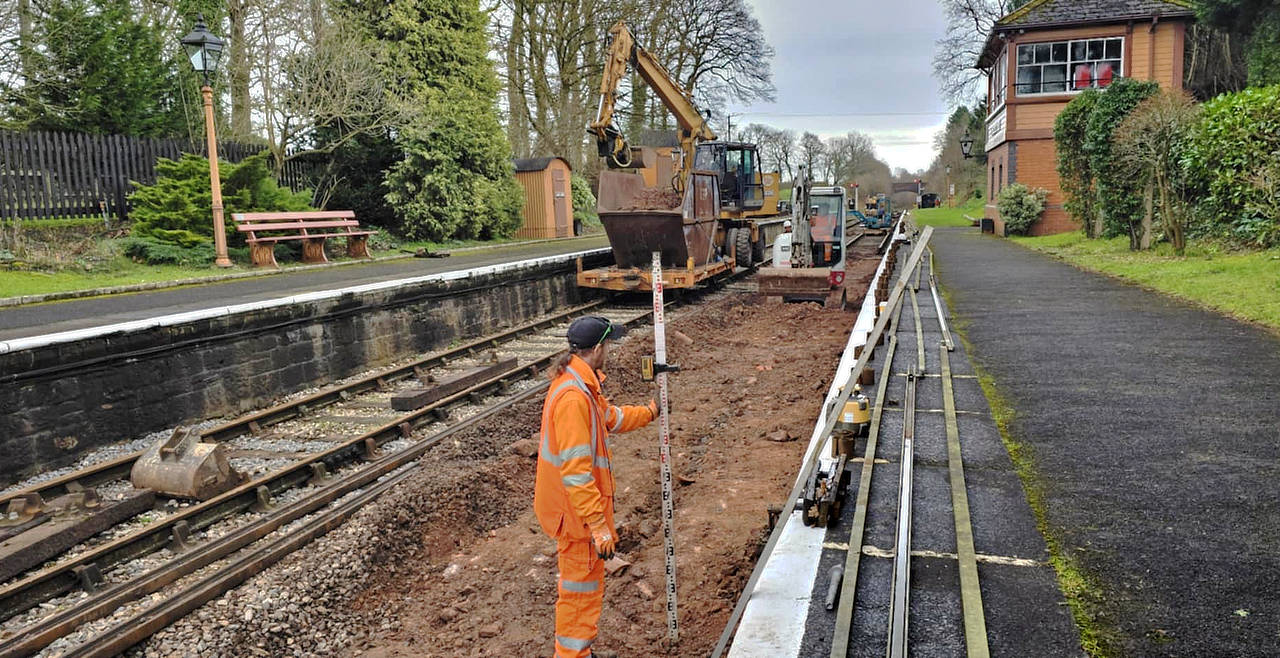
    In parallel with this, the WSR Infrastructure team are hard at work renovating and repairing at multiple locations along the 23-mile line. The signalling is being overhauled at Blue Anchor and the down line is being re-laid at Crowcombe Heathfield, to name but two of the activity areas. This work is often a joint effort between WSR staff and volunteers, and is to be applauded.

    The Infrastructure team are hard at work re-laying the down line through Crowcombe Heathfield station. Pictured on Thursday 6th February 2025 by Brenden Hill © CC BY-NC 3.0


    The WSR have now published their running calendar for 2025 on their website and social media channels, and we have updated our DIESEL RUNNING DATES page including provisional loco allocations, some of which are subject to change to align with the availability of the locos and the crews. As the information becomes more refined, we will update our page and send out a DIESELGEN bulletin with the clarification. Click here or on the banner below to view the provisional allocations:

    Click here or on the image below to visit the WSR’s timetable page:


    The WSR’s SUMMER DIESEL FESTIVAL has been confirmed as being Thursday 5th through Saturday 7th with a Mixed Traction Day  on Sunday 8th of June 2025.


    Click here to join the DEPG

    Click here to go to our DIESEL RUNNING DATES page

    Click here to go to our ONLINE SHOP

    Thank you very much for your support !


    LOCO NEWS:

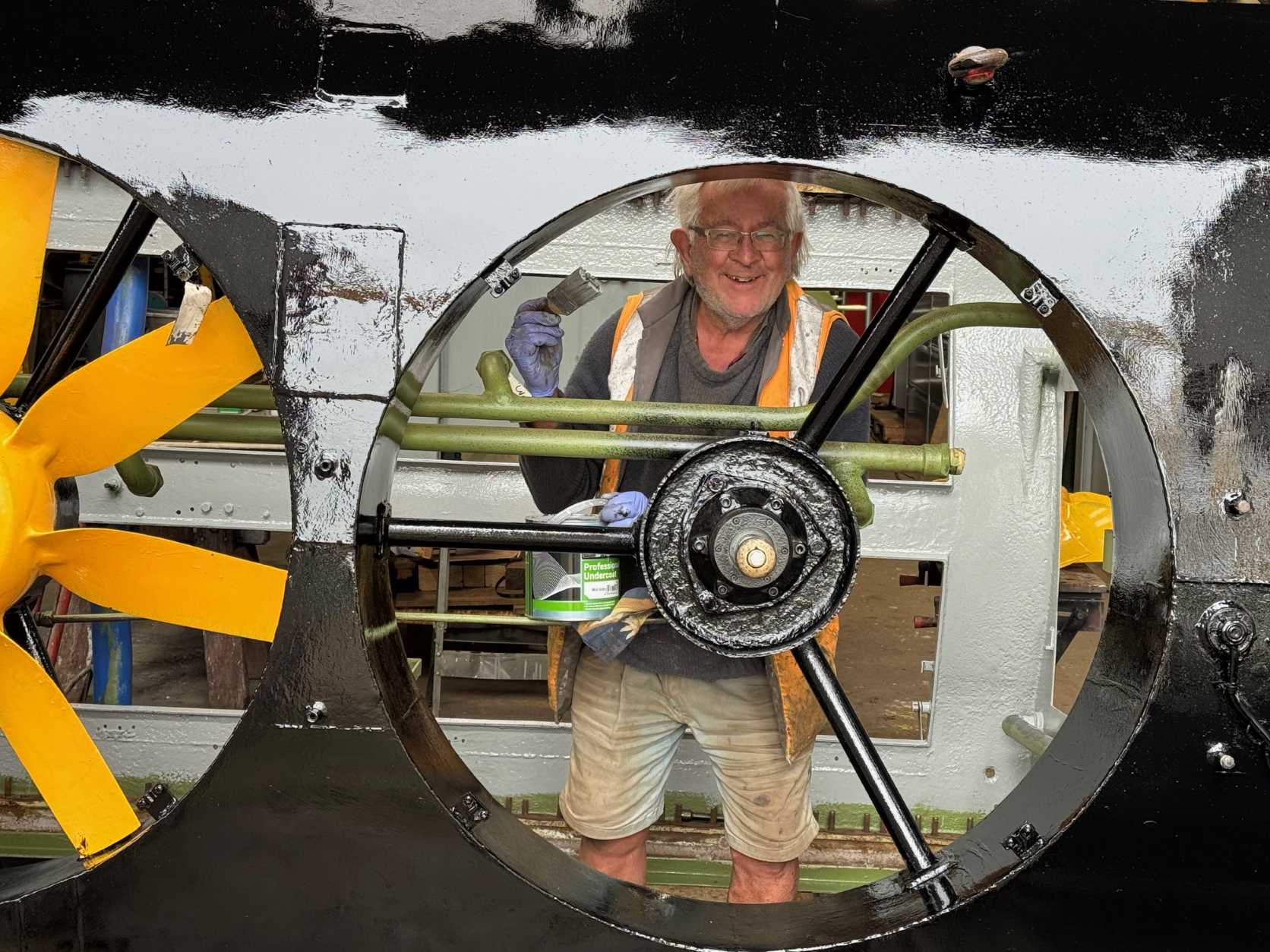
    Class 52 D1010 ‘WESTERN CAMPAIGNER’ – with the focus on other projects at Williton last weekend, the D1010 team were content to keep out of the way and progress some simpler tasks, with Ian F continuing his never-ending paintwork challenge and Gordon tackling the 50-year accumulation of dirt that has attached itself to the underside of the loco. The focus in the coming weeks will be on evaluating and recording the condition of the various bogie components, so that the repair work can be arranged along with the necessary replacement parts.

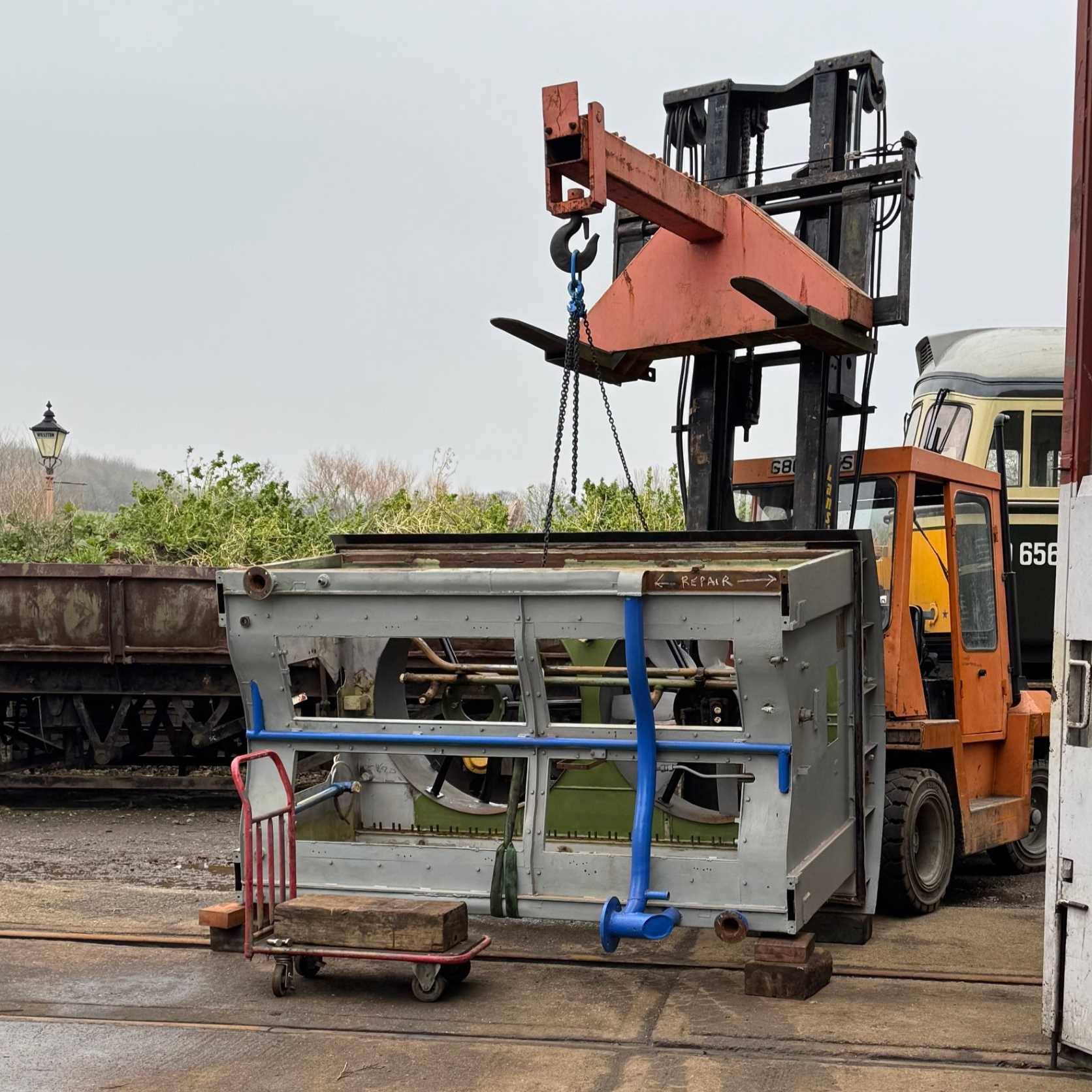
    D1010 – the ‘A’ cooler group is still undergoing welding repairs, but it had to be moved out of the loco shed to make way for the crane on Saturday 8th February 2025. Pictured at Williton by Jon Tooke © CC BY-NC 3.0


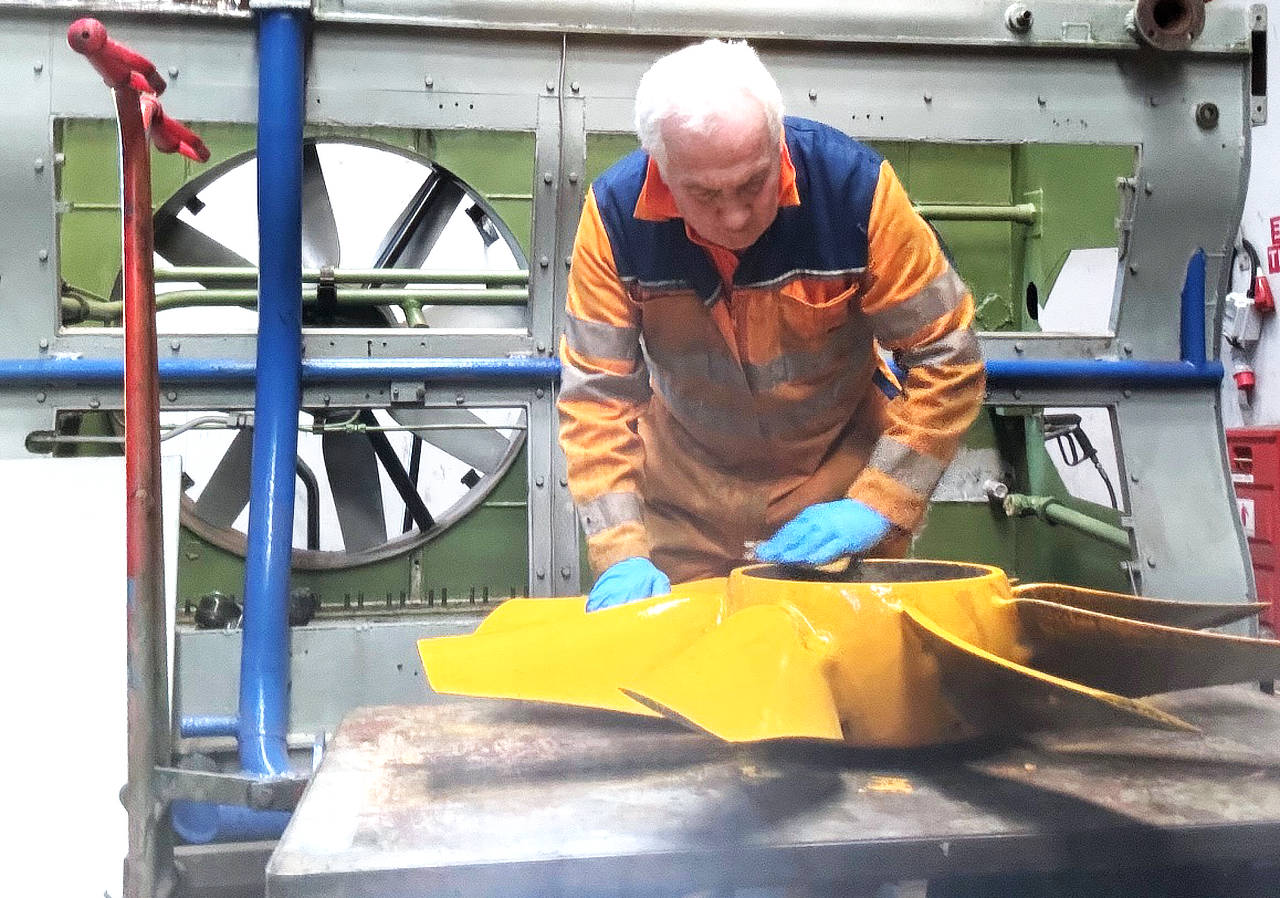
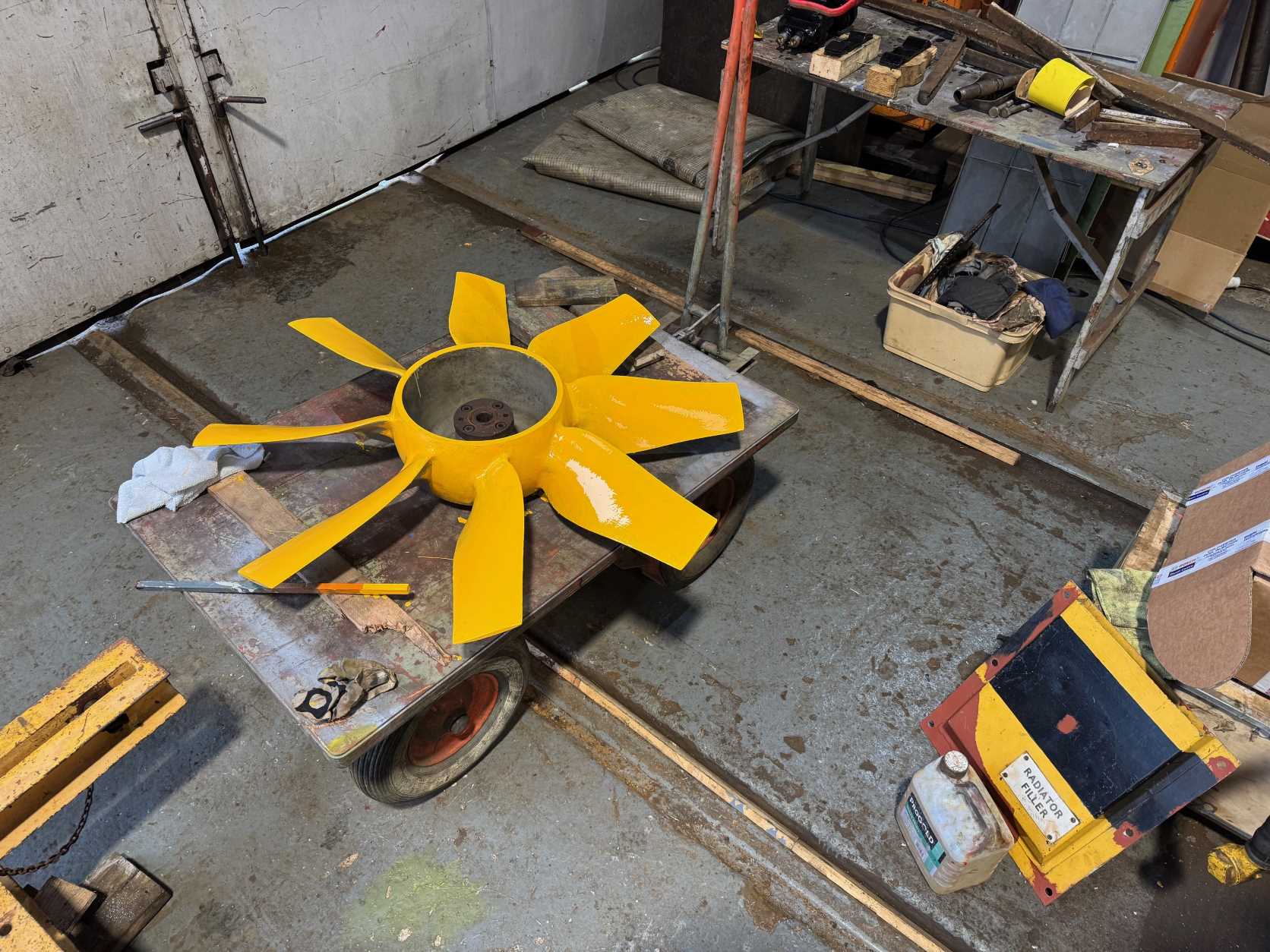
    D1010 – one of the fans from the ‘A’ cooler group had to be removed to allow the motor to be repaired, but this has now been done and the fan is being prepared for re-fitting to the motor shaft. Pictured at Williton on Saturday 8th February 2025 by Jon Tooke © CC BY-NC 3.0


    Our appeals for MORE VOLUNTEERS are working because we have had another new volunteer join us in the last week, which is great news, but WE STILL NEED MORE HELP to get this huge loco back on the rails, so please get in touch by using our CONTACT FORM if you are able to join the team.


    As mentioned before, apologies to those D1010 sponsors who have yet to receive the photos and certificates for the patches that they have sponsored. The bitterly cold weather is preventing us from spending outdoor time on the engraving, so we will need to leave this work a little longer, at least until the temperature is back in (positive) double digits.

    Rest assured that every sponsor will receive their certificate and the details of where to find their sponsored patch. We will be making a further push for funds soon, because we have some big ticket items for refurbishment, including the remaining cardan shafts and 32 springs from the suspension system.

    MANY THANKS to all who have sponsored and supported the RESTORATION of D1010 !


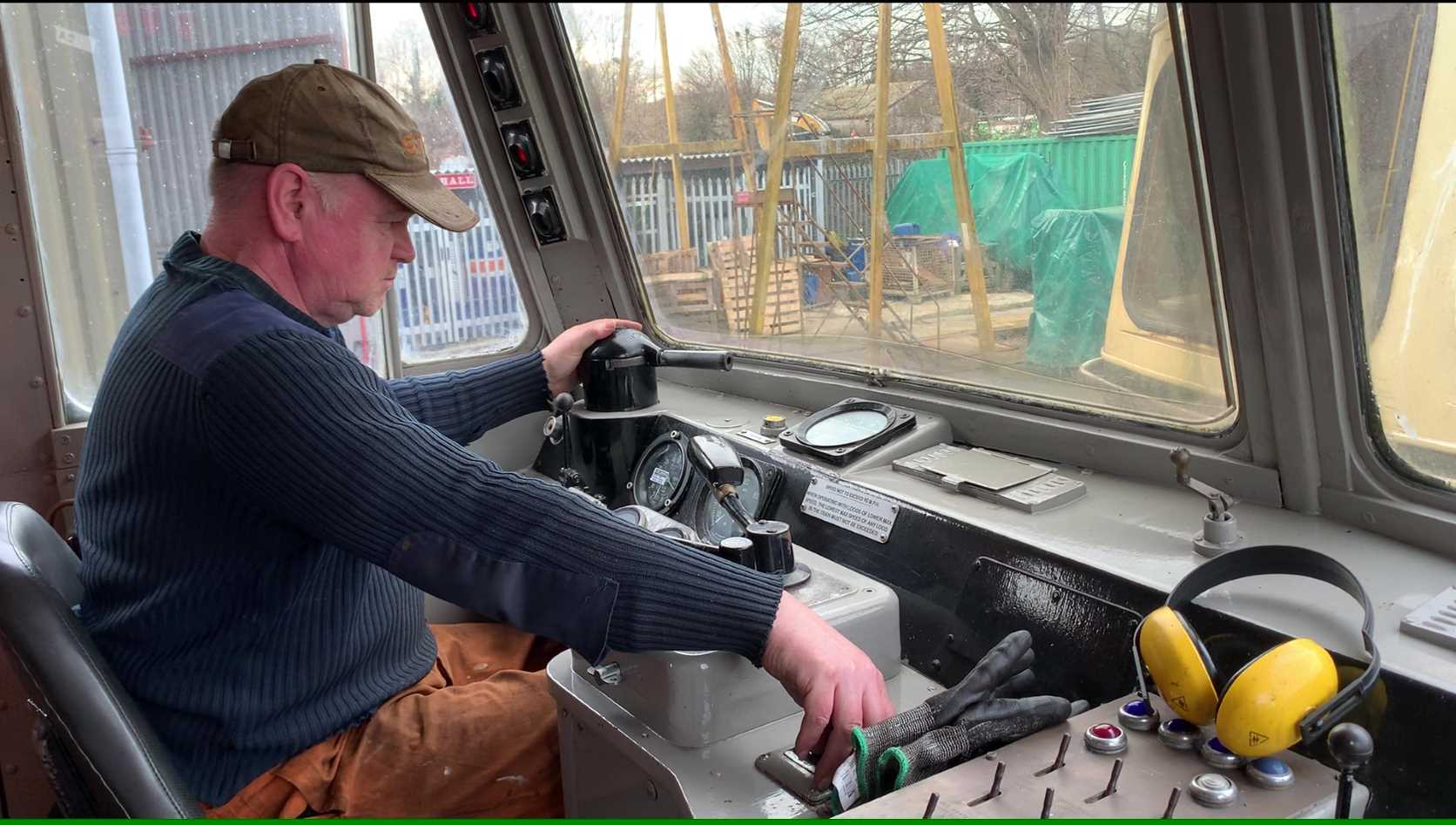
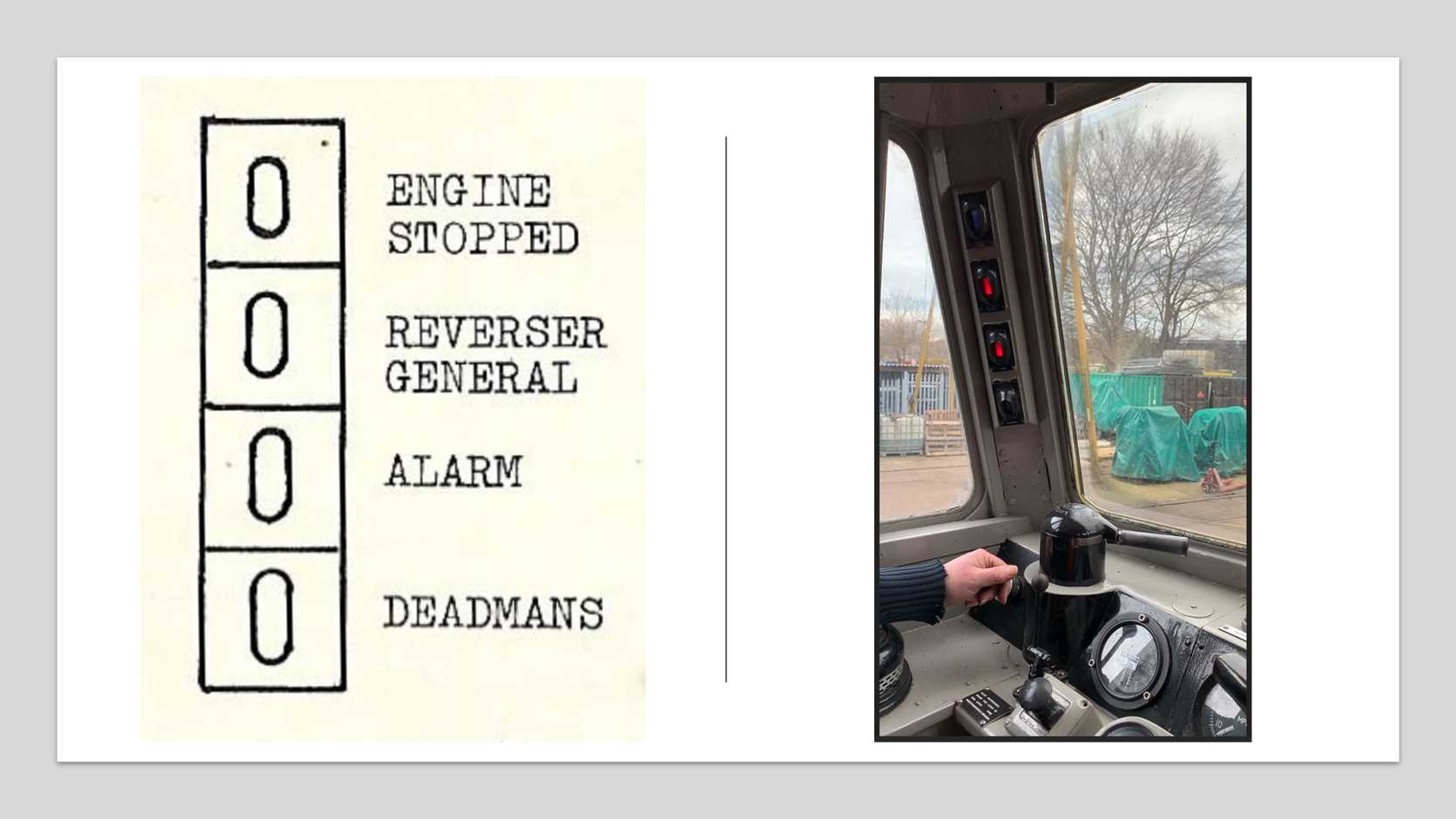
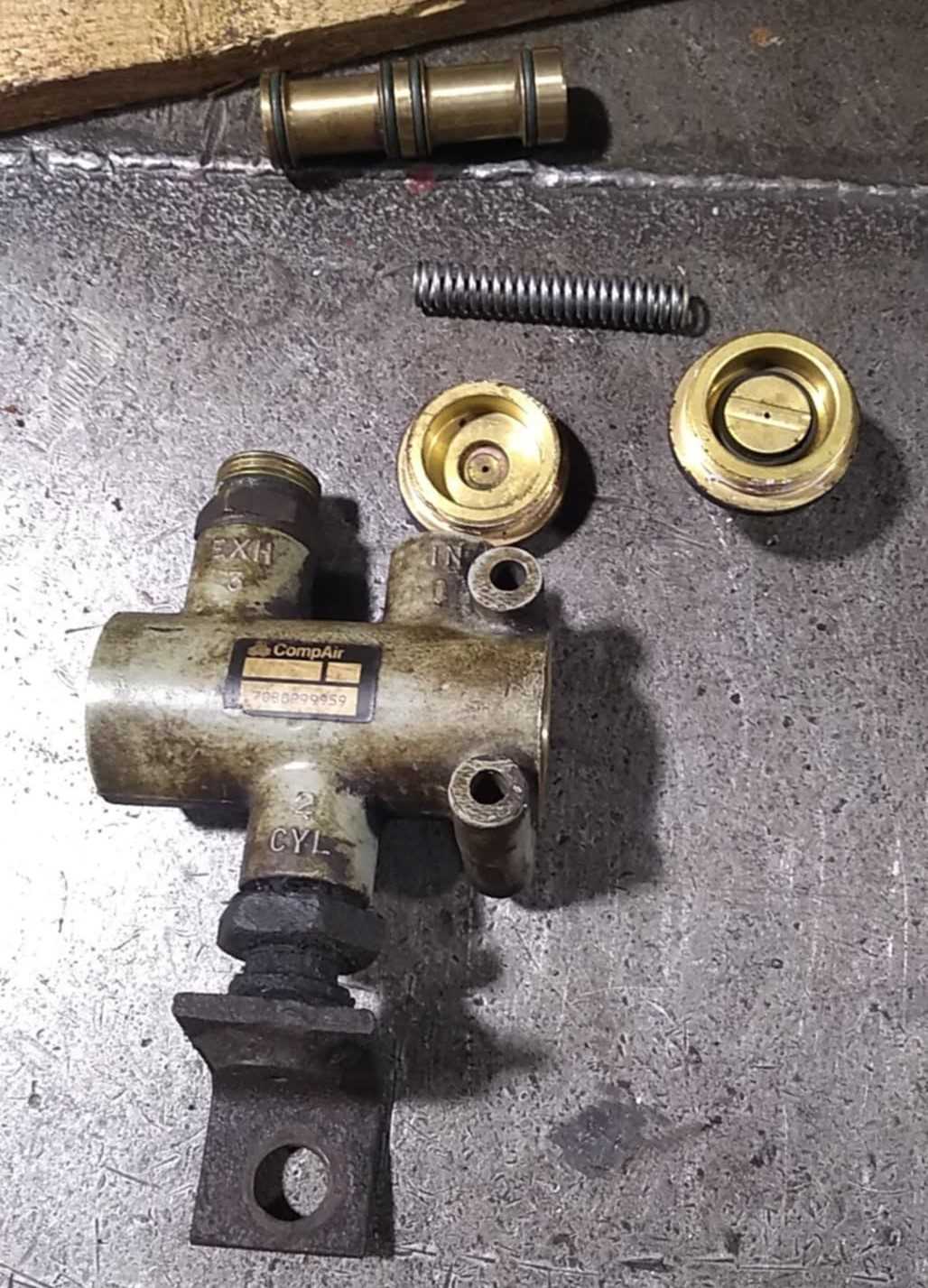
    Class 09 D4107 (09019) – the Oleo hydraulic buffers have been overhauled by a specialist subcontractor and are on their way back to Williton, which is great news and quite a relief, given that we are running out of time to keep this loco at Williton. The list of outstanding repairs and maintenance tasks is diminishing, the latest success being the solution to the slow operation of the Driver’s Safety Device (DSD, sometimes called the ‘deadmans’ handle or pedal), this issue being traced to a stuck valve underneath the floor of the loco. After dismantling and cleaning the valve, the DSD system now works as it should.

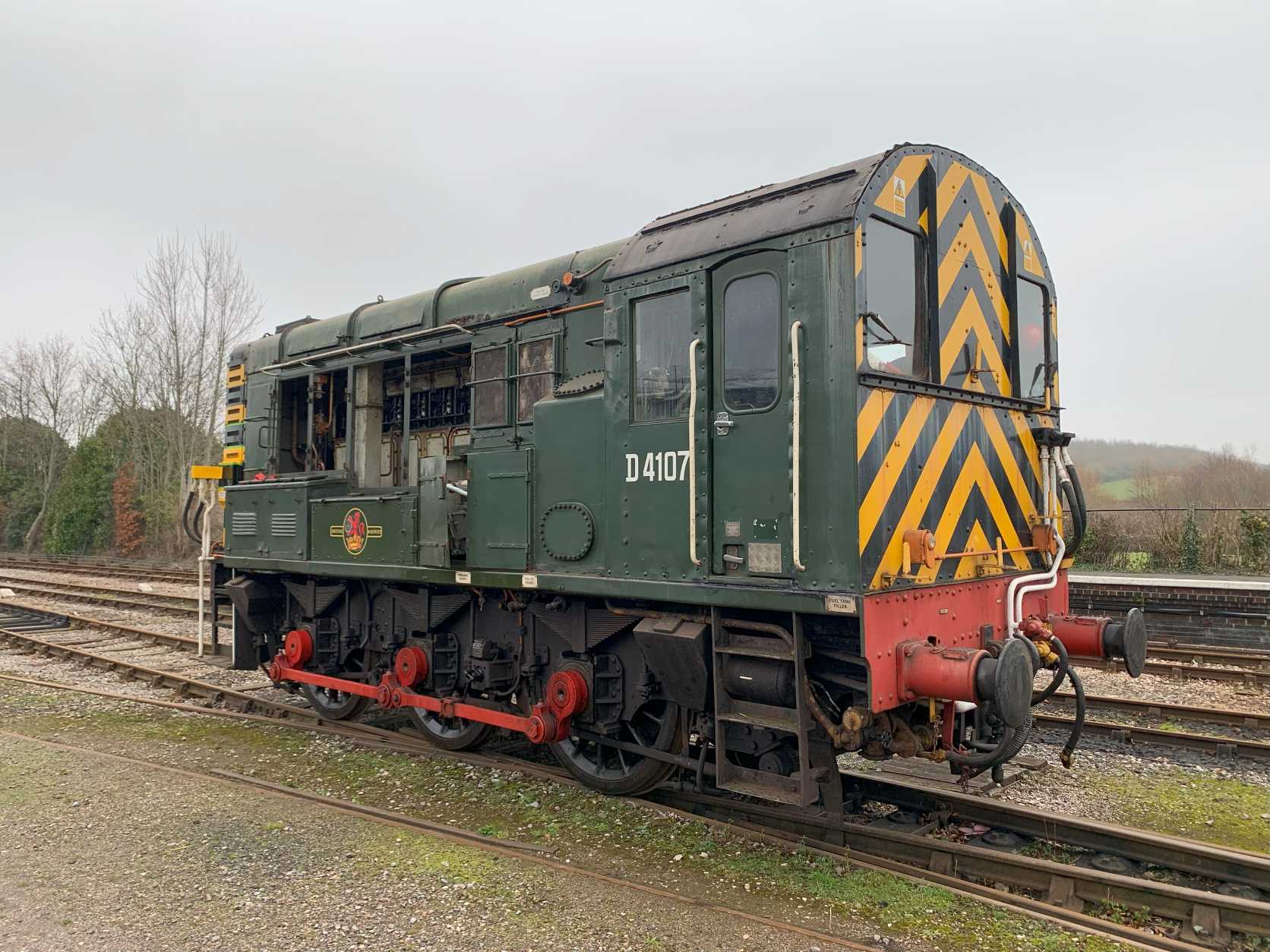
    D4107 (09019) – winter maintenance and repair works are almost complete, although the repaint will have to wait until next year. Pictured at Williton on Saturday 8th February 2025 by Andy Royal © CC BY-NC 3.0


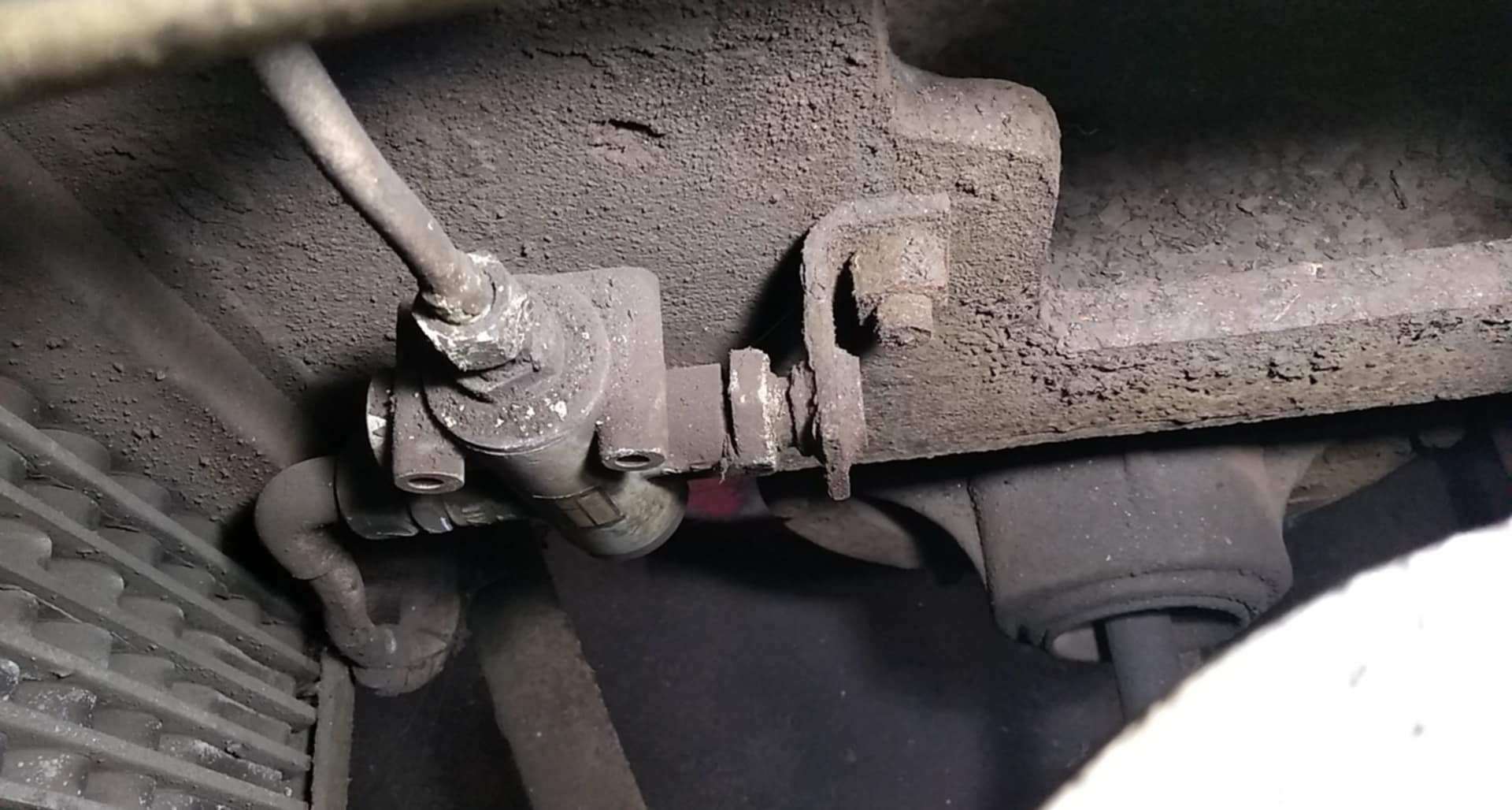
    D4107 (09019) – the delinquent valve is pictured as mounted under the cab floor. Photo dated Sunday 9th February 2025 by Ian Robins © CC BY-NC 3.0


    D4107 (09019) – the delinquent valve was disassembled and cleaned up at Williton on Sunday 9th February 2025, solving the issue with the DSD. Photo by Ian Robins © CC BY-NC 3.0


    Class 33 D6566 (33 048) – this loco has now returned to Williton and will receive some scheduled maintenance while also enjoying some rest and relaxation in the confines of the yard.


    Class 33 D6575 (33 057) – this loco has now become the Duty Loco, after moving to Bishops Lydeard on Saturday 18th January. This loco will be in use between Bishops Lydeard and Norton Fitzwarren for crew training purposes on Friday 14th and Saturday 15th February.


    Class 35 ‘Hymek’ D7017 – in addition to the bodywork overhaul that is taking place in the loco shed at Minehead, volunteer driver and loco manager Neil has been investigating the issue with the driver’s droplight (side) window and has found that corrosion has caused the underlying framework to swell, resulting in distortion of the guide channel which then gets in the way of the window glass. The solution is to remove the former BR(WR) Automatic Train Control (ATC) equipment from the cab side wall and expose the window mechanism so that the corroded section can be cut out and fresh metal welded in. This fairly simple issue will take many hours of work because of the difficulty accessing the work area. Although the ATC equipment is redundant, it is kept for authenticity and reflects the equipment fitted to these locos throughout their working lifetimes, so quite a bit of patience is required to get this job done. Well done to Neil for taking on the task !

    D7017 – the driver’s droplight window needs attention so the equipment mounted on the cab side wall had to be removed to allow access. What a task, and there is more to be removed before the welding repairs can take place! Pictured at Minehead on Wednesday 5th February 2025 by Neil McCannon © CC BY-NC 3.0


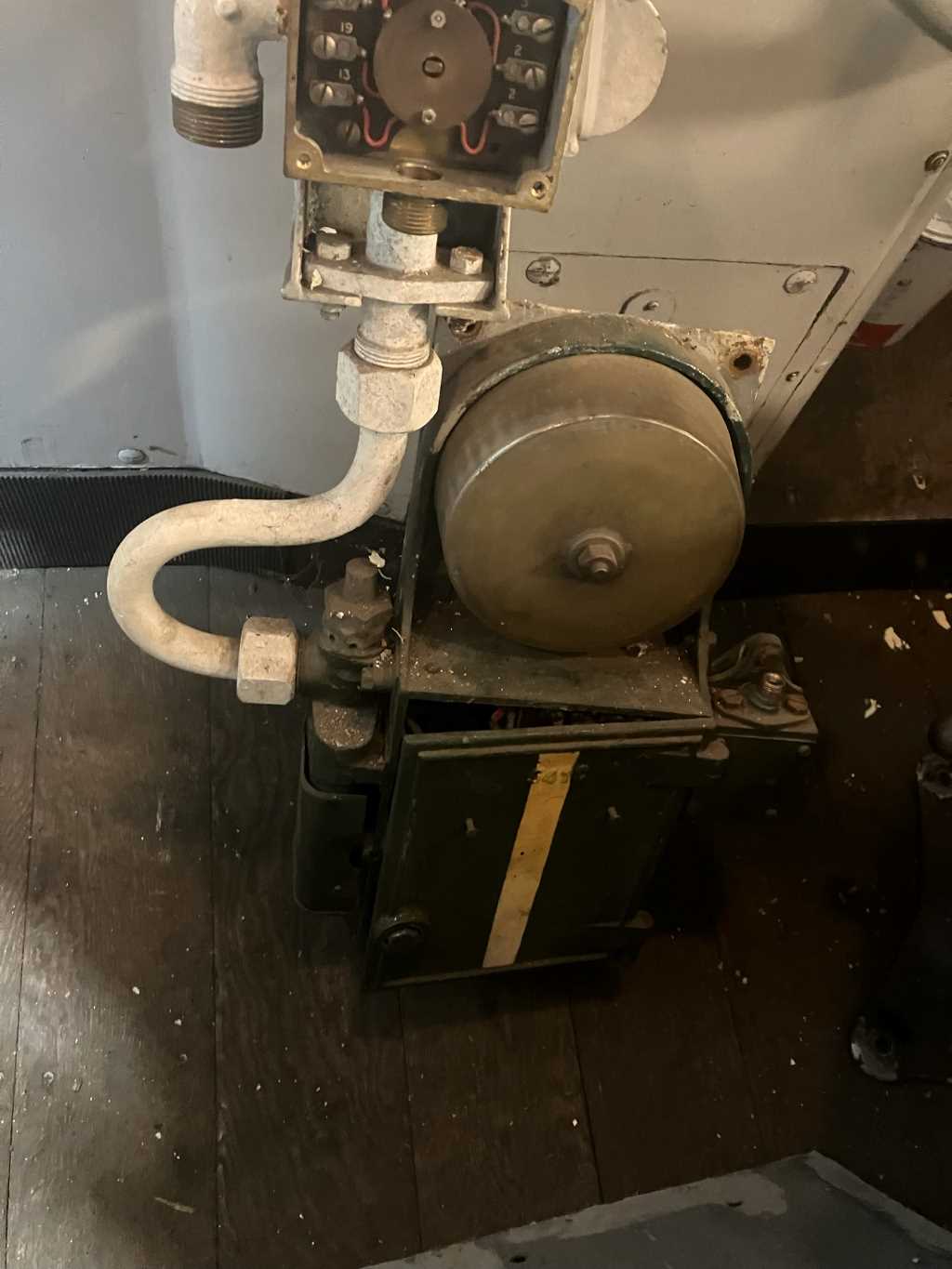
    D7017 – the BR(WR) ATC equipment is mounted on the cab wall on the driver’s side, which then makes access to the window mechanism extremely difficult. Pictured at Minehead on Wednesday 5th February 2025 by Neil McCannon © CC BY-NC 3.0


    Class 35 ‘Hymek’ D7018 – this loco is getting closer to her return to service in this, the 50th year of ‘Hymek’ preservation. This loco was the last of the Class to be switched off, being withdrawn from service at Old Oak Common on 16th March, 1975. For more details, get a copy of our booklet ‘HYMEK D7018’ by clicking on this link.

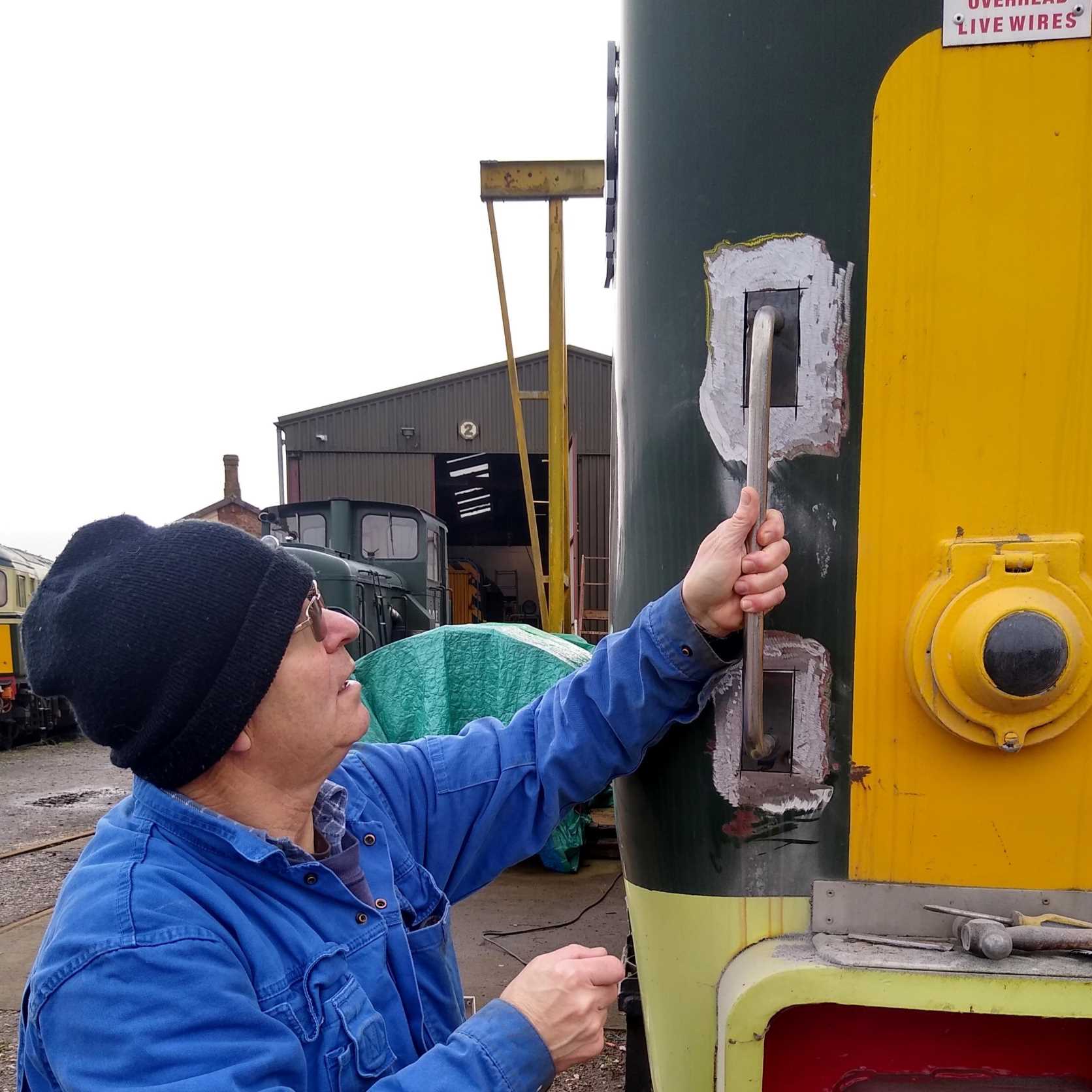
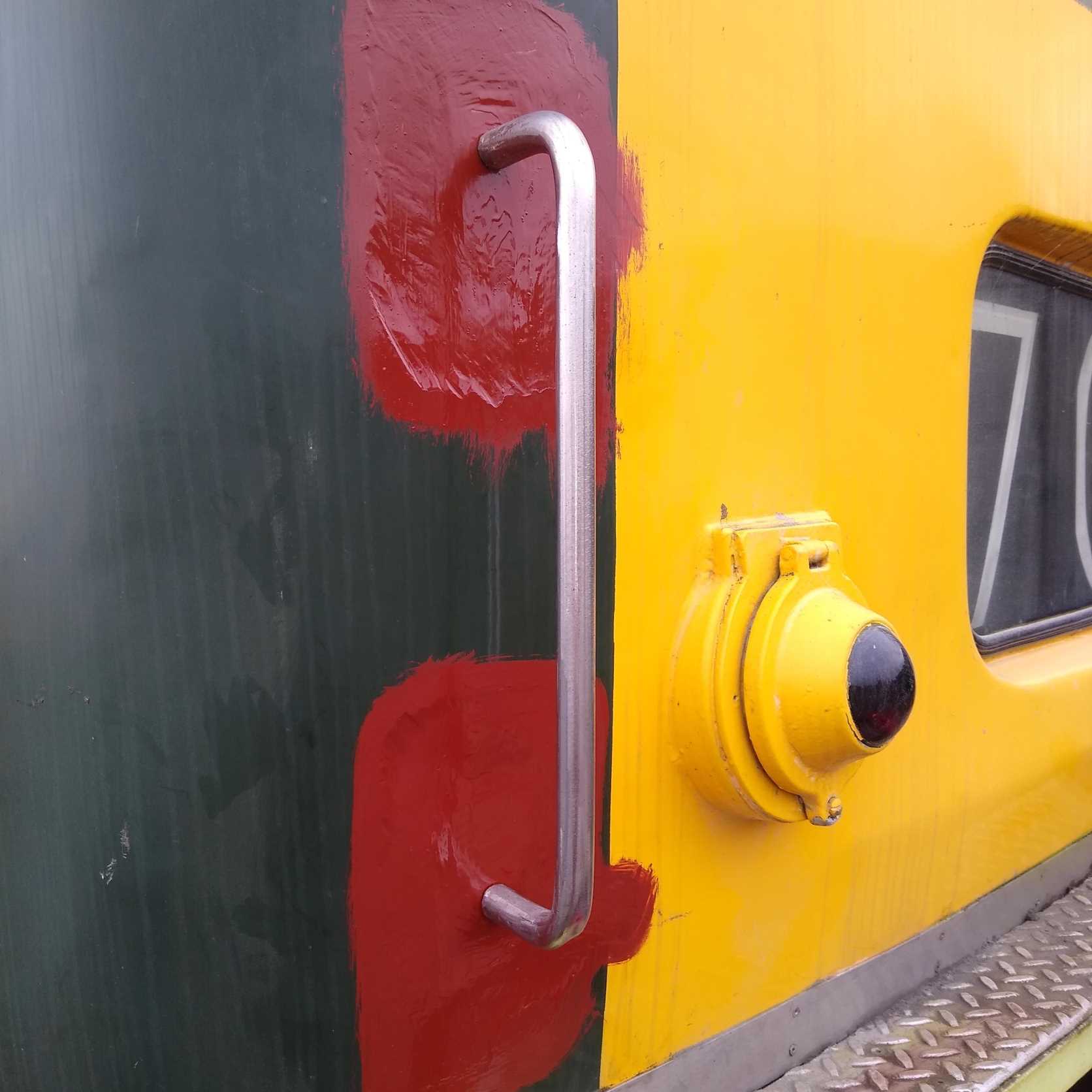
    As the transmission team were in a holding pattern after completing their preparations for the transmission to be re-installed, they demonstrated their talents by resolving an issue that had marred the looks of the loco for some time, namely the bent handrail on the Secondman’s side at the ‘Minehead’ end of the locomotive !

    The team set about removing the handrail for straightening, then welded it to rectangular plates, and then welded those plates to the loco body from the outside. This was necessary because of the lack of access from the inside. However, the team did mange to get a few coats of paint onto the repaired area from inside the cab, ensuring that the repair will last as long as the rest of the loco. Well done team !

    D7018 – the damaged handrail had been removed by Geoff and Colin F on the previous day, and straightened out before attaching it to two rectangular plates, with corresponding cutouts made in the loco body panel. Pictured at Williton on Tuesday 4th February 2025 by Colin Foxhall © CC BY-NC 3.0


    D7018 – after welding from the outside and applying red anti-corrosive primer, the repair is now ready for completion by the painting team. Pictured at Williton on Tuesday 4th February 2025 by Colin Foxhall © CC BY-NC 3.0


    Class 14 ‘Teddy Bear’ D9518 – as previously reported, the cab assembly has now been remounted onto the loco frames and the work of bolting it down and re-attaching the various parts can now proceed. This will also allow the wiring work to be completed. The engine overhaul is proceeding in parallel, and we will bring more news on that in the next roundup.


    Quality work needs to be funded, so we will continue to appeal for funds to support the work, right up to the point where the loco is completed. Any surplus will then be used to ensure her proper care and upkeep. If you like what we are doing, please make a donation via our website (click on the icon below) or by bank app or by sending a cheque to the DEPG at WillitonTHANK YOU VERY MUCH FOR YOUR SUPPORT !


    Class 14 ‘Teddy Bear’ D9526 – this loco celebrated her 60th birthday on Monday 6th January, as announced in an earlier post (click here for the post and for a video clip of her most recent engine run). This loco will enter the loco shed some time in the spring and will undergo engine maintenance and receive a paint refresh in time for her appearance at the WSR’s SUMMER DIESEL FESTIVAL 2025.


    Class 47 47077 ‘NORTH STAR’ – this loco is based at Grosmont on the North Yorkshire Moors Railway and we look forward to seeing this loco being in regular use during 2025 !


    Andrew Barclay 0-4-0DH 578 – although this loco had been very busy in connection with the re-location of the West Somerset Railway Heritage Trust’s carriage collection from Williton to Washford and had demonstrated her reliability and usefulness, she let us down totally on Saturday 8th by failing to start when we needed her to move D7018 and D9518 ! The issue appears to be a failure within the starter motor, so we are investigating that and trying to find a solution that will allow the loco to be started and moved out of the way while we get a spare motor overhauled. Such is life !

    Barclay 578 (ROF1) was marooned on number 4 road in disgrace after failing to start on the morning of Saturday 8th February 2025. The issue with her starter motor is being investigated. Pictured at Williton on the 8th by Jon Tooke © CC BY-NC 3.0
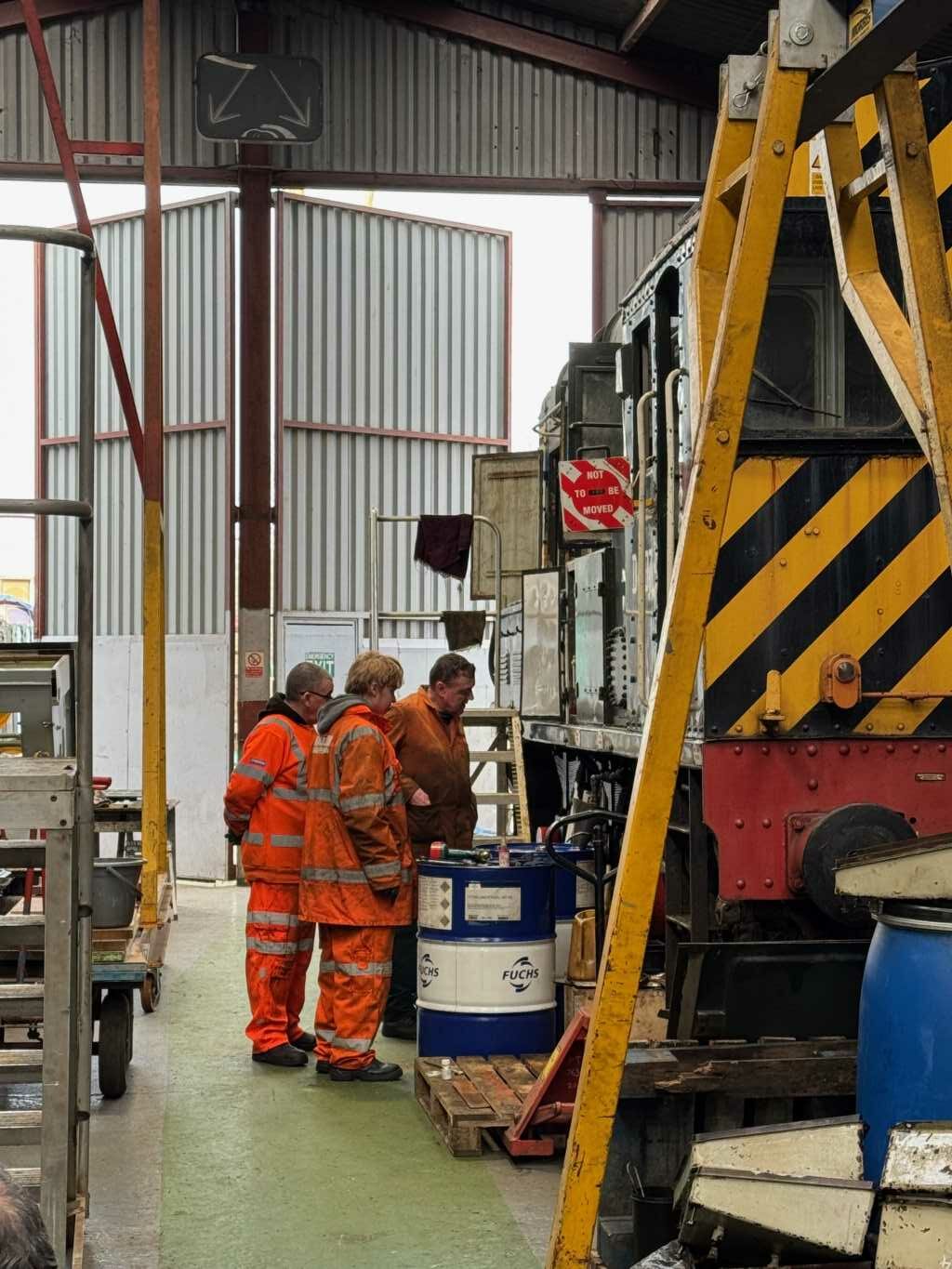
     

    If you can help by donating your time to any of these projects, then please JOIN US and come along to the depot for an introduction to what we do and how we do it. We currently have people on site from Saturday through to Tuesday and we can open on other days if we can be sure of getting at least two volunteers on site at all times, so there is plenty of scope. We have tasks of all types to suit most capabilities, both skilled and unskilled.

    Many thanks to all of our volunteers who give up so much of their time to work on the cleaning, painting, maintaining, restoring, managing and fund raising for our fleet of heritage locomotives !


    BOOK REVIEW: many thanks to those who have already ordered this new book, and apologies for the delay in shipping, but we now have the books in stock and shipment commenced on Saturday 8th. Thank you for your patience!

    This is a new release from Pen & Sword, another in the series of locomotive studies by ANTHONY P. SAYER and no doubt destined for similar positive reviews, as has been the case for other publications from this author (click here for details). His target this time is the short-lived Class 23 ‘Baby Deltic’, a rare example of a product from the English Electric stable that did not deliver on it’s promises. Anthony digs deep into the background and presents the story in his usual style, complete with fine detail.

    Here’s the description text that has been provided by the publisher, Pen & Sword:

         “The British Railways ‘Pilot Scheme’ orders of 1955 included ten English Electric Type 2 diesel-electric locomotives deploying Napier ‘Deltic’ engines. These locomotives, more colloquially known as the ‘Baby Deltics’, were introduced into traffic during 1959 for use on the Eastern Region of British Railways. This book looks at the history of the Class 23s, making extensive use of available but previously unpublished archive material, covering their introduction, technical idiosyncrasies, appearance design and performance. Issues with the original ‘Deltic’ engines were ultimately dealt with via a major rehabilitation exercise during the 1963-65 period; whilst various re-engining options were considered , including a new ‘U’ series English Electric high-speed engine design, the original Napier engines were ultimately retained. The work involved in the whole rehabilitation process is discussed in detail using internal English Electric archive material and forms a central focus of research. The fleet survived intact until 1968, when withdrawal commenced as a direct result of declining traffic levels across the UK, with successive National Traction Plans progressively selecting the less successful, non-standard and ‘numerically-challenged’ classes for removal from traffic. All ten locomotives were withdrawn by March 1971. Individual locomotive histories, allocations, fire and accident incidents, liveries and detail differences, storage and disposals are provided for each locomotive.”

    Price £32 – NOTE: RRP is £35 so save £3 by buying from the DEPG !

    Click here to obtain your copy of this new book.

    Other books in this popular series are also available from the DEPG online store (classes 1417 and 22)

    Four new books have just been added to our online store – click on the images below for details:

    The Railways of South Wales 1975-1995 Part 1 – by Michael Rhodes – price £21.95 The Berks & Hants Line – 40 Years from the Lineside – by Stephen Dance – price £22.95
    Railways of Cornwall – A Decade of Change – Part 1 – by Keith Barrow – price £20.95 Winners & Losers – Loco Bashing Tales from the 1990s – by Andy Chard – £18.95


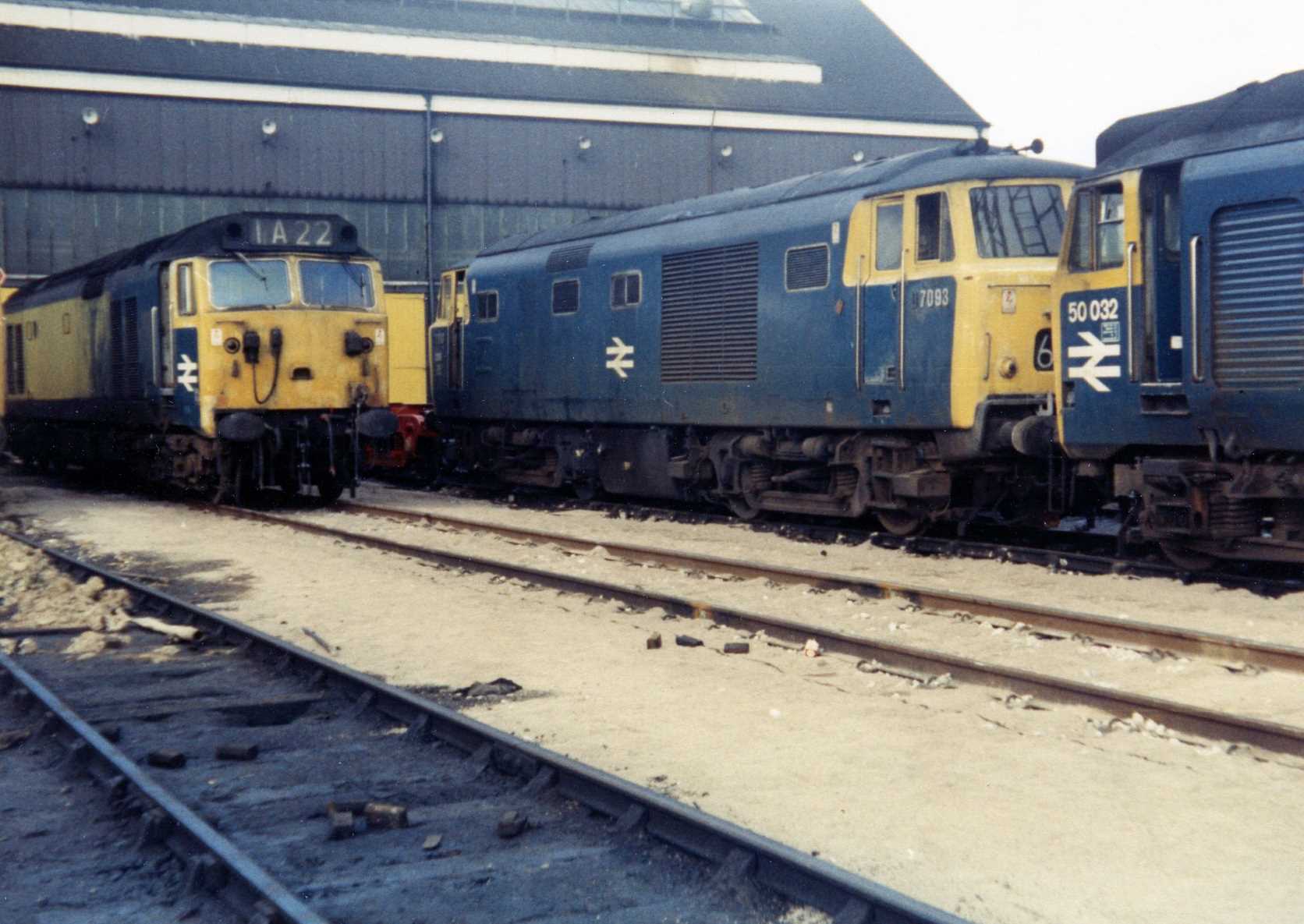
    ON SHED: in July of 2024, we featured a photo of Class 52 D1069 ‘WESTERN VANGUARD’ at Cardiff Canton depot carrying the headcode ‘2V48’ and this raised some questions about what Class 2 service the ‘Western’ would have been working prior to arrival on shed. The discussions over the last two weeks about Class 52 ‘Westerns’ working the 18:12 Fridays Only (FO) from Paddington have caused DEPG founder member Clive Burrows to make a plausible connection that would explain the ‘2V48’ headcode on a loco that quite possibly made its way to Cardiff on a Class 1 service from Bristol, while still showing the ‘2V48’ headcode at the trailing end of the loco. Here’s the information that Clive has provided:


         “Several months ago you published a picture of a Class 52 with a Class 2 WR headcode (2V48) with a question about the interregional service that was involved.  That reminded me that the 18:12 FO from Paddington was often hauled by a Class 52 up to the end of April 1976 as it was diagrammed for Mk.1 vacuum braked stock, even though all the other weekday services on the route had migrated to ETH stock.  The locomotive off the 18:12 FO then worked the Saturday afternoon 16:xx Bristol to Weymouth and the 19:xx return, which is likely to be where the 2Vxx headcode came from on the Class 52 in your photograph.

         The final destination of the18:12 FO from Paddington to Bristol was actually Taunton, but the locomotive would have brought the empty coaching stock (ECS) back from Taunton to Malago Vale before going on to Bristol Bath Road depot.  Looking back at my records, on 1st November 1974 I caught the 18:12 FO from Paddington to Chippenham that was hauled by D1046 and then the following day (Saturday 2nd November 1974) I caught the 16:00 Bristol TM to Weymouth that was also hauled by D1046.

         Rather strangely, I caught the 18:12 (FO) from Paddington to Bristol one evening several years later during an industrial dispute when it was load 11 coaches hauled by a single Class 33 with a Westbury based crew.  I rode on the footplate with the Westbury crew and noted that the power controller only had two positions, open and shut!”

    Many thanks to Clive for providing this information. Does anyone have an alternative theory about the mysterious ‘2V48’ headcode ? If so, please let us know by using our CONTACT FORM.


    Class 52 1069 ‘WESTERN VANGUARD’ stands at the head of a line of locos at Cardiff Canton shed on a gloomy day in December 1974. This loco was delivered new to Cardiff Canton on 21st October 1963 and immediately put to use on the Paddington express workings, to relieve the ‘Hymeks’ on these heavy turns. Evidently reduced to Class 2 workings by 1974, this loco was withdrawn in October of the following year. Photo by the late Mike Evans © CC BY-NC 3.0


    DEPG NEWS – the February edition of the quarterly DEPG Newsletter has been produced on schedule by editor Mark Bladwell and has been mailed or emailed (according to member preferences). The paper copies were mailed last weekend, but an issue has arisen where an effort to save cost has backfired ….

    The labels used were old stock and have lost their ‘stickyness’ and some are becoming detached in the post, resulting in the newsletters being returned to the sender without address labels. Unfortunately, we don’t know who has received their newsletters and who hasn’t !

    So, if you are a member and want a paper copy of the newsletter and haven’t received it by the 19th of February, please get in touch by using our CONTACT FORM and we will get another copy in the mail for you. Apologies for any delay !


    The DEPG is a charity and is run entirely by volunteers, many of whom give both their time and their money to the continuance of work on the locos in the DEPG fleet. If you have been enjoying the roundup for free, have you considered joining us for just £1 a month ? You can then add your name to all of those helping out on the above projects and play your part in the future of our locos for a lot less than the price of a cup of coffee!


    JOIN US using whichever membership class is appropriate for your situation and means. CLICK HERE or on the image below or use the QR code to get the details.


    If you would like to go one step further and come along to help with the work on the locos in our fleet, then please use our CONTACT FORM to let us know that you would like to volunteer and we will respond with more details.

    We look forward to hearing from you !


    Go to the previous Weekly Roundup post

  • Weekly Roundup – 02-Feb-25

    Barclay 578 (ROF Bridgwater No. 1) was put to work on Monday and Tuesday 27/28 January 2025, hauling the WSRHT’s heritage coaches from Williton to Washford with Class 03 D2133 at the rear. Pictured arriving at Washford with TK 5856 on the 28th. Photo by Robin Wichard © CC BY-NC 3.0


    The re-location of the West Somerset Railway Heritage Trust’s (WSRHT) collection of heritage coaches from Williton to Washford created a challenge for the WSR because of the frail condition of some of the vehicles, most of which have not been subjected to haulage by rail for a very long time. After careful inspection, the vehicles were given permission to be moved by rail – but one at a time with a loco top and tail and at a maximum speed of 5mph.

    So, on Monday 27th and Tuesday 28th January 2025, the WSR’s Class 03 shunter D2133 arrived at Williton where the coaches had previously been made ready by DEPG Williton depot shunter Barclay 578 (ROF 1), and the two locos positioned at the top and tail of each coach in turn before heading off at walking speed. Over the course of two days, five heritage coaches were moved to their new home at Washford where they were shunted into the yard awaiting their turn in the restoration queue.

    The chance for such a workout does not come along very often, but we are happy to say that ‘ROF 1‘ gave a good account of herself and got the job done !

    DEPG and WSR volunteer secondman Chris was pictured while preparing to couple Barclay 578 (ROF Bridgwater No. 1) to the last of five WSRHT heritage coaches to be moved from Williton to Washford. Pictured at Williton on Tuesday 28th January 2025 by Mark Bladwell © CC BY-NC 3.0


    Barclay 578 (ROF Bridgwater No. 1) was pictured departing from Williton on Tuesday 28 January 2025, hauling another of the WSRHT’s heritage coaches from Williton to Washford with Class 03 D2133 at the rear. The blue smoke soon cleared as the 52-year-old loco’s Paxman engine warmed up. Photo by Mark Bladwell © CC BY-NC 3.0


    D7017 UPDATE

    The repair of the hidden corrosion took a step forward last week when the DEPG authorised an additional block of expenditure to cover the cutting out and repairing of corroded body sections that are not normally visible or accessible, but that need to be dealt with to prevent further damage occurring. This work has been made possible by the generous donations that have been pouring into the D7017 bodywork overhaul fund, so a BIG THANK YOU goes out to all of the 63 people who have donated.

    A combined team of DEPG and WSR volunteers are working alongside the WSR engineering team to keep this project moving forward and ensure that the loco is back in service in time for the WSR’s Summer Diesel Festival (5-7th June).

    As we reported last week, the fundraiser for the bodywork repairs for ‘Hymek’ D7017 has been kept open with a new target of £12,000 with a total of £10,778 being raised so far.

    THANK YOU FOR YOUR FANTASTIC SUPPORT !

    The new target of  £12,000 will cover most of the work being done on the loco, the remaining £3,000 being provided from the DEPG’s general fund. The sub-contract route was taken to make sure that the loco gets repaired during the winter and is able to take pole position in the celebration of 50 years of ‘Hymek’ preservation that will take place in the summer of this year.

    The initial target was reached on 1st January 2025, but we are keeping the fundraiser open until the work is completed, to make sure that we have sufficient funding to cover any unexpected costs, and make sure that a thorough and long-lasting repair is carried out. All funds donated via this appeal will be allocated to returning D7017 to service in time for the forthcoming season.


    Can you help ? Click here to donate £17 to D7017 !


    If you can help with this short-term appeal, please make a donation via our website (click on the icons above or below) or by bank app or by sending a cheque to the DEPG at WillitonTHANK YOU VERY MUCH !


    SOME SAD NEWS

    As has been widely covered in the press, the Severn Valley Railway (SVR) suffered an embankment failure adjacent to a river bridge near Sterns, between Hampton Loade and Bridgnorth. The line is now closed north of Hampton Loade while the options for remedial work are being investigated. There is no doubt that this will be a lengthy and expensive repair, so the SVR is appealing for donations to its RESILIENCE FUND to help get the work done as quickly as possible. The SVR is an active base for many heritage diesel locomotives and the DEPG encourages all members and roundup readers to help support the repair fund as best they can.

    An aerial view of the embankment failure near Sterns on the Severn Valley Railway. Pictured on Sunday 2nd February 2025 by Gary Essex (c)


    WSR NEWS

    The WSR have now published their running calendar for 2025 on their website and social media channels, and we have updated our DIESEL RUNNING DATES page including provisional loco allocations, some of which are subject to change to align with the availability of the locos and the crews. As the information becomes available, we will update our page and send out a DIESELGEN bulletin with the clarification.

    Click here or on the image below to visit the WSR’s timetable page:


    The WSR’s SUMMER DIESEL FESTIVAL has been confirmed as being Thursday 5th through Saturday 7th with a Mixed Traction Day  on Sunday 8th of June 2025.


    Click here to join the DEPG

    Click here to go to our DIESEL RUNNING DATES page

    Click here to go to our ONLINE SHOP

    Thank you very much for your support !


    LOCO NEWS:

    Class 52 D1010 ‘WESTERN CAMPAIGNER’ – as our attention turns to the assessment and repair of the various parts that have been removed from the ‘B’ bogie, some of our volunteers appeared eager to start work on the ‘A’ bogie – so we needed to measure the spring heights and clearances and record them in case any unplanned dismantling takes place. Cue former railway engineer Barry, who attended at the yard last Saturday and took the measurements, adding them to the tables on the drawings that he had also prepared. This information will be helpful when the bogie is being re-assembled, because it will allow us to get the settings approximately right before making adjustments to compensate for any repair work that has been carried out.

    D1010 – the ‘A’ bogie is outdoors on number 1 road and is covered by a tarpaulin as it awaits a space in the loco shed. Volunteer Barry was pictured while measuring the spring heights and clearances at Williton on Saturday 1st February 2025 and recording them on the drawings that he also prepared. Photo by Andy Royal © CC BY-NC 3.0


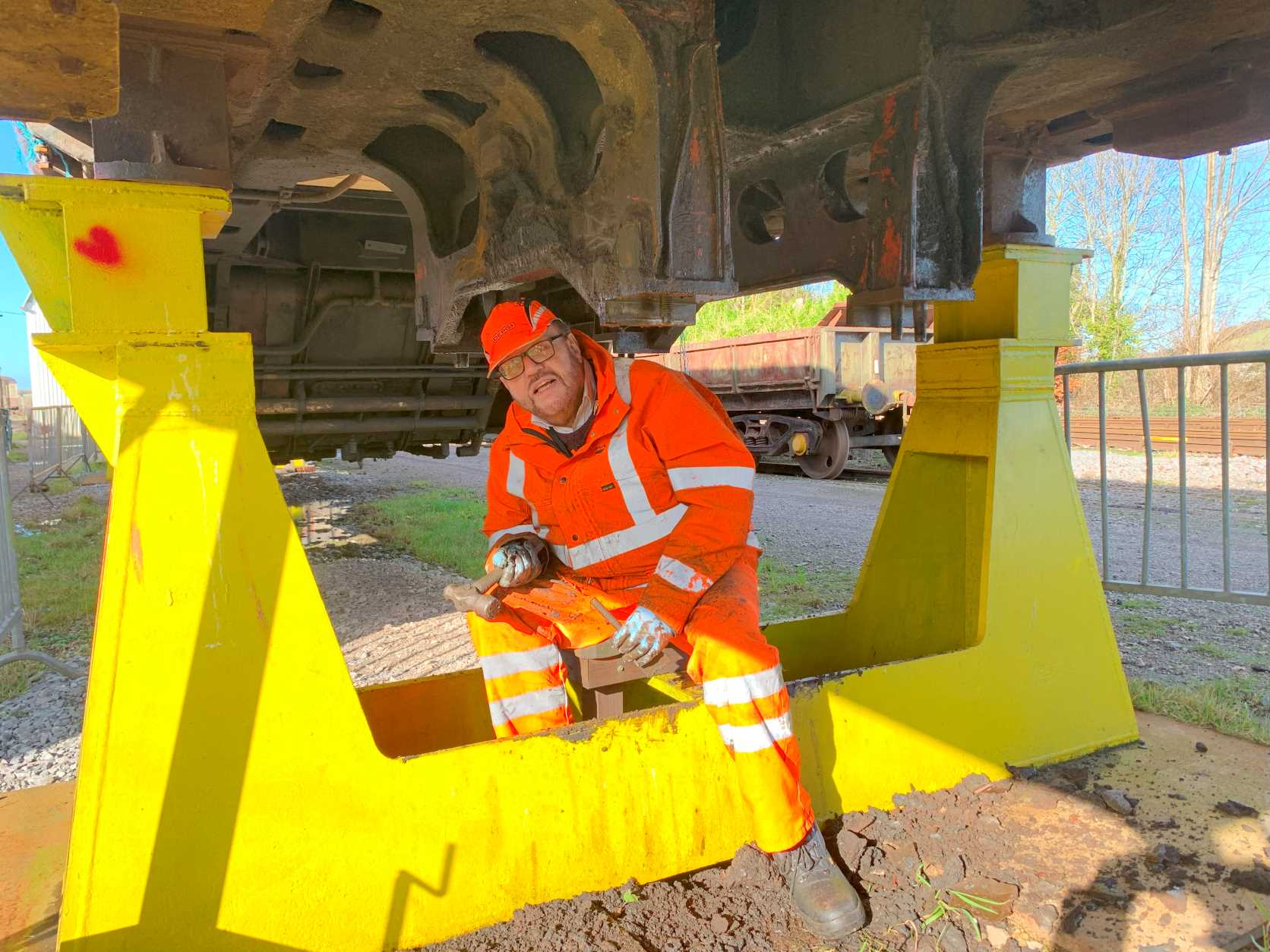
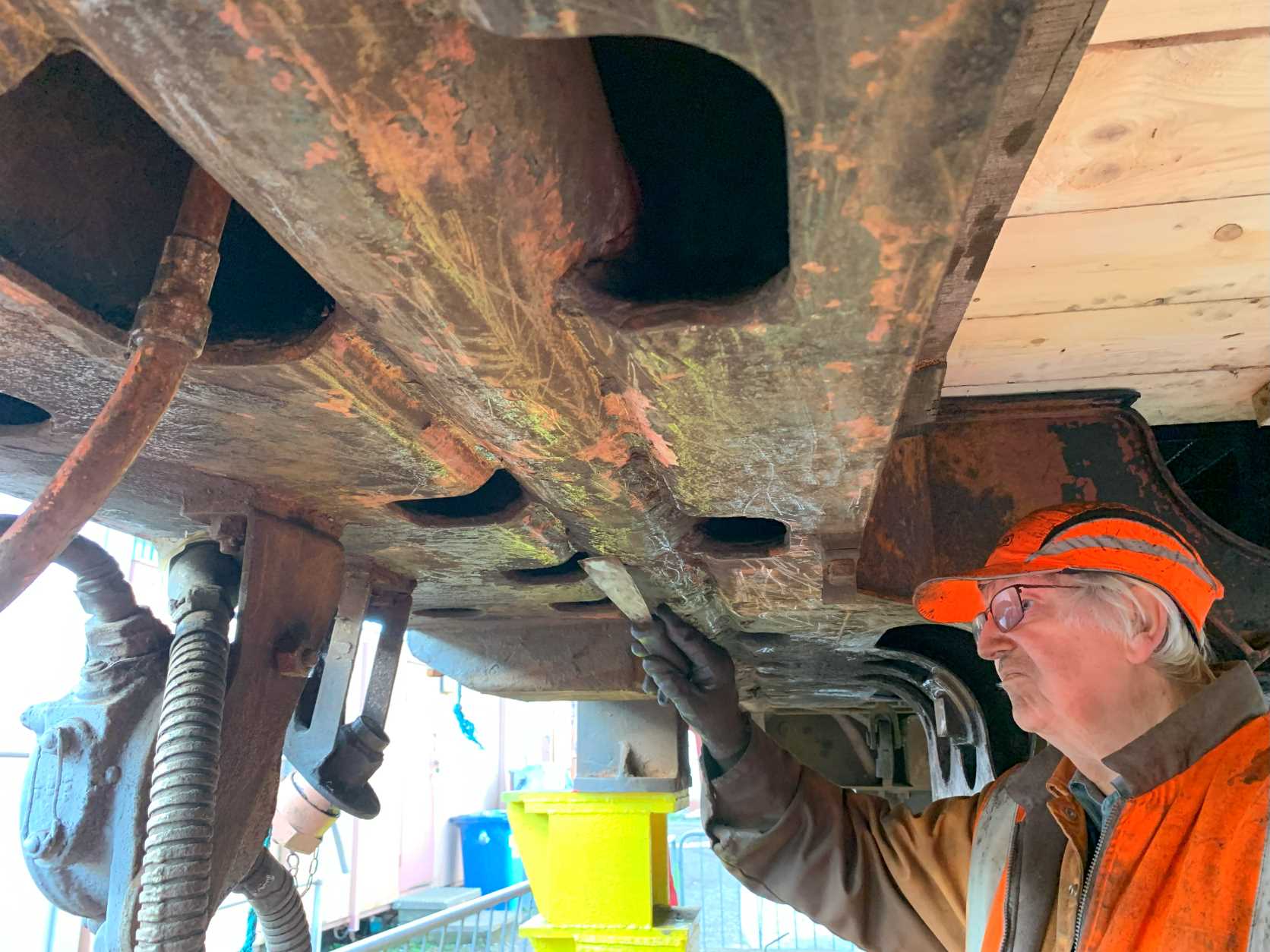
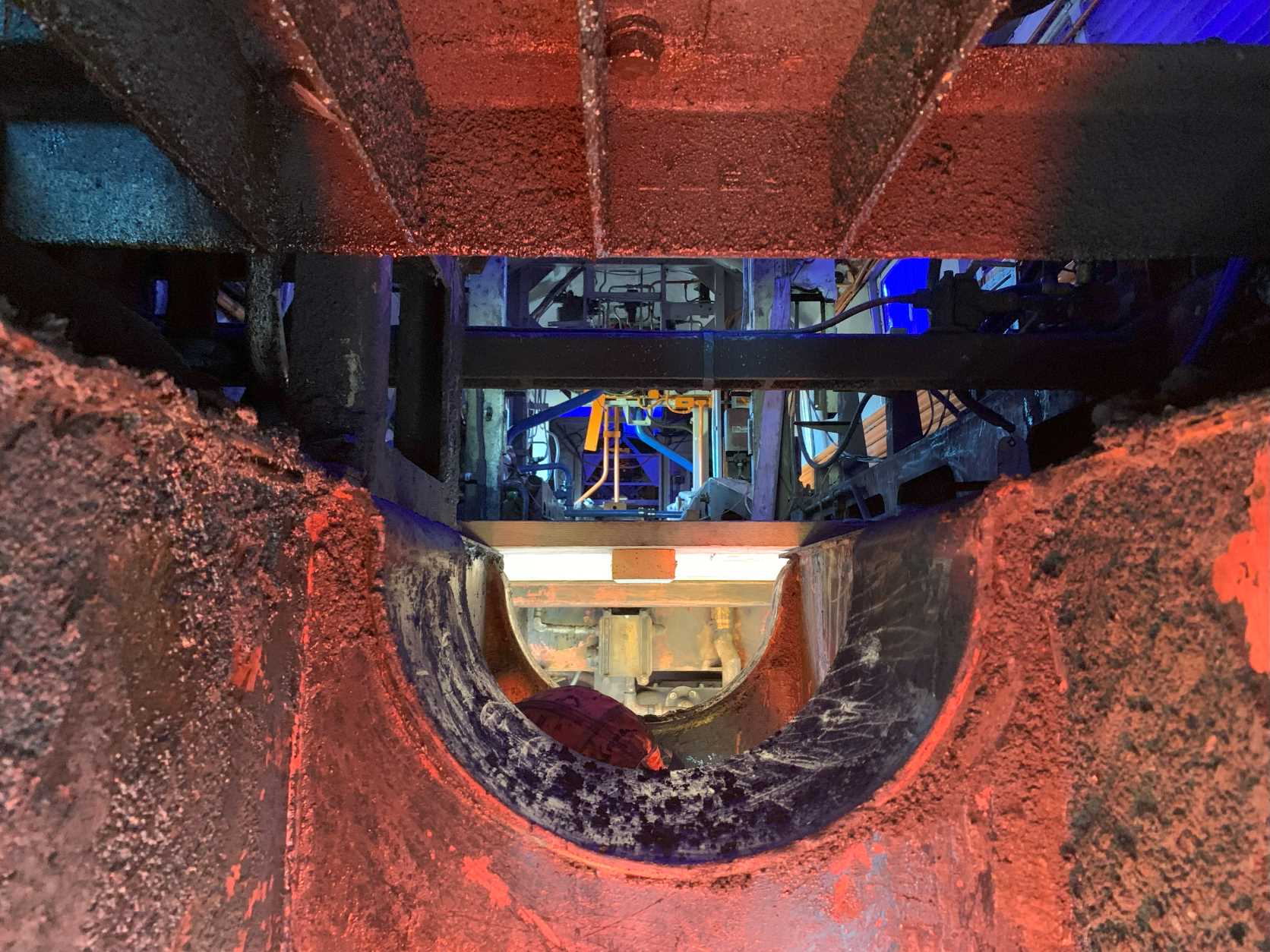
    Meanwhile, Gordon started work on the underside of the loco, scraping off the layers of dirt that hide some of the features of the underframe design. Being fabricated from some decent-sized steelwork, the underframe is in very good condition – but there is a lot of it – so we will welcome some help in tackling this massive task. The good news is that it is an under cover job, although the breeze can be rather cold at times !

    D1010 – Gordon was hard at work, scraping the dirt from the ‘A’ end underframe at Williton on Saturday 1st February 2025. The substantial nature and good condition of this structural steelwork is apparent in this photo by Andy Royal © CC BY-NC 3.0


    Our appeals for MORE VOLUNTEERS are working because we have had another new volunteer join us in the last week, which is great news, but WE STILL NEED MORE HELP to get this huge loco back on the rails, so please get in touch by using our CONTACT FORM if you are able to join the team.


    As mentioned before, apologies to those D1010 sponsors who have yet to receive the photos and certificates for the patches that they have sponsored. The bitterly cold weather is preventing us from spending outdoor time on the engraving, so we will need to leave this work a little longer, at least until the temperature is back in (positive) double digits.

    Rest assured that every sponsor will receive their certificate and the details of where to find their sponsored patch. We will be making a further push for funds soon, because we have some big ticket items for refurbishment, including the remaining cardan shafts and 32 springs from the suspension system.

    MANY THANKS to all who have sponsored and supported the RESTORATION of D1010 !


    Class 09 D4107 (09019) – the long list of work on this locomotive is now reducing to a few items that are either in final stages or are waiting for parts. The issue with the Automatic Voltage Regulator (AVR) was resolved last weekend by connecting the ‘right wires’ to the ‘right places’, so that was a quick one and was confirmed by an engine test run, during which the AVR worked exactly as intended.

    The Oleo hydraulic buffers are being overhauled by a specialist subcontractor who also has many other buffers from various other railways, so there is a bit of a queue and we just have to wait a bit longer to get ours back on the loco. There are several small maintenance tasks to finish off, but nothing that is going to prevent us from getting this loco back in service during March – except perhaps the buffers ! We may have to borrow some buffers from another group in order to get the loco out of the shed and back to Bishops Lydeard on time.

    D4107 (09019) – winter maintenance work is drawing to a close, although there are still some tasks that need to be completed before the loco can return to service in March. Pictured at Williton on Saturday 1st February 2025 by Andy Royal © CC BY-NC 3.0


    Class 33 D6566 (33 048) – this loco has now returned to Williton to enjoy some rest and relaxation while her sister takes on the role of Duty Loco.


    Class 33 D6575 (33 057) – this loco has now become the Duty Loco, after moving to Bishops Lydeard on Saturday 18th January.


    Class 35 ‘Hymek’ D7017 – in addition to the bodywork overhaul that is taking place in the loco shed at Minehead, there are also a few other tasks that are being carried out. The reconditioned cardan shafts that connect the transmission to the dynastarter and Serck pump need to be re-installed and the droplight window on the driver’s side at the Minehead end needs investigating because it won’t go down as far as it should. Readers who remember the Summer Diesel Festival of 2023 might recall that the driver’s window at the Bishops Lydeard end dropped too quickly and shattered on the first day of the event, and it took us weeks to fix it, so we are eager to avoid a repeat performance !

    In addition to his work on the bodywork repairs, volunteer driver and loco manager Neil has started work on the window and we will include his findings in the next edition of roundup.


    Class 35 ‘Hymek’ D7018 – this loco is being prepared for the re-installation of her transmission and the start of a series of static tests that will hopefully allow the loco to return to service in this, the 50th year of ‘Hymek’ preservation. This loco was the last of the Class to be switched off, being withdrawn from service at Old Oak Common on 16th March, 1975. For more details, get a copy of our booklet ‘HYMEK D7018’ by clicking on this link.

    The crane is booked to be on site on Saturday 8th February to lift the centre roof panel section off, then lower the repaired transmission into the loco, then lower the tested heat exchanger, then put the roof back on. This activity will be followed by a few weeks of work to re-connect everything and do some checks, then a start-up will be arranged with data logging of the various pressure sensors that will be fitted to the transmission to verify correct and safe operation. After all of these static tests have been completed, permission will be sought for a test run, probably in April.

    The transmission heat exchanger was subjected to a pressure test at Williton last week and the unit passed with flying colours. The integrity of this device is critical because an internal leak could allow coolant to enter the transmission, resulting in corrosion damage. The leak test involved fitting blanking plates over the coolant connections and pressuring the housing with compressed air. The transmission fluid connections were covered with polythene film, held in place only by a layer of grease. Any internal leak in the heat exchanger matrix would result in a pressure increase in the transmission fluid circuit, which would be indicated by bulging of the film. Simple and effective.

    D7018 – looking in through one of the coolant connection ports, the copper tubes that carry the hot transmission fluid are clearly visible. Pictured at Williton on Tuesday 28th January 2025 by Colin Foxhall © CC BY-NC 3.0


    D7018 – for the pressure test, both of the coolant connection ports were fitted with blanking plates and sealed with gaskets. The tyre valve visible in the centre of the plate was then used to pressurise the housing, simulating the maximum operating pressure of the coolant. Pictured at Williton on Tuesday 28th January 2025 by Colin Foxhall © CC BY-NC 3.0


    D7018 – during the test, the two transmission fluid connections were covered with polythene film held in place only by a layer of grease. An internal pressure leak would cause the film to bulge or be displaced. Pictured at Williton on Tuesday 28th January 2025 by Colin Foxhall © CC BY-NC 3.0


    Class 14 ‘Teddy Bear’ D9518 – the crane has been booked to visit Williton to lift the cab assembly back on to the frames on Saturday 8th February, and everything is ready. The one thing outside of our control is the weather, so let’s hope for some good luck with that.

    Meanwhile, there has been further progress with the engine overhaul, with the engine block getting close to being ready for re-assembly.

    D9518 – Tuesday team members Nick and Gwyn (L-R) were pictured while working on the Paxman 6YJ cylinder block at Williton on Tuesday 28th January 2025. Photo by Mark Bladwell © CC BY-NC 3.0


    D9518 – the cylinder block gets a coat of red oxide primer, courtesy of Colin G at Williton on Saturday 1st February 2025. Photo by Andy Royal © CC BY-NC 3.0


    D9518 – the cylinder block carries the evidence of a pressure test that was carried out almost 60 years ago, on 25th February 1965. Pictured at Williton on Saturday 1st February 2025 by Andy Royal © CC BY-NC 3.0


    Quality work needs to be funded, so we will continue to appeal for funds to support the work, right up to the point where the loco is completed. Any surplus will then be used to ensure her proper care and upkeep. If you like what we are doing, please make a donation via our website (click on the icon below) or by bank app or by sending a cheque to the DEPG at WillitonTHANK YOU VERY MUCH FOR YOUR SUPPORT !


    Class 14 ‘Teddy Bear’ D9526 – this loco celebrated her 60th birthday on Monday 6th January, as announced in an earlier post (click here for the post and for a video clip of her most recent engine run). This loco will enter the loco shed some time in the spring and will undergo engine maintenance and receive a paint refresh in time for her appearance at the WSR’s SUMMER DIESEL FESTIVAL 2025.
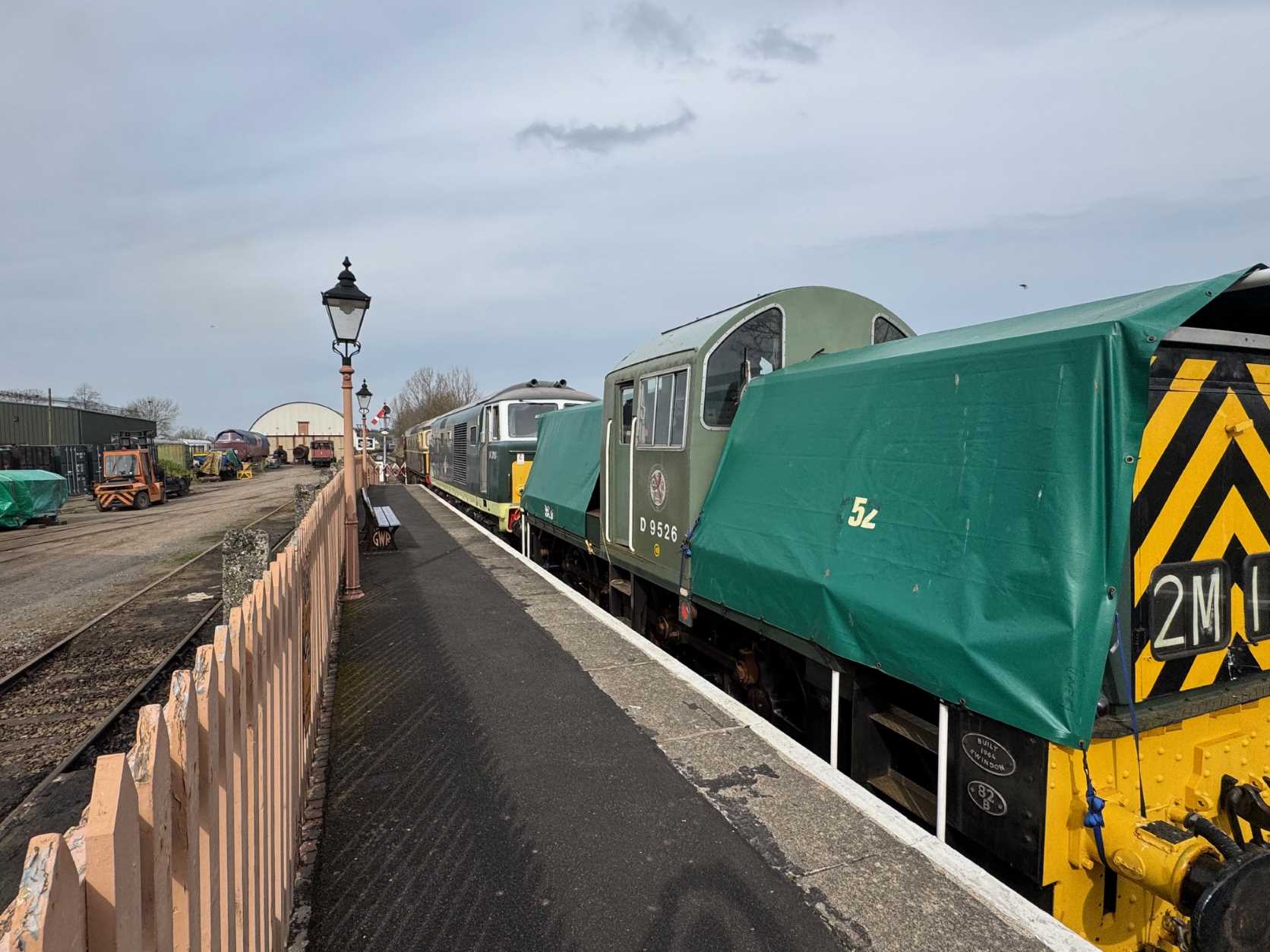
     

    Class 47 47077 ‘NORTH STAR’ – this loco is based at Grosmont on the North Yorkshire Moors Railway and we look forward to seeing this loco being in regular use during 2025 !

    We have been advised that this loco is booked to work an Empty Coaching Stock (ECS) train from Pickering on Wednesday 12th February, so keep an eye on the NYMR Railcams on that day to get a glimpse of this loco in action.


    Andrew Barclay 0-4-0DH 578 – as covered previously, this loco has been very busy in connection with the re-location of the West Somerset Railway Heritage Trust’s carriage collection from Williton to Washford. It is great to see this powerful little loco being put to good use !


    If you can help by donating your time to any of these projects, then please JOIN US and come along to the depot for an introduction to what we do and how we do it. We currently have people on site from Saturday through to Tuesday and we can open on other days if we can be sure of getting at least two volunteers on site at all times, so there is plenty of scope. We have tasks of all types to suit most capabilities, both skilled and unskilled.

    Many thanks to all of our volunteers who give up so much of their time to work on the cleaning, painting, maintaining, restoring, managing and fund raising for our fleet of heritage locomotives !


    BOOK REVIEW: many thanks to those who have already ordered this new book, and apologies for the delay in shipping, but we now have the books in stock and shipments will commence on Saturday 8th. Thank you for your patience!

    This is a new release from Pen & Sword, another in the series of locomotive studies by ANTHONY P. SAYER and no doubt destined for similar positive reviews, as has been the case for other publications from this author (click here for details). His target this time is the short-lived Class 23 ‘Baby Deltic’, a rare example of a product from the English Electric stable that did not deliver on it’s promises. Anthony digs deep into the background and presents the story in his usual style, complete with fine detail.

    Here’s the description text that has been provided by the publisher, Pen & Sword:

         “The British Railways ‘Pilot Scheme’ orders of 1955 included ten English Electric Type 2 diesel-electric locomotives deploying Napier ‘Deltic’ engines. These locomotives, more colloquially known as the ‘Baby Deltics’, were introduced into traffic during 1959 for use on the Eastern Region of British Railways. This book looks at the history of the Class 23s, making extensive use of available but previously unpublished archive material, covering their introduction, technical idiosyncrasies, appearance design and performance. Issues with the original ‘Deltic’ engines were ultimately dealt with via a major rehabilitation exercise during the 1963-65 period; whilst various re-engining options were considered , including a new ‘U’ series English Electric high-speed engine design, the original Napier engines were ultimately retained. The work involved in the whole rehabilitation process is discussed in detail using internal English Electric archive material and forms a central focus of research. The fleet survived intact until 1968, when withdrawal commenced as a direct result of declining traffic levels across the UK, with successive National Traction Plans progressively selecting the less successful, non-standard and ‘numerically-challenged’ classes for removal from traffic. All ten locomotives were withdrawn by March 1971. Individual locomotive histories, allocations, fire and accident incidents, liveries and detail differences, storage and disposals are provided for each locomotive.”

    Price £32 – NOTE: RRP is £35 so save £3 by buying from the DEPG !

    Click here to obtain your copy of this new book.

    Other books in this popular series are also available from the DEPG online store (classes 1417 and 22)

    Four new books have just been added to our online store – click on the images below for details:

    The Railways of South Wales 1975-1995 Part 1 – by Michael Rhodes – price £21.95 The Berks & Hants Line – 40 Years from the Lineside – by Stephen Dance – price £22.95
    Railways of Cornwall – A Decade of Change – Part 1 – by Keith Barrow – price £20.95 Winners & Losers – Loco Bashing Tales from the 1990s – by Andy Chard – £18.95


    ON SHED: last week, we featured a photo from Mark Bladwell’s collection showing the 09:45 Paddington to Bristol Temple Meads on 21st August 1974 which had arrived with D1036 ‘WESTERN EMPEROR’ hauling the failed train loco 50013 (D413) (later to be named ‘Agincourt’). This prompted a response from DEPG member and loco owner Clive Burrows, who kindly provided the following feedback:

         “The photograph of D1036 assisting 50013 highlights the appalling unreliability of the Class 50s at that time.  I travelled on the 13:24 Bath to Bristol the same day (21.08.1974), which was hauled by 45112.  The 13:24 from Bath would have been the 11:15 from Paddington, the service subsequent to the 09:45 that set out with 50013 and then failed.  Interestingly, I travelled on the 19:45 Paddington to Bristol the previous evening (20.08.1974) and that was also hauled by 45112.  Bristol Bath Road crews were trained on Class 45s for the cross-country services, which would have enabled these Bristol-Paddington services to be hauled by Class 45s, much to the annoyance of the Midland fleet planners! The dreadful performance of the Class 50s when first transferred to the WR contributed to the need to extend the life of the Class 52s.

         I came across D1036 hauling air conditioned Mk2 coaches again on the Paddington-Bristol route two years later, on 7th May 1976, when I travelled on the 18:12 Fridays Only (FO) service from Paddington to Chippenham, which was a set of very hot air-conditioned Mk2 coaches, again hauled by D1036.”


    We will have more feedback from Clive in the next edition of roundup, with a curious but plausible connection between the 18:12 FO and a photo that we featured in a roundup last year …


    This week, we jump back across the Welsh Channel to Cardiff Canton depot, with a photo of our very own Class 35 ‘Hymek’ D7018 standing on the same road as the breakdown train. This is actually a postcard that was discovered when looking through some old documents. The postcard was published by the Oxford Publishing Co and credits the photographer as B J Nicolle (author of several railway books).

    No date information is given, but a reasonable guess would be summer 1974, based on the generally tired look of the locomotive and the short shadow length. Does anyone have a photo of their own depicting D7018 on the breakdown road ? Or perhaps have a B J Nicolle book featuring this same photograph ?

    Class 35 ‘Hymek’ D7018 was pictured on the breakdown train road at Cardiff Canton Diesel Depot in this undated picture postcard published by the Oxford Publishing Co. with photo by B J Nicolle ©


    DEPG NEWS – there has been a delay in announcing the loco allocations for this year’s running, due to the need to align the plan with the availability of drivers. Details will be posted on our DIESEL RUNNING DATES page and sent out via DIESELGEN as soon as the crew rostering details have been finalised – hopefully during the coming week.


    The DEPG is a charity and is run entirely by volunteers, many of whom give both their time and their money to the continuance of work on the locos in the DEPG fleet. If you have been enjoying the roundup for free, have you considered joining us for just £1 a month ? You can then add your name to all of those helping out on the above projects and play your part in the future of our locos for a lot less than the price of a cup of coffee!


    JOIN US using whichever membership class is appropriate for your situation and means. CLICK HERE or on the image below or use the QR code to get the details.


    If you would like to go one step further and come along to help with the work on the locos in our fleet, then please use our CONTACT FORM to let us know that you would like to volunteer and we will respond with more details.

    We look forward to hearing from you !


    Go to the previous Weekly Roundup post

  • Weekly Roundup – 26-Jan-25

    The English Electric 6KT engine of Class 09 shunter D4107 (09019) was started up on Sunday 26th January 2025 after undergoing maintenance at Williton. Volunteers Ian R, Ashley and Tom were in attendance. Photo by Ashley Harris  © CC BY-NC 3.0


    The engine of the DEPG’s Class 09 shunter D4107 (09019) was started up on Sunday 26th January after undergoing winter maintenance that included the fitting of a set of reconditioned fuel injection pumps. After a reluctant start, the loco settled into a steady tickover, but it became apparent that the newly-installed Automatic Voltage Regulator (AVR) was not working as it should, so running was curtailed to allow the issue to be investigated. There are still several tasks still to be completed on the loco, but our volunteers are continuing to apply their efforts to getting the work done so that the loco can head back to Bishops Lydeard before the start of the 2025 running season.

    The last of the set of six reconditioned fuel injection pumps was installed into the engine of Class 09 shunter D4107 (09019) by Tom on Saturday 25th January 2025. Photo by Andy Royal  © CC BY-NC 3.0


    The work on D4107 (09019) also including the replacement of the worn-out compressor with a low-hours unit that was recoved from a Class 31. The Westinghouse type 3CV50 compressor is widely used across various classes of locomotive including Class 35 ‘Hymeks’ and Class 52 ‘Westerns’.

    The replacement Westinghouse 3CV50 compressor is shown mounted in position in the close-fitting compartment of Class 09 shunter D4107 (09019) at Williton on Saturday 25th January 2025. Photo by Andy Royal © CC BY-NC 3.0


    A number of bodywork repairs were carried out on D4107 (09019) during her time at Williton, but several other areas also need attention so the loco will be recalled to Williton next autumn to undergo further work and hopefully also undergo a repaint. In the short term, the criticial areas such as the battery boxes have been repaired and some other areas have been patched temporarily to prevent water ingress and avoid further deterioration.

    The heavily-corroded end plate from the Battery Isolation Switch (BIS) compartment was removed (it put up a bit of a fight) and replaced with a new piece of sheet steel, visible in red oxide primer behind the corroded part. Pictured at Williton on Thursday 23rd January 2025 by Anthony Austin © CC BY-NC 3.0


    D7017 UPDATE

    Work continues at Minehead on the repairs to the corrosion damage that has affected several areas of the bodywork of this 63-year-old locomotive. A combined team of DEPG and WSR volunteers are working alongside the WSR engineering team to keep this project moving forward and ensure that the loco is back in service in time for the WSR’s Summer Diesel Festival (5-7th June).

    As we reported last week, the fundraiser for the bodywork repairs for ‘Hymek’ D7017 has been kept open with a new target of £12,000 with a total of £10,715 being raised so far.

    THANK YOU FOR YOUR FANTASTIC SUPPORT !

    The new target of  £12,000 will cover most of the work being done on the loco, the remaining £3,000 being provided from the DEPG’s general fund. The sub-contract route was taken to make sure that the loco gets repaired during the winter and is able to take pole position in the celebration of 50 years of ‘Hymek’ preservation that will take place in the summer of this year.

    The initial target was reached on 1st January 2025, but we are keeping the fundraiser open until the work is completed, to make sure that we have sufficient funding to cover any unexpected costs, and make sure that a thorough and long-lasting repair is carried out.

    All funds donated via this appeal will be allocated to returning D7017 to service in time for the forthcoming season.


    Can you help ? Click here to donate £17 to D7017 !


    If you can help with this short-term appeal, please make a donation via our website (click on the icons above or below) or by bank app or by sending a cheque to the DEPG at WillitonTHANK YOU VERY MUCH !


    The rainwater ingress below the bodyside grille in the former boiler room of Class 35 ‘Hymek’ D7017 shows evidence of corrosion that will be dealt with during the bodywork overhaul. Pictured at Minehead on Friday 24th January 2025 by Neil McCannon © CC BY-NC 3.0


    WSR NEWS

    The WSR have now published their running calendar for 2025 on their website and social media channels, and we have updated our DIESEL RUNNING DATES page including provisional loco allocations, some of which are subject to change to align with the availability of the locos and the crews. As the information becomes available, we will update our page and send out a DIESELGEN bulletin with the clarification.

    Click here or on the image below to visit the WSR’s timetable page:


    The WSR’s SUMMER DIESEL FESTIVAL has been confirmed as being Thursday 5th through Saturday 7th with a Mixed Traction Day  on Sunday 8th of June 2025.


    Click here to join the DEPG

    Click here to go to our DIESEL RUNNING DATES page

    Click here to go to our ONLINE SHOP

    Thank you very much for your support !


    LOCO NEWS:

    Class 52 D1010 ‘WESTERN CAMPAIGNER’ – the cardan shafts from the ‘A’ bogie have been released from their fastenings and are waiting for the Fork Lift Truck to become available so that these large and heavy shafts can then be lifted from the bogies and placed on a pallet for shipping to specialist subcontractor FIROW PROPSHAFTS for assessment and repair if necessary. The equivalent shafts from ‘B’ bogie have been found to be in need of replacement due to excessive wear, especially in the splined joint, no doubt as a result of 50+ years of wear and tear. The shafts in the ‘A’ bogie may be equally worn, but we will keep our fingers crossed in case they had been replaced at Laira during the last year of the loco’s life in BR service (we do not have the service records for this period). We can only hope for the best !

    D1010 – just returned from Firow Proposhafts with a clean bill of health and a lick of paint, the giant-sized cardan shafts that link the transmissions to the intermediate drive gearboxes were ready to be put in store at Williton, pending their re-installation into the loco. Pictured on Saturday 25th January 2025 by Andy Royal © CC BY-NC 3.0


    Meanwhile, Gordon continued with his work on the ‘B’ bogie, eventually managing to remove the primary spring hangers that had been surrounded by compacted and solidified brake dust, resisting the efforts of lesser mortals ! 

    D1010 – pictured holding a primary suspension spring hanger from the ‘’B’ bogie at Williton on Saturday 25th January 2025, Gordon gives the part a quick visual inspection before tagging it and adding it to the pile of items awaiting Non-Destructive Testing (NDT). Photo by Andy Royal © CC BY-NC 3.0


    Our appeals for MORE VOLUNTEERS are working because we have had another potential volunteer come forward in the last week, which is great news, but WE STILL NEED MORE HELP to get this huge loco back on the rails, so please get in touch by using our CONTACT FORM if you are able to join the team.


    As mentioned before, apologies to those D1010 sponsors who have yet to receive the photos and certificates for the patches that they have sponsored. The bitterly cold weather is preventing us from spending outdoor time on the engraving, so we will need to leave this work a little longer, at least until the temperature is back in double digits.

    Rest assured that every sponsor will receive their certificate and the details of where to find their sponsored patch. We will be making a further push for funds soon, because we have some big ticket items for refurbishment, including the remaining cardan shafts and 32 springs from the suspension system.

    MANY THANKS to all who have sponsored and supported the RESTORATION of D1010 !


    Class 09 D4107 (09019) – already covered above !


    Class 33 D6566 (33 048) – this loco has now returned to Williton to enjoy some rest and relaxation while her sister takes on the role of Duty Loco.


    Class 33 D6575 (33 057) – this loco has now become the Duty Loco, after moving to Bishops Lydeard on Saturday 18th January.


    Class 35 ‘Hymek’ D7017 – already covered. This loco celebrated her 63rd birthday on Thursday 8th January 2025, after entering service at Bristol Bath Road depot on Monday 8th January 1962.


    Class 35 ‘Hymek’ D7018 – this loco is being prepared for the re-installation of her transmission and the start of a series of static tests that will hopefully allow the loco to return to service in this, the 50th year of ‘Hymek’ preservation. This loco was the last of the Class to be switched off, being withdrawn from service at Old Oak Common on 16th March, 1975. For more details, get a copy of our booklet ‘HYMEK D7018’ by clicking on this link.

    D7018 – the transmission has been repaired and painted and is now ready to be re-installed in the loco, a task that is planned for Saturday 8th February 2025. Pictured with Geoff at Williton on Monday 20th January 2025 by Colin Foxhall © CC BY-NC 3.0


    D7018 – the transmission heat exchanger is the next target for the team. This large and heavy item was moved to the transmission repair facility on Saturday 25th January so that the team can prepare it for re-installation on the transmission casing. Pictured in the loco on Monday 20th January 2025 by Colin Foxhall © CC BY-NC 3.0


    Class 14 ‘Teddy Bear’ D9518 – the crane has been booked to visit Williton to lift the cab assembly back on to the frames on Saturday 8th February, so the final preparations for this milestone event are taking place at Williton during this coming weekend. Work continues on the engine overhaul, with the cylinder heads being completed and painted, and the cylinder liners also being readied for re-insllation.

    D9518 – the Paxman 6YJ cylinder block gets attention from volunteer Nick at Williton on Tuesday 21st January 2025. Photo by Terry Deacon © CC BY-NC 3.0


    D9518 – three of the six Paxman cylinder heads are lined up on the bench, ready for re-fitting to the engine. Pictured with Terry at Williton on Saturday 25th January 2025. Photo by Andy Royal © CC BY-NC 3.0


    D9518 – Terry points out the surface that supports the cylinder liners (which have been removed from the engine for cleaning and inspection). A thin copper ring provides the seal beween the cylinder liner and the cylinder block. Pictured at Williton on Saturday 25th January 2025 by Andy Royal © CC BY-NC 3.0


    D9518 – A close-up view – Terry points out the surface that supports the cylinder liners (which have been removed from the engine for cleaning and inspection). Pictured at Williton on Saturday 25th January 2025 by Andy Royal © CC BY-NC 3.0


    Quality work needs to be funded, so we will continue to appeal for funds to support the work, right up to the point where the loco is completed. Any surplus will then be used to ensure her proper care and upkeep. If you like what we are doing, please make a donation via our website (click on the icon below) or by bank app or by sending a cheque to the DEPG at WillitonTHANK YOU VERY MUCH FOR YOUR SUPPORT !


    Class 14 ‘Teddy Bear’ D9526 – this loco celebrated her 60th birthday on Monday 6th January, as announced in an earlier post (click here for the post and for a video clip of her most recent engine run). This loco will enter the loco shed some time in the spring and will undergo engine maintenance and receive a paint refresh in time for her appearance at the WSR’s SUMMER DIESEL FESTIVAL 2025.


    Class 47 47077 ‘NORTH STAR’ – this loco is based at Grosmont on the North Yorkshire Moors Railway and we look forward to seeing this loco being in regular use during 2025 !


    Andrew Barclay 0-4-0DH 578 – this loco has been very busy shunting both yards at Williton in connection with the re-location of the West Somerset Railway Heritage Trust’s carriage collection from Williton to Washford. This loco was due to be in use again in the week under review, but poor weather forced a postponement of one week, so we will be covering these moves in the next edition of Roundup.


    If you can help by donating your time to any of these projects, then please JOIN US and come along to the depot for an introduction to what we do and how we do it. We currently have people on site from Saturday through to Tuesday and we can open on other days if we can be sure of getting at least two volunteers on site at all times, so there is plenty of scope. We have tasks of all types to suit most capabilities, both skilled and unskilled.

    Many thanks to all of our volunteers who give up so much of their time to work on the cleaning, painting, maintaining, restoring, managing and fund raising for our fleet of heritage locomotives !


    BOOK REVIEW: this week, we are featuring a new release from Pen & Sword, another in the series of locomotive studies by ANTHONY P. SAYER and no doubt destined for similar positive reviews, as has been the case for other publications from this author (click here for details). His target this time is the short-lived Class 23 ‘Baby Deltic’, a rare example of a product from the English Electric stable that did not deliver on it’s promises. Anthony digs deep into the background and presents the story in his usual style, complete with fine detail.

    Here’s the description text that has been provided by the publisher, Pen & Sword:

         “The British Railways ‘Pilot Scheme’ orders of 1955 included ten English Electric Type 2 diesel-electric locomotives deploying Napier ‘Deltic’ engines. These locomotives, more colloquially known as the ‘Baby Deltics’, were introduced into traffic during 1959 for use on the Eastern Region of British Railways. This book looks at the history of the Class 23s, making extensive use of available but previously unpublished archive material, covering their introduction, technical idiosyncrasies, appearance design and performance. Issues with the original ‘Deltic’ engines were ultimately dealt with via a major rehabilitation exercise during the 1963-65 period; whilst various re-engining options were considered , including a new ‘U’ series English Electric high-speed engine design, the original Napier engines were ultimately retained. The work involved in the whole rehabilitation process is discussed in detail using internal English Electric archive material and forms a central focus of research. The fleet survived intact until 1968, when withdrawal commenced as a direct result of declining traffic levels across the UK, with successive National Traction Plans progressively selecting the less successful, non-standard and ‘numerically-challenged’ classes for removal from traffic. All ten locomotives were withdrawn by March 1971. Individual locomotive histories, allocations, fire and accident incidents, liveries and detail differences, storage and disposals are provided for each locomotive.”

    Price £32 – NOTE: RRP is £35 so save £3 by buying from the DEPG !

    Click here to obtain your copy of this new book.

    Other books in this popular series are also available from the DEPG online store (classes 1417 and 22)

    More new books will be added to our website during the coming days. Here’s a quick preview – please use our CONTACT FORM if you would like us to reserve one or more of these titles for you:

    The Railways of South Wales 1975-1995 Part 1 – by Michael Rhodes – price £21.95 The Berks & Hants Line – 40 Years from the Lineside – by Stephen Dance – price £22.95
    Railways of Cornwall – A Decade of Change – Part 1 – by Keith Barrow – price £20.95 Winners & Losers – Loco Bashing Tales from the 1990s – by Andy Chard – £18.95


    ON SHED: this week, we jump from South Wales directly across the Bristol Channel and we feature a photo from Mark Bladwell’s collection, no doubt to the absolute delight of some of the spotters on the platform at Bristol Temple Meads that day, but given the August date, probably not much fun for the passengers in the air-conditioned Mk2 stock (which the ‘Westerns’ were not equipped to power).

    The service is the 09:45 Paddington to Bristol Temple Meads, which had arrived with D1036 ‘WESTERN EMPEROR’ hauling the failed train loco 50013 (D413) (later to be named ‘Agincourt’). The photo was taken as the ‘Western’ removed the failed ’50’, no doubt to deposit it at Bristol Bath Road Depot for attention. The ‘Western’ had just two years left to run but the ’50’ remained in service until 1988, just days beyond it’s 20th birthday. Many thanks to Mark for sharing his photos with us all.

    Class 52 D1036 ‘WESTERN EMPEROR’ removes failed Class 50 50013 (D413) from the 09:45 Paddington to Bristol Temple Meads service after both locos arrived at their destination together on Wednesday 21st August 1974. Photo by Mark Bladwell © CC BY-NC 3.0


    DEPG NEWS – a Board Meeting took place at Williton on Saturday 25th January, with a considerable number of topics to discuss and several items requiring follow up. One of the key points of discussion was the loco allocations for this year’s running, details of which will be posted on our DIESEL RUNNING DATES page and sent out via DIESELGEN as soon as the crew rostering details have been finalised – hopefully during the coming week.


    The DEPG is a charity and is run entirely by volunteers, many of whom give both their time and their money to the continuance of work on the locos in the DEPG fleet. If you have been enjoying the roundup for free, have you considered joining us for just £1 a month ? You can then add your name to all of those helping out on the above projects and play your part in the future of our locos for a lot less than the price of a cup of coffee!


    JOIN US using whichever membership class is appropriate for your situation and means. CLICK HERE or on the image below or use the QR code to get the details.


    If you would like to go one step further and come along to help with the work on the locos in our fleet, then please use our CONTACT FORM to let us know that you would like to volunteer and we will respond with more details.

    We look forward to hearing from you !
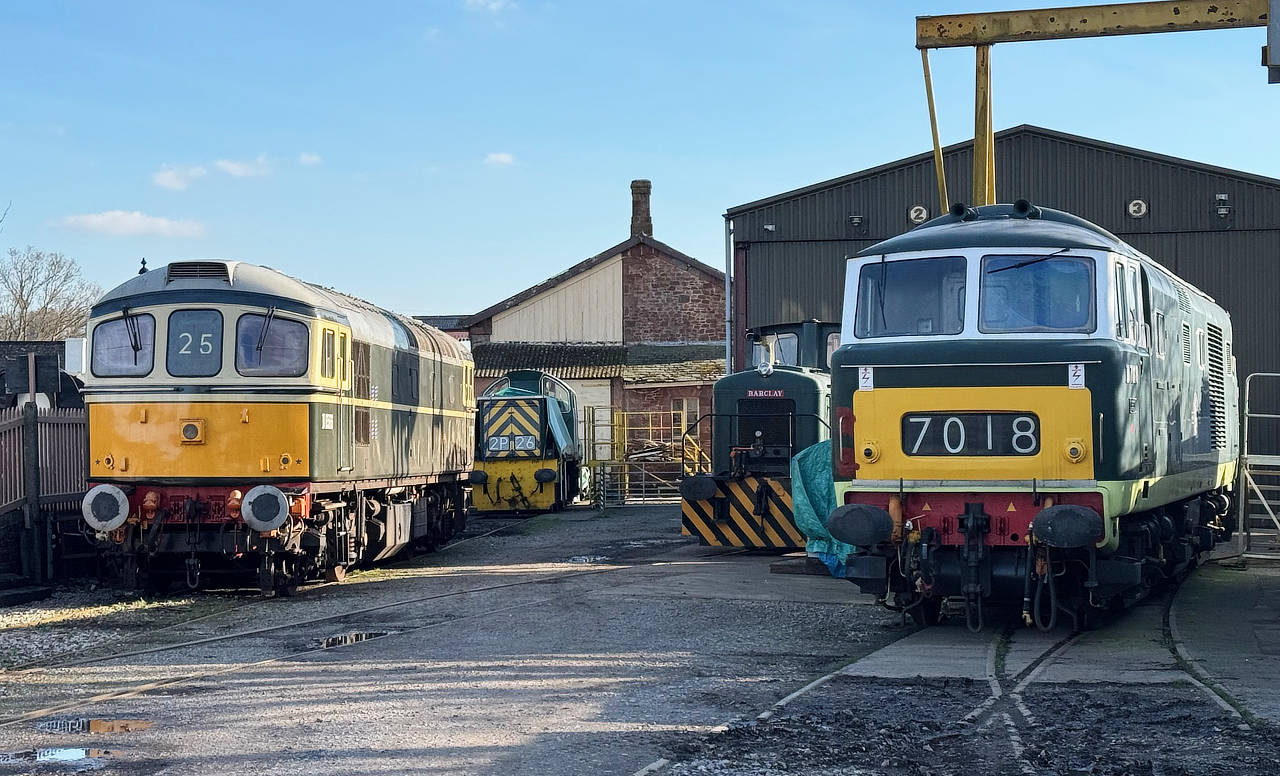
     

    Go to the previous Weekly Roundup post

  • Weekly Roundup – 19-Jan-25

    Class 33 ‘Crompton’ D6566 (33048) had some good company in the form of English Electric Class 37 37423 D6996, 37296) for the first two weeks of the year, thanks to a filming contract. The two locos were pictured in Westridge shed on 17th January 2025 by Europhoenix driver Matt Hunt © CC BY-NC 3.0


    The WSR got off to a great start in 2025 with plenty of activity at Bishops Lydeard and elsewhere on the line in connection with a filming contract. We were not able to cover this at the time, but the restrictions have now been lifted and we have a lot to talk about, although our scope has to be limited to traction and vehicles !

    English Electric Class 37 37423 D6996, 37296) is almost 60 years old and is still busy at work on the main line, now in the care of Europhoenix. Pictured in Westridge shed at Bishops Lydeard with Class 33 ‘Crompton’ D6566 (33048) on 17th January 2025. Photo by Matt Hunt © CC BY-NC 3.0


    The filming involved the use of four coaches (three Mk 2 and one Mk 3 sleeper) that had been hired and specially prepared ‘elsewhere’ and arrived on the WSR on Monday 6th January behind the ’37’. An issue arose almost immediately, when it was realised that the train was the wrong way around for the filming, and it had to be turned on the triangle at Norton Fitzwarren (the existence of which was quite convenient and saved a lot of time and cost). This gave an opportunity for Class 33 ‘Crompton’ D6566 (33048) to top and tail the stock with the Class 37, both locos being air brake fitted. Photos of this movement are rare indeed, but we happen to have the following:

    Class 33 ‘Crompton’ D6566 (33048) led the consist along the west chord of the Norton Fitzwarren triangle, heading for Allerford along the truncated spur of the Barnstaple branch. Class 37 37423 D6996, 37296) was at the tail end. Pictured on Tuesday 7th January 2025 by Matt Hunt © CC BY-NC 3.0


    A little later and with some decent daylight brightening the picture, a reversing movement placed English Electric Class 37 37423 D6996, 37296) at the head of the consist, ready to draw forward to Barnstaple Junction where the ’33’ would then take charge again and haul the train back to Bishops Lydeard via the east chord. Pictured on 7th January 2025 by Matt Hunt © CC BY-NC 3.0


    This extract from the WSR Rule Book, Map 10 shows that the Allerford spur is all that remains of the Barnstaple branch. To see the Rule Book maps and many more, go to the wsr.org.uk website by clicking this link. Image courtesy of WSR plc © CC BY-NC 3.0


    The actual filming sequences were ‘off limits’ to all but essential staff and volunteers, so we will have to wait to see the results (we will share the screening information when we receive it), but the visiting loco and stock and associated movements certainly brightened up the month ! WELL DONE to all involved in winning the contract for the WSR and delivering exactly what the director wanted !


    With filming duties completed, the loco and stock departed from Bishops Lydeard on Sunday 19th January 2025 and headed for Great Yarmouth. The raw power of the type was clearly being demonstrated as 37423 D6996, 37296) accelerated her train to line speed. Photo by Paul Fleet © CC BY-NC 3.0


    Away from the excitement of the film set, the two ‘Cromptons’ were both in action on a ‘Tidy Train’ working on Saturday 18th January, with D6566 (33048) working the train as far as Williton where sister D6575 (33057) swapped places and took the train back to Norton Fitzwarren. The regular swap-over allows both locos to get a balanced share of useage and maintenance, which contributes to their excellent reliability.

    Class 33 D6566 (33048) hauled the ‘Tidy Train’ from Norton Fitzwarren on Saturday 18th January 2025, seen here at Greenway Wood, just north of Bishops Lydeard station on the outward leg of the journey. Photo by Paul Main © CC BY-NC 3.0


    The locos were swapped at Williton, so Class 33 D6575 (33057) worked the return leg and was pictured in the afternoon of Saturday 18th January 2025 while at standstill with a well loaded train at Quarkhill Bridge on the approach to Stogumber Station. Photo by Paul Main © CC BY-NC 3.0


    AN EVENT ON THE EAST LANCS RAILWAY (ELR)

    On Saturday 18th January, the ELR held an event that showcased their fleet of diesel shunting locos, with rides in their ‘Pacer’ units included for those who wanted a reminder of the riding qualities of those wonderful (!) machines. Demand was so high that a second set had to be coupled up to create a 4-car set. The event was enhanced further by a wide range of preserved diesels being on static display, including Class 35 ‘Hymek’ D7076.

    WELL DONE to the ELR … and food for thought for the WSR …


    Hudswell Clarke ‘Arundel Castle’, works number D1076 of 1959, previously operated as 4002 on the Manchester Ship Canal Railway System and was in use for passenger haulage on the ELR on Saturday 18th January 2025. Pictured at Summerseat Halt by Neale Long © CC BY-NC 3.0


    Class 35 ‘Hymek’ D7076 was on static display at Bury Bolton Street Station on the ELR on Saturday 18th January 2025 along with several other preserved mainline diesels. Photo by Neale Long © CC BY-NC 3.0


    D7017 UPDATE

    Work is proceeding apace at Minehead, as a combined WSR and DEPG team make progress on the bodywork repairs that are necessary to allow this loco to celebrate her 50th year in preservation in fine style. The team have been removing the bodyside windows and grilles to repair the corrosion damage beneath them, and this has also exposed some additional corrosion that has had to be dealt with.

    As we reported last week, the fundraiser for the bodywork repairs for ‘Hymek’ D7017 has now passed the target of £10,000 with a total of £10,684 being raised in the eleven weeks since launching the appeal.

    THANK YOU FOR YOUR FANTASTIC SUPPORT !

    We set the target at £10,000 to cover the expected cost of the work that is already taking place at the WSR’s workshops at Minehead. This sub-contract route was taken to make sure that the loco gets repaired during the winter and is able to take pole position in the celebration of 50 years of ‘Hymek’ preservation that will take place in the summer of this year.

    The target has been reached, but we are going to keep the fundraiser open until the work is completed, to make sure that we have sufficient funding to cover any unexpected costs, and make sure that a thorough and long-lasting repair is carried out. All funds donated via this appeal will be allocated to returning D7017 to service in time for the forthcoming season.


    Can you help ? Click here to donate £17 to D7017 !


    If you can help with this short-term appeal, please make a donation via our website (click on the icons above or below) or by bank app or by sending a cheque to the DEPG at WillitonTHANK YOU VERY MUCH !


    The aluminium bodyside windows and grille surrounds have been removed from Class 35 ‘Hymek’ D7017 and are now back at Williton to undergo restoration prior to being refitted to the loco. Pictured on Saturday 18th January 2025 by Andy Royal © CC BY-NC 3.0


    Preparation work for the re-paint of Class 35 ‘Hymek’ D7017 has revealed the corrosion that has been taking place behind the trims and grilles along the bodyside. Pictured at Minehead on Friday 17th January 2025 by Neil McCannon © CC BY-NC 3.0


    The air vent of the former boiler room of Class 35 ‘Hymek’ D7017 has suffered from corrosion that has been taking place out of sight, behind the aluminium trim. This area will need to be cut out and new sheet steel welded in. Pictured at Minehead on Friday 17th January 2025 by Neil McCannon © CC BY-NC 3.0


    WSR NEWS

    The WSR have now published their running calendar for 2025 on their website and social media channels, and we have updated our DIESEL RUNNING DATES page including provisional loco allocations, some of which are subject to change to align with the availability of the locos and the crews. As the information becomes available, we will update our page and send out a DIESELGEN bulletin with the clarification.

    Click here or on the image below to visit the WSR’s timetable page:


    The WSR’s SUMMER DIESEL FESTIVAL has been confirmed as being Thursday 5th through Saturday 7th with a Mixed Traction Day  on Sunday 8th of June 2025.


    Click here to join the DEPG

    Click here to go to our DIESEL RUNNING DATES page

    Click here to go to our ONLINE SHOP

    Thank you very much for your support !


    LOCO NEWS:

    Class 52 D1010 ‘WESTERN CAMPAIGNER’ – the priority during the last week has been to remove the cardan shafts from the ‘A’ bogie and get them sent out to specialist subcontractor FIROW PROPSHAFTS for assessment and any repairs that may be necessary. The ‘A’ bogie has been largely untouched since being released from under the loco back in July 2024, because effort has been concentrated on the ‘B’ bogie which was known to be showing more advanced signs of wear than the ‘A’ bogie.

    As several cardan shafts have now been overhauled and returned to Williton, it has become necessary to send the remaining shafts so that we know what we have that is good and what we have that needs money spent on it. The list is currently as follows:

    Shaft Loco end  Status
    Engine to transmission A At Firow, awaiting assessment
    B At Firow, awaiting assessment
    Transmission to Intermediate Gearbox A Overhauled, being returned to Williton
    B Overhauled, being returned to Williton
    Transmission to Dynastarter A Overhauled, already back in store at Williton
    B Overhauled, already back in store at Williton
    Transmission to Serck pump A Overhauled, already back in store at Williton
    B Overhauled, already back in store at Williton
    Bogie shaft 1 A Not yet removed from the bogie
    B At Firow, in need of repair
    Bogie shaft 2 A Not yet removed from the bogie
    B At Firow, in need of repair
    Bogie shaft 3 A Not yet removed from the bogie
    B At Firow, in need of repair


    This table will be updated as we receive the reports for the shafts that have yet to be assessed. It is no surprise that some of the 50-year-old shafts on the bogies will need repair or replacement – they have lasted a long time already – but we do need to know precisely so that we can budget for the expenditure. Hopefully the remaining three shafts (which have already been freed from their fastenings) will be lifted off the bogie during the next week or two and will be found to be in better condition than those on the ‘B’ bogie.

    D1010 – pictured while removing the cardan shafts from the ‘A’ bogie at Williton on a very cold Saturday 18th January 2025, recent recruit Ethan lets his dad Jason release the lock tabs before they both work together to undo the very close-fitting bolts that hold the shafts tight against the flanges. Photo by Andy Royal © CC BY-NC 3.0


    The bodyside of a ‘Western’ has three windows per side, one in each engine compartment with sliding glass panes, and a central window with a single fixed pane. The central window on the ‘A’ side of D1010 has been missing for many years and had been replaced by a ‘temporary’ Perspex window and has since been boarded up.

    HERE IS A QUESTION: DO YOU HAVE A WINDOW FROM A ‘WESTERN’ ? We know that some centre windows were removed from scrap locos by souvenir hunters during the open days at Swindon Works (all done with permission, of course) and such items might have found their way into garden sheds or perhaps have other innovative uses. If you have one, then D1010 could benefit from you donating it. Here’s a photo that shows the internal detail of one of these windows.

    D1010 – this photo shows the rather complicated internal detail of the centre window on the ‘B’ side of the loco. The equivalent on the ‘A’ side of the loco is missing altogether and has been boarded up. CAN YOU HELP ? Pictured at Williton on 4th January 2025 by Andy Royal © CC BY-NC 3.0


    Our appeals for MORE VOLUNTEERS are working because we have had two additional potential volunteers come forward in the last week, which is great news, but WE STILL NEED MORE HELP to get this huge loco back on the rails, so please get in touch by using our CONTACT FORM if you are able to join the team.


    As mentioned before, apologies to those D1010 sponsors who have yet to receive the photos and certificates for the patches that they have sponsored. The bitterly cold weather is preventing us from spending outdoor time on the engraving, so we will need to leave this work a little longer, at least until the temperature is back in double digits.

    Rest assured that every sponsor will receive their certificate and the details of where to find their sponsored patch. We will be making a further push for funds soon, because we have some big ticket items for refurbishment, including the remaining cardan shafts and 32 springs from the suspension system.

    MANY THANKS to all who have sponsored and supported the RESTORATION of D1010 !


    Class 09 D4107 (09019) – there is a big push being made to get the work on this loco completed so that she can return to service in time for the start of the season (mid-March). The major tasks are close to completion, so another week or two should allow us to prepare the loco for her Vehicle Inspection and Brake Test (VIBT). The replacement compressor was re-installed in the loco last Saturday and now needs the electrical connections to be hooked up and the compartment doors fitted back in place. The Oleo buffers have been overhauled and will be delived back to Williton soon. The various welding repairs and other maintenance tasks have been progressed by the team and are close to being finished, so we are getting there!

    D4107 (09019) – the replacement compressor has now been installed in the loco and is ready for the electrical hook-up. DEPG Chairman and volunteer Martin gives instruction to Bob while Terry approaches with some additional lighting. Pictured at Williton on Saturday 18th January 2025 by Andy Royal © CC BY-NC 3.0


    D4107 (09019) – Bob provides some encouragement to the electrical conduit to get it to line up with the compressor housing so that the electrical hook-up can take place. Pictured at Williton on Saturday 18th January 2025 by Andy Royal © CC BY-NC 3.0


    Class 33 D6566 (33 048) – as already mentioned, this loco has now returned to Williton to enjoy some rest and relaxation while her sister takes on the role of Duty Loco.


    Class 33 D6575 (33 057) – this loco has now become the Duty Loco, after moving to Bishops Lydeard on Saturday 18th January.


    Class 35 ‘Hymek’ D7017 – already covered. This loco celebrated her 63rd birthday on Thursday 8th January 2025, after entering service at Bristol Bath Road depot on Monday 8th January 1962.


    Class 35 ‘Hymek’ D7018 – this loco celebrated her 63rd birthday on Saturday 18th January and was given the ‘gift’ of an overhauled transmission, all nicely painted in ‘Rail Grey’ and ready to be lifted back into the loco. The crane has been booked for Saturday 8th February, after which the loco will undergo some static tests before an engine start is attempted. After startup, there will be more tests before the loco will be allowed to exercise in the yard and eventually go out on a test run.

    Between now and the 8th February, work will take place within the loco to prepare for the re-installation of the transmission. One item that needs cleaning and inspection before re-attachment is the transmission heat exchanger, which has the important job of cooling the transmission fluid to keep the temperature within limits when the loco is working hard. The drawing for the heat exchanger was reviewed last Saturday and the data table on the drawing was seen to include some jaw-dropping figures that show just how much work these relatively simple components have to do. Take a look at this:

    D7018 – Beyer Peacock drawing number 135335 gives details of the heat exchangers. The item most of interest is that for the transmission, pictured above. The data table includes some interesting information. Pictured at Williton on Saturday 18th January 2025 by Andy Royal © CC BY-NC 3.0


    D7018 – zooming in on the data table of Beyer Peacock drawing number 135335, the flow rates and heat transfer capacities are significant! Pictured at Williton on Saturday 18th January 2025 by Andy Royal © CC BY-NC 3.0


    Class 14 ‘Teddy Bear’ D9518 – the crane has been booked to visit site to lift the cab assembly back on to the frames on Saturday 8th February, so work has now shifted to the engine overhaul and the restoration of the many small parts that have been removed from the loco in the past and will soon need to be re-installed. These driver’s desk gauges show the attention to detail that the team is building into this restoration project. Excellent work indeed !

    D9518 – the missing gauges from the driver’s desk have been found and restored to their former glory. Pictured at Williton on Saturday 11th January 2025 by Colin Girle © CC BY-NC 3.0


    D9518 – the original AEI pressure switches (Start Oil Pressure Switch and Run Oil Pressure Switch) from the loco have been overhauled and found to be working perfectly, even though they are 60 years old ! Pictured at Williton on Saturday 11th January 2025 by Colin Girle © CC BY-NC 3.0


    Quality work needs to be funded, so we will continue to appeal for funds to support the work, right up to the point where the loco is completed. Any surplus will then be used to ensure her proper care and upkeep. If you like what we are doing, please make a donation via our website (click on the icon below) or by bank app or by sending a cheque to the DEPG at WillitonTHANK YOU VERY MUCH FOR YOUR SUPPORT !


    Class 14 ‘Teddy Bear’ D9526 – this loco celebrated her 60th birthday on Monday 6th January, as announced in an earlier post (click here for the post and for a video clip of her most recent engine run). This loco will enter the loco shed some time in the spring and will undergo engine maintenance and receive a paint refresh in time for her appearance at the WSR’s SUMMER DIESEL FESTIVAL 2025.


    Class 47 47077 ‘NORTH STAR’ – this loco is based at Grosmont on the North Yorkshire Moors Railway and we look forward to seeing this loco being in regular use during 2025 !


    Andrew Barclay 0-4-0DH 578 – this loco has been very busy shunting both yards at Williton in connection with the re-location of the West Somerset Railway Heritage Trust’s carriage collection from Williton to Washford. This loco will be in use again next week, so we look forward to being able to share some more photos in a future roundup. Here’s a photo of one of the coaches that this little loco has been shunting:

    The WSRHT‘s Collett 1935-vintage Third Class Corridor coach, TK 5856, pictured at Williton on Saturday 18th January 2025 by Malcolm Anderson © CC BY-NC 3.0


    If you can help by donating your time to any of these projects, then please JOIN US and come along to the depot for an introduction to what we do and how we do it. We currently have people on site from Saturday through to Tuesday and we can open on other days if we can be sure of getting at least two volunteers on site at all times, so there is plenty of scope. We have tasks of all types to suit most capabilities, both skilled and unskilled.

    Many thanks to all of our volunteers who give up so much of their time to work on the cleaning, painting, maintaining, restoring, managing and fund raising for our fleet of heritage locomotives !


    BOOK REVIEW: this week, we are featuring a new release from Pen & Sword, another in the series of locomotive studies by ANTHONY P. SAYER and no doubt destined for similar positive reviews, as has been the case for other publications from this author (click here for details). His target this time is the short-lived Class 23 ‘Baby Deltic’, a rare example of a product from the English Electric stable that did not deliver on it’s promises. Anthony digs deep into the background and presents the story in his usual style, complete with fine detail.

    Here’s the description text that has been provided by the publisher, Pen & Sword:

         “The British Railways ‘Pilot Scheme’ orders of 1955 included ten English Electric Type 2 diesel-electric locomotives deploying Napier ‘Deltic’ engines. These locomotives, more colloquially known as the ‘Baby Deltics’, were introduced into traffic during 1959 for use on the Eastern Region of British Railways. This book looks at the history of the Class 23s, making extensive use of available but previously unpublished archive material, covering their introduction, technical idiosyncrasies, appearance design and performance. Issues with the original ‘Deltic’ engines were ultimately dealt with via a major rehabilitation exercise during the 1963-65 period; whilst various re-engining options were considered , including a new ‘U’ series English Electric high-speed engine design, the original Napier engines were ultimately retained. The work involved in the whole rehabilitation process is discussed in detail using internal English Electric archive material and forms a central focus of research. The fleet survived intact until 1968, when withdrawal commenced as a direct result of declining traffic levels across the UK, with successive National Traction Plans progressively selecting the less successful, non-standard and ‘numerically-challenged’ classes for removal from traffic. All ten locomotives were withdrawn by March 1971. Individual locomotive histories, allocations, fire and accident incidents, liveries and detail differences, storage and disposals are provided for each locomotive.”

    Price £32 – NOTE: RRP is £35 so save £3 by buying from the DEPG !

    Click here to obtain your copy of this new book.

    Other books in this popular series are also available from the DEPG online store (classes 14, 17 and 22)

    More new books will be added to our website during the coming days. Here’s a quick preview – please use our CONTACT FORM if you would like us to reserve one or more of these titles for you:

    The Railways of South Wales 1975-1995 Part 1 – by Michael Rhodes – price £21.95 The Berks & Hants Line – 40 Years from the Lineside – by Stephen Dance – price £22.95
    Railways of Cornwall – A Decade of Change – Part 1 – by Keith Barrow – price £20.95 Winners & Losers – Loco Bashing Tales from the 1990s – by Andy Chard – £18.95


    ON SHED: this week, we move to South Wales and a photo of a nice clean Class 37 (there were some!) at Cardiff Canton (CF) shed, taken by the late Mike Evans in June of 1984. The ’37s’ were the backbone of South Wales operations, covering most of the numerous freight workings of the time, but some (with steam heat boilers) also covering passenger workings.

    The subject loco, 37229 (formerly D6929) had been named ‘The Cardiff Rod Mill‘ just one month prior, which explains the tidy condition of the loco when it was captured by Mike’s camera. The loco was delivered new to Swansea Landore (LE) depot in February of 1964 and was a steady performer for the next 40 years before ending up at Booth’s scrap yard in Rotherham.

    Class 37 37229 (D6929) ‘The Cardiff Rod Mill’ was on shed at Cardiff Canton in the company of a Class 45/46 ‘Peak’ and a Class 33 ‘Crompton’ in June of 1984. Photo by the late Mike Evans © CC BY-NC 3.0


    DEPG NEWS – the next meeting of the Board of Trustees will take place at Williton on Saturday 25th January. If you have any questions that you would like to place before the Board, please get in touch by using the CONTACT FORM on our website.


    The DEPG is a charity and is run entirely by volunteers, many of whom give both their time and their money to the continuance of work on the locos in the DEPG fleet. If you have been enjoying the roundup for free, have you considered joining us for just £1 a month ? You can then add your name to all of those helping out on the above projects and play your part in the future of our locos for a lot less than the price of a cup of coffee!


    JOIN US using whichever membership class is appropriate for your situation and means. CLICK HERE or on the image below or use the QR code to get the details.


    If you would like to go one step further and come along to help with the work on the locos in our fleet, then please use our CONTACT FORM to let us know that you would like to volunteer and we will respond with more details.

    We look forward to hearing from you !
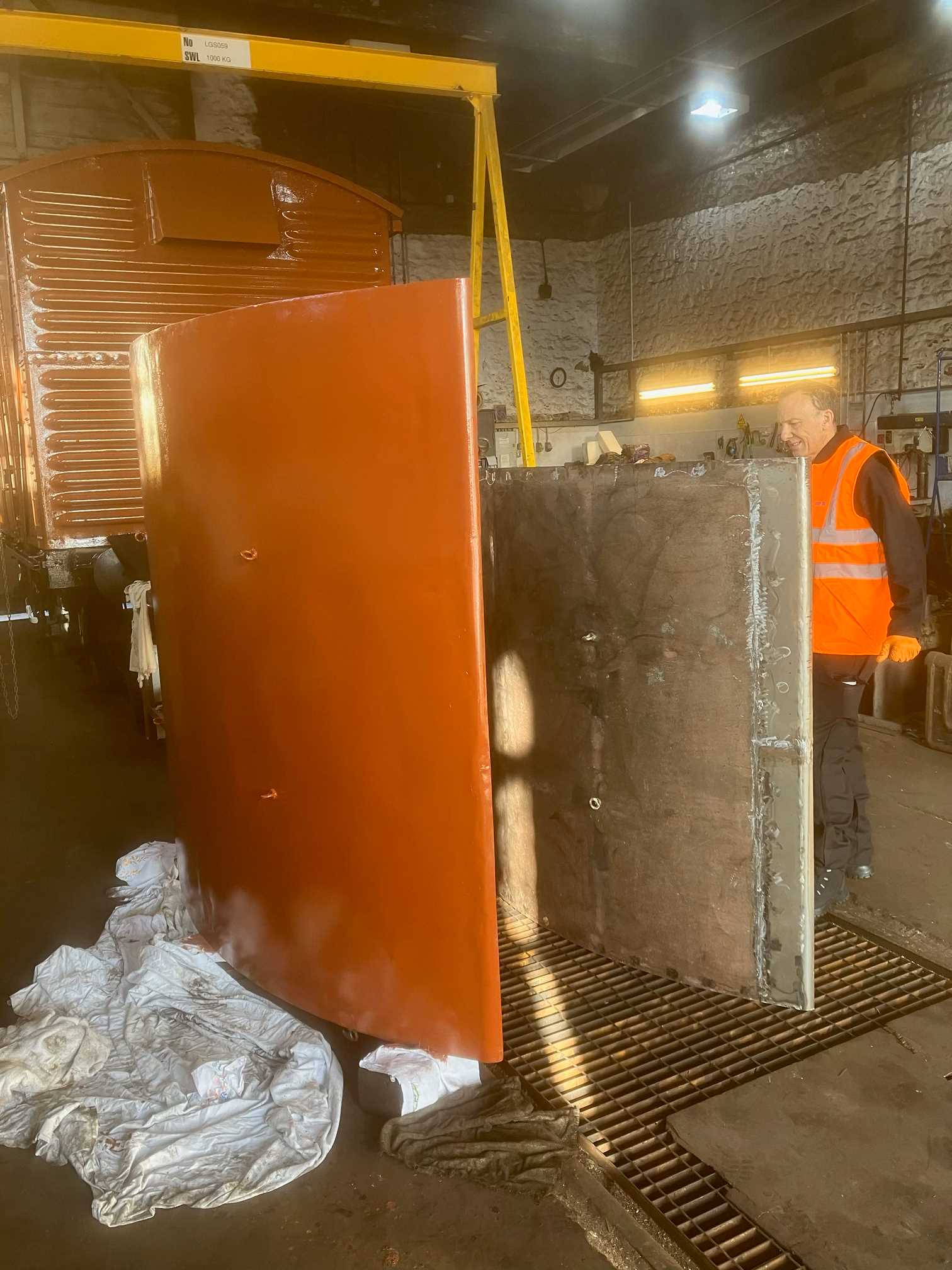
     

    Go to the previous Weekly Roundup post

Posts navigation